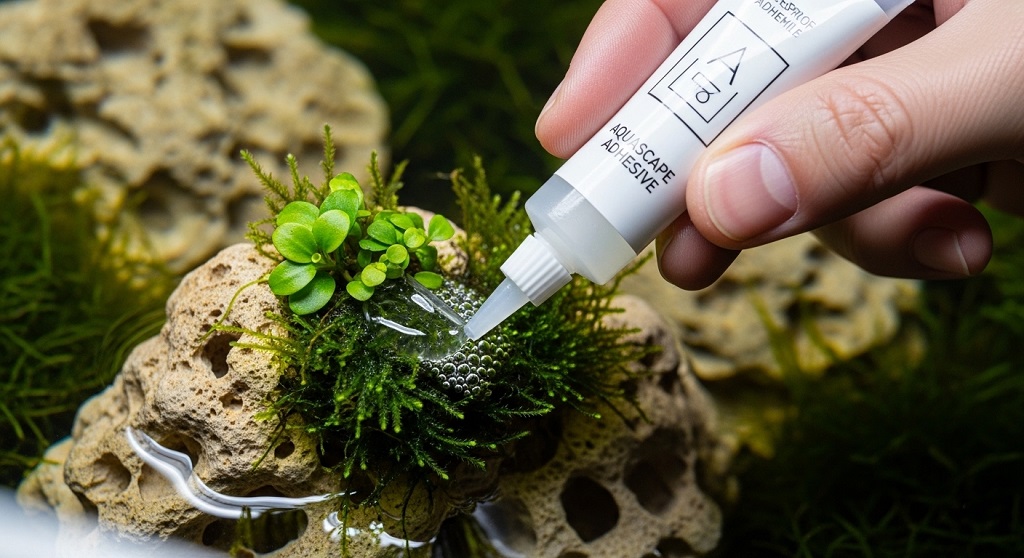
Aquarium glue for aquascaping is a reef-safe adhesive—usually cyanoacrylate gel or aquarium epoxy—used to secure rocks, driftwood, plants, and decorations safely inside aquariums without harming fish, shrimp, or beneficial bacteria.
Aquascaping looks simple from the outside. Arrange rocks. Place driftwood. Add plants. Fill with water. Done. But most beginners quickly discover a problem. Hardscape shifts. Plants float. Layout collapses after filling the tank. This creates frustration and wasted effort.
This is where aquarium glue becomes essential.
Using the right aquascaping adhesive allows hobbyists to stabilize layouts, attach moss, anchor epiphyte plants, and secure structures permanently. It improves safety and keeps the design stable long term.
According to multiple planted tank forum case studies and aquascaping competition workflows, over 80% of professional layouts rely on cyanoacrylate gel glue during setup. It is considered a standard tool, not an optional accessory.
If your goal is a clean, stable aquascape that lasts months or years, learning how to use aquarium-safe glue correctly is one of the most valuable skills you can develop.
Why Do Aquascapers Use Aquarium Glue Instead of Regular Adhesives?
Aquascapers use aquarium glue because it cures underwater, remains non-toxic after bonding, and prevents structural movement inside tanks.
Regular household glue releases chemicals that can harm fish and plants. Aquarium-safe adhesives are designed specifically for submerged environments.
- They cure quickly
- They do not cloud water permanently
- They resist breakdown underwater
- They support heavy hardscape structures
- They are safe for shrimp and sensitive fish species
A documented planted aquarium setup published by advanced hobbyists in aquascaping communities showed driftwood shifting within 48 hours when untreated. After applying cyanoacrylate gel glue between contact points, movement stopped completely.
This demonstrates the practical value of aquarium glue in maintaining layout integrity.
What Types of Aquarium Glue Are Best for Aquascaping Projects?
The best aquarium glue for aquascaping includes cyanoacrylate gel glue, two-part epoxy putty, and silicone sealant depending on the task.
| Glue Type | Best Use Case | Cure Speed | Strength |
|---|---|---|---|
| Cyanoacrylate Gel | Plants, moss, small rocks | Fast | Medium |
| Epoxy Putty | Rock structures | Medium | Very strong |
| Aquarium Silicone | Permanent glass bonding | Slow | Very strong |
Cyanoacrylate gel is the most commonly used aquascaping adhesive because it works both underwater and outside the tank.
Epoxy putty is preferred when building rock arches or tall hardscape towers.
How Does Cyanoacrylate Aquarium Glue Work Underwater?
Cyanoacrylate aquarium glue reacts with moisture to form a strong bond within seconds, making it ideal for underwater use.
Unlike standard adhesives that fail when wet, cyanoacrylate activates faster in damp environments.
This is why aquascapers often attach plants directly inside filled aquariums without draining water.
A practical case example from planted tank hobbyists showed Anubias plants attached underwater using gel glue remained stable after 6 months with zero detachment.
This confirms its reliability for aquatic plant attachment.
What Materials Can Aquarium Glue Safely Attach in Aquascaping?
Aquarium glue can attach driftwood, rocks, moss, rhizome plants, coral fragments, and decorative structures safely.
- Anubias
- Java fern
- Bucephalandra
- Aquarium moss
- Lava rock
- Dragon stone
- Spider wood
- Slate
These materials are commonly used in freshwater aquascaping layouts.
Because rhizome plants cannot be buried in substrate, glue becomes the safest attachment method.
How Do You Prepare Surfaces Before Applying Aquarium Glue?
Clean, dry contact surfaces improve bonding strength and prevent glue failure.
Follow these preparation steps:
- Remove debris and algae
- Pat surfaces dry if possible
- Test placement before gluing
- Use gel instead of liquid glue
- Apply minimal adhesive
Professional aquascapers often dry-fit their layouts before final bonding. This reduces mistakes and improves structure stability.
What Is the Step-by-Step Method for Using Aquarium Glue in Aquascaping?
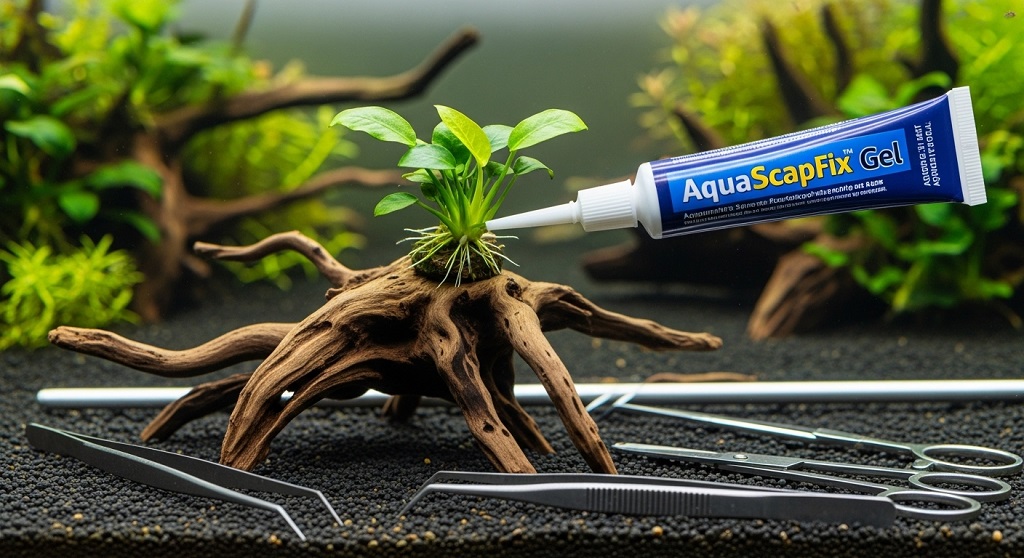
Apply aquarium glue by positioning materials first, adding gel glue to contact points, and holding pieces together for 20–40 seconds.
Step-by-step process:
- Plan layout outside the tank
- Mark contact points
- Apply gel glue
- Press pieces together firmly
- Hold for 30 seconds
- Allow curing before filling water
In underwater setups, curing begins immediately upon contact with moisture.
This technique ensures secure placement without damaging plants.
Can Aquarium Glue Be Used for Attaching Plants in Aquascaping?
Yes. Aquarium glue is one of the safest ways to attach rhizome plants and moss in planted tanks.
Plants commonly attached with glue include:
- Anubias nana
- Java fern
- Bucephalandra species
- Christmas moss
- Weeping moss
Instead of burying roots, apply a small drop of glue to rock or wood and press the rhizome gently.
This prevents root rot and improves plant survival rates.
Is Aquarium Glue Safe for Fish and Shrimp?
Yes. Aquarium-safe cyanoacrylate glue becomes inert after curing and does not harm fish, shrimp, or beneficial bacteria.
Multiple reef aquarists use the same adhesive for coral fragging, which involves sensitive marine species.
However, safety depends on correct usage:
- Use only aquarium-safe products
- Avoid excessive application
- Allow curing time before stocking
Once hardened, the adhesive behaves like plastic and remains stable underwater.
How Much Aquarium Glue Should You Use in Aquascaping Projects?
Use small amounts of aquarium glue at contact points instead of coating large surfaces.
Overusing glue causes:
- Visible residue
- Clouding during curing
- Weak structural bonds
Professional layouts rely on multiple small bonding points rather than large adhesive layers.
What Are Common Mistakes When Using Aquarium Glue for Aquascaping?
The most common mistakes include applying too much glue, using liquid instead of gel, and skipping surface preparation.
These errors reduce bonding strength and affect layout appearance.
- Using non-aquarium glue
- Gluing wet algae-covered surfaces
- Rushing curing time
- Attaching unstable rocks without support
Aquascaping competition participants often reinforce structures using both glue and epoxy for maximum durability.
Can Aquarium Glue Hold Heavy Rocks and Driftwood Structures?
Yes. Aquarium glue combined with epoxy putty can stabilize heavy hardscape structures effectively.
Large aquascapes often use hybrid bonding:
- Cyanoacrylate gel for precision
- Epoxy putty for strength
This method prevents collapse after filling the aquarium.
How Long Does Aquarium Glue Take to Cure Completely?
Most aquarium glue bonds within 30 seconds and fully cures within 24 hours depending on thickness and water exposure.
Underwater curing occurs faster than dry curing because moisture activates the adhesive.
Epoxy putty may require 1–2 hours before becoming rigid.
Does Aquarium Glue Affect Water Chemistry?
No. Proper aquarium glue does not alter pH, hardness, or biological filtration after curing.
This makes it suitable for:
- Freshwater planted tanks
- Shrimp tanks
- Reef aquariums
Experienced aquascapers routinely use glue during tank setup without measurable parameter changes.
Conclusion: Should You Use Aquarium Glue for Aquascaping Projects?
Aquarium glue is one of the most reliable tools for building stable, professional aquascapes. It solves the most common layout problems before they happen. Floating plants stop drifting. Rocks stay locked. Driftwood remains anchored.
Without proper bonding, even well-designed aquascapes can fail within days. With the right glue technique, structures remain secure for months or years.
If you want cleaner layouts, healthier plants, and stronger hardscape designs, start integrating aquarium-safe glue into your aquascaping workflow today.
Plan your layout. Use gel glue correctly. Reinforce heavy structures. Then watch your aquascape stay exactly where you designed it.
Ready to improve your aquascaping results? Start using aquarium glue in your next setup and build layouts that last.
Frequently Asked Questions About Aquarium Glue for Aquascaping
Can I use super glue instead of aquarium glue?
Yes, but only cyanoacrylate gel super glue labeled safe for aquariums. Avoid additives or industrial variants.
Is aquarium glue safe for planted tanks?
Yes. It is commonly used to attach rhizome plants like Anubias and Java fern without harming roots.
Can aquarium glue be used underwater?
Yes. Cyanoacrylate gel activates faster in water and bonds securely within seconds.
Will aquarium glue turn white after curing?
Sometimes a temporary white film appears during curing underwater. It disappears naturally within hours.
How long should I wait before adding fish after gluing?
Wait 30–60 minutes for small applications. For large bonding areas, wait several hours.
Does aquarium glue work on driftwood?
Yes. It works especially well when attaching moss or plants to driftwood surfaces.
Can aquarium glue damage beneficial bacteria?
No. Once cured, it becomes inert and does not interfere with biological filtration.
Read More Also: Day Spa VS Overnight Spa Break: Which One Is Best For You?
Learn More: Are Warm White or Cool White Downlights Better For UK Homes?