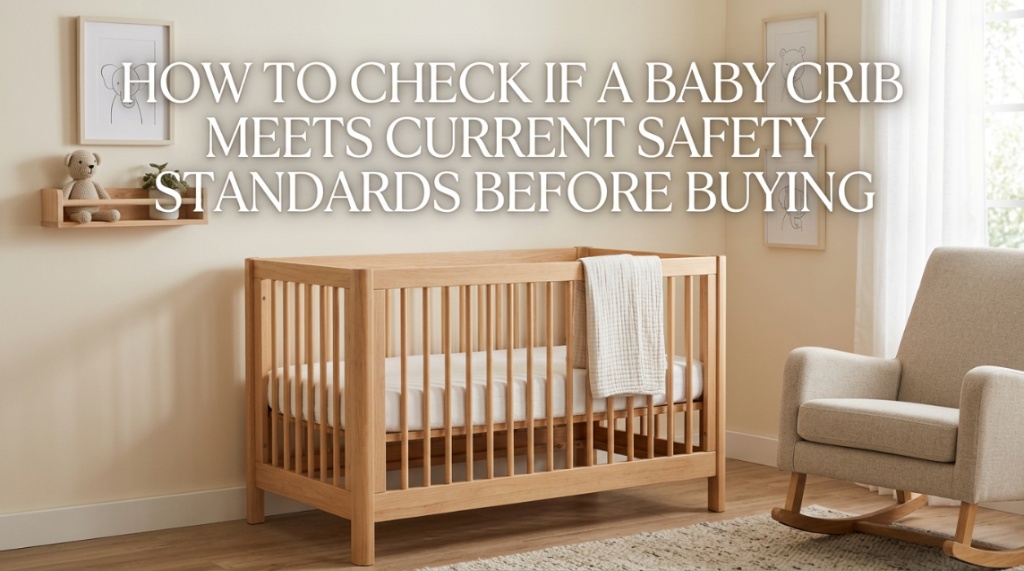
One overlooked screw hole can tell you more about a crib’s safety than a glossy product photo ever will. When evaluating safe baby cribs, the fastest way to determine whether a model meets current safety requirements is to verify that it complies with the latest Consumer Product Safety Commission (CPSC) regulations, carries third-party certification, has fixed sides instead of drop sides, proper slat spacing, a firm mattress fit, and no active recalls. Checking these factors before purchase dramatically reduces safety risks and helps parents choose truly certified cribs that align with modern standards.
What Does It Mean for a Baby Crib to Meet Current Safety Standards?
A baby crib meets current safety standards when it complies with the latest federal safety regulations, passes required testing, and follows modern design requirements intended to prevent suffocation, entrapment, falls, and structural failures.
Crib safety standards have changed significantly over the years. Older cribs that were once considered acceptable may now be unsafe due to updated regulations and improved research on infant sleep safety.
In the United States, crib manufacturing is regulated by the Consumer Product Safety Commission (CPSC). Manufacturers must comply with mandatory standards established under the Consumer Product Safety Improvement Act (CPSIA). These standards address:
- Structural integrity
- Mattress support durability
- Slat spacing requirements
- Lead and toxic substance limits
- Hardware security
- Entrapment prevention
- Side rail safety
Parents researching nursery equipment often compare crib safety alongside other everyday child products. Resources discussing practical parenting solutions such as spill-resistant toddler drinking systems can help families understand how modern child-safety engineering influences product design across different categories.
How Can You Verify That a Crib Is Certified and Compliant?
The easiest verification method is checking for certification labels, manufacturer documentation, and compliance statements referencing current CPSC requirements.
Reputable manufacturers clearly display certification details on packaging, product pages, manuals, and safety labels attached to the crib frame.
What Certifications Should Parents Look For?
Look for certifications and compliance indicators such as:
- CPSC compliance statement
- ASTM International certification
- JPMA certification seal
- CPSIA compliance documentation
- Independent laboratory testing verification
The Juvenile Products Manufacturers Association (JPMA) certification indicates that a product has undergone independent testing beyond basic regulatory requirements.
Where Can You Find Safety Information?
Most compliant cribs include:
- Permanent safety labels
- Model identification numbers
- Manufacturing dates
- Assembly instructions
- Safety warnings
- Compliance documentation
If a seller cannot provide clear compliance information, consider that a warning sign and continue your search elsewhere.
What Safety Features Should Every Modern Baby Crib Have?
Every modern crib should have fixed sides, appropriate slat spacing, secure hardware, a firm mattress fit, and durable construction free from hazardous openings.
These features directly address the most common causes of crib-related injuries and accidents.
| Feature | Safe Standard | Why It Matters |
|---|---|---|
| Fixed sides | Required | Prevents side-rail failures |
| Slat spacing | Maximum 2⅜ inches | Prevents head entrapment |
| Firm mattress fit | Minimal gaps | Reduces suffocation risk |
| Secure hardware | No loose parts | Maintains structural stability |
| Smooth surfaces | No sharp edges | Prevents injuries |
| Stable frame | No wobbling | Reduces collapse risk |
Why Is Slat Spacing So Important?
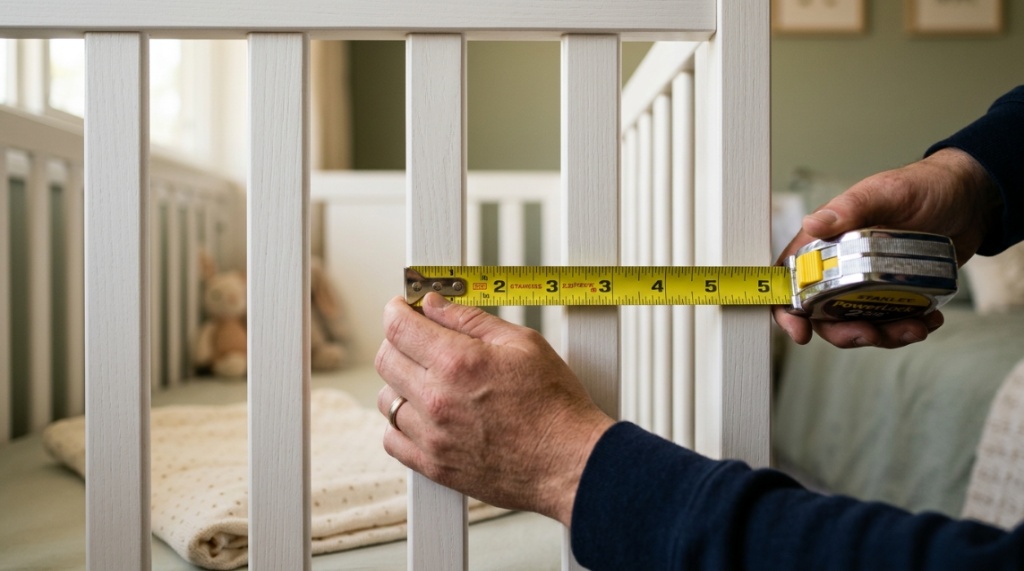
The maximum recommended spacing between crib slats is 2⅜ inches (about 6 centimeters). Wider spacing may allow an infant’s head to become trapped, creating a serious safety hazard.
How Tight Should the Mattress Fit?
A crib mattress should fit snugly against all sides of the crib. If you can fit more than two fingers between the mattress and crib frame, the gap may be too large.
Which Baby Cribs Should You Avoid Buying?
Avoid drop-side cribs, recalled models, damaged second-hand cribs, heavily modified cribs, and products lacking safety certification.
While used nursery furniture may seem budget-friendly, outdated designs often fail to meet current safety requirements.
Parents frequently evaluate overall developmental safety when preparing for a newborn. Educational resources covering milestones such as early infant skill development during beginner swim programs highlight how age-appropriate environments contribute to safer growth experiences.
Are Drop-Side Cribs Still Safe?
No. Drop-side cribs are no longer permitted for manufacture or sale in the United States because of documented safety concerns involving entrapment and suffocation risks.
If you encounter a drop-side crib at a garage sale, online marketplace, or family storage unit, it is best not to use it.
Should You Buy a Second-Hand Crib?
Used cribs can be safe if they:
- Meet current regulations
- Have all original parts
- Show no structural damage
- Have never been recalled
- Include manufacturer information
However, many experts recommend purchasing new certified cribs whenever possible because safety standards evolve over time.
How Can You Check Whether a Crib Has Been Recalled?
Always search recall databases before purchasing any crib, whether new or used.
Product recalls occur when manufacturers or regulators identify safety defects that could potentially harm infants.
Where Should Parents Search for Recalls?
Reliable sources include:
- CPSC recall database
- Manufacturer websites
- Retailer safety notices
- Government consumer protection websites
Search using the exact model number and manufacturer name. Even if a crib appears structurally sound, an undisclosed defect may have triggered a recall.
Why Are Recall Checks Essential?
Many recalled cribs look perfectly normal. Hidden design flaws may involve mattress supports, hardware failures, side rails, or structural weaknesses that only become apparent after extensive testing or reported incidents.
What Materials Are Safest for Baby Cribs?
The safest cribs use durable, non-toxic materials that comply with strict chemical safety regulations.
Both solid wood and high-quality engineered materials can be safe when manufactured according to current standards.
What Should Parents Know About Paint and Finishes?
Modern crib finishes should be:
- Lead-free
- Low-VOC or non-toxic
- Free from harmful heavy metals
- Compliant with CPSIA regulations
Babies often chew crib rails while teething, making finish safety particularly important.
Are Solid Wood Cribs Better?
Not necessarily. Construction quality matters more than material type alone. A well-manufactured engineered wood crib that meets current standards may be safer than an older solid wood crib lacking modern safety features.
What Questions Should You Ask Before Purchasing a Crib?
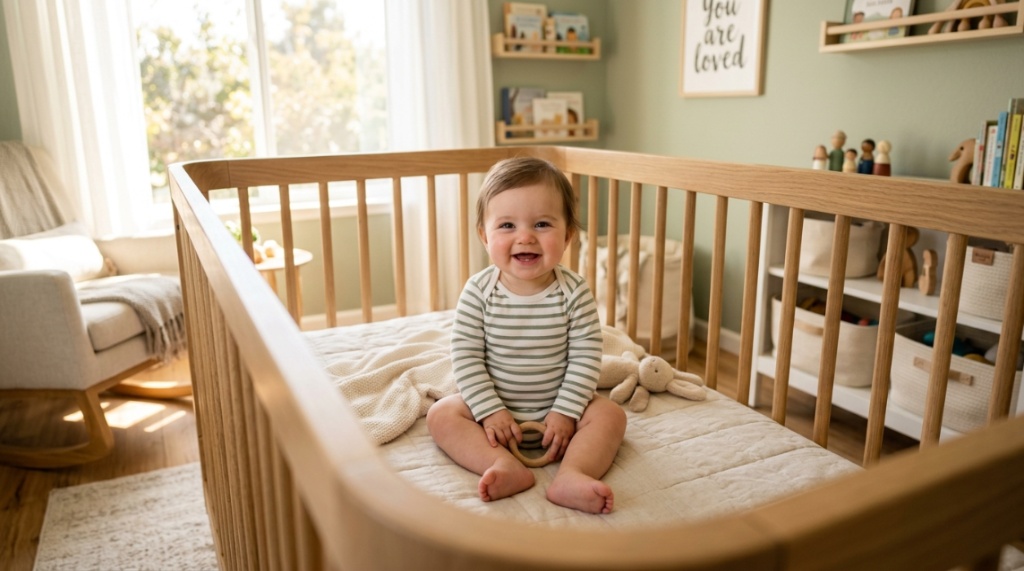
Asking the right questions can quickly identify whether a crib satisfies modern safety expectations.
Before purchasing, ask the manufacturer or retailer:
- Does this crib comply with current CPSC standards?
- Is it JPMA certified?
- Has the model ever been recalled?
- What testing has been performed?
- Are replacement parts available?
- Does the mattress fit manufacturer specifications?
- When was the crib manufactured?
Transparent answers typically indicate a reputable manufacturer.
How Do Certified Cribs Compare to Non-Certified Options?
Certified cribs undergo testing and verification processes that provide greater confidence in safety performance.
| Criteria | Certified Cribs | Non-Certified Cribs |
|---|---|---|
| Safety testing | Verified | May be limited |
| Regulatory compliance | Documented | Often unclear |
| Quality assurance | Consistent | Variable |
| Recall tracking | Easier identification | May be difficult |
| Consumer confidence | Higher | Lower |
While certification does not guarantee perfection, it significantly improves confidence that a crib has been evaluated according to recognized safety criteria.
What Other Safe Sleep Guidelines Should Parents Follow?
Even the safest crib requires proper sleep practices to maximize infant safety.
The American Academy of Pediatrics (AAP) recommends placing babies on their backs on a firm sleep surface without soft bedding or loose objects.
What Should Be Kept Out of a Crib?
Keep the crib free from:
- Pillows
- Blankets
- Stuffed animals
- Bumper pads
- Sleep positioners
- Loose bedding
A bare crib remains the safest sleep environment for infants.
When Should Mattress Height Be Adjusted?
Lower the mattress as your baby grows and begins sitting, pulling up, or standing. This helps prevent falls and climbing accidents.
Conclusion: What Is the Safest Way to Choose a Baby Crib?
The safest way to buy a crib is to confirm compliance with current CPSC standards, verify certification, inspect critical safety features, check recall records, and follow recommended safe sleep practices after purchase.
Modern safe baby cribs are designed around decades of safety research, but parents still need to verify that a product meets current requirements. Focus on fixed-side construction, proper slat spacing, secure hardware, a snug mattress fit, and documented compliance certifications. Avoid outdated models, recalled products, and cribs with missing components.
For parents comparing nursery products and researching dependable buying guides, reviewing expert recommendations on top-rated baby crib options for different family needs can provide additional insight before making a final decision.
A few minutes spent checking certifications and safety records today can help create a safer sleep environment for your child tomorrow. Before purchasing, verify every detail, compare options carefully, and choose a crib that meets both modern regulations and your family’s long-term needs.
Frequently Asked Questions About Baby Crib Safety
How do I know if a crib meets current safety standards?
Check for CPSC compliance, ASTM testing standards, JPMA certification, recall-free status, fixed-side construction, and proper labeling from a reputable manufacturer.
Are older baby cribs safe to use?
Not always. Older cribs may lack modern safety features and could violate current regulations. Verify manufacturing date, recall history, and compliance before use.
What is the safest crib type for newborns?
A full-size crib that complies with current federal regulations, includes a firm mattress, fixed sides, and documented certification is generally considered one of the safest options.
Is JPMA certification required for baby cribs?
No. JPMA certification is voluntary, but it provides additional confidence that a crib has undergone independent safety testing beyond minimum requirements.
Can a crib be safe if it is not certified?
Possibly, but certification offers extra assurance. Parents should still verify compliance with mandatory safety regulations and review manufacturer testing documentation.
What mattress should I use with a baby crib?
Use a firm mattress designed specifically for the crib model or size recommended by the manufacturer. Avoid oversized gaps around the mattress perimeter.
How often should I inspect my baby’s crib?
Inspect the crib monthly for loose screws, damaged hardware, cracked components, worn mattress supports, and signs of structural instability.