Texas offers over 600 miles of coastline, but that’s just the beginning. Between the sandy Gulf beaches, the limestone riverbeds of the Hill Country, and the rocky shores of lakes like Texoma, your feet face a variety of harsh terrain. If you have ever stepped on a scorching hot boat ramp in July or slipped on moss-covered rocks in an East Texas creek, you know exactly why footwear matters. The challenge is finding gear that protects without draining your wallet. Many shoppers assume they need to spend $80 to get a decent pair. That’s simply not true. Affordable water shoes in Texas exist, but you need to know what features actually matter to avoid wasting money on disposable flimsy options.
Choosing the wrong pair leads to blisters, premature tearing, and foot fatigue—essentially throwing cash into the trash. This guide breaks down exactly how to evaluate materials, fit, and tread patterns so you can make a smart purchase. Whether you’re planning a float trip down the Guadalupe River or a beach day at South Padre Island, this guide ensures you get the best value for your budget.
Why Do Texas Terrain Conditions Demand Specific Water Shoes?
The Lone Star State is not just a single environment; it’s a patchwork of ecosystems that punish generic footwear. The heat, the geology, and the wildlife all play a role in what makes a shoe suitable for use here. You need gear that can handle the unique combination of scorching heat and abrasive surfaces.
The Heat Factor: Asphalt, Sand, and Rocks
Surface temperatures in Texas can exceed 150°F during summer afternoons. Standard flip-flops trap heat and offer zero protection. A good water shoe needs a thermal barrier. Look for a midsole that is not just thin rubber. You want enough density to insulate your foot from the baking ground, especially if you are walking across a parking lot to a fishing spot.
Navigating Slippery Limestone and Riverbed Hazards
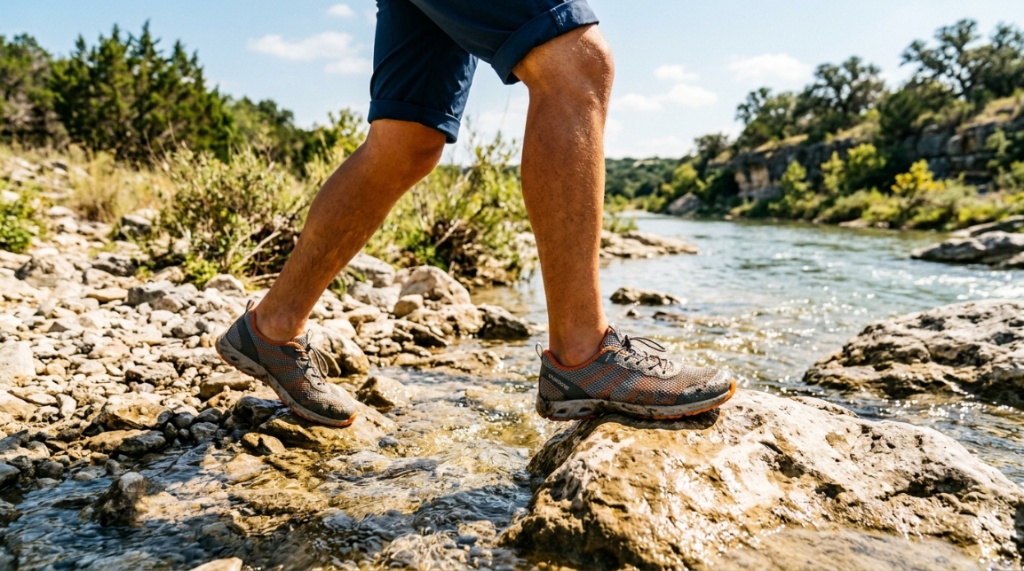
Hill Country rivers are notorious for “slick rock”—algae-covered limestone that is as slippery as ice. The tread pattern is the safety critical feature here. You need aggressive lugs (the rubber nubs on the bottom) that channel water away and dig into the rock surface. Siping, which are tiny slits in the rubber, also helps grip wet surfaces better than smooth soles.
Protection Against Stingrays and Debris in Gulf Waters
In the Gulf of Mexico, the “stingray shuffle” is a survival tactic. Shuffle your feet to avoid stepping on a ray. However, a sturdy shoe adds a layer of defense. Opt for a sole that offers puncture resistance. Thin yoga-mat soles are useless against a ray barb or a broken bottle embedded in the sand.
Which Materials Offer the Best Durability for the Price?
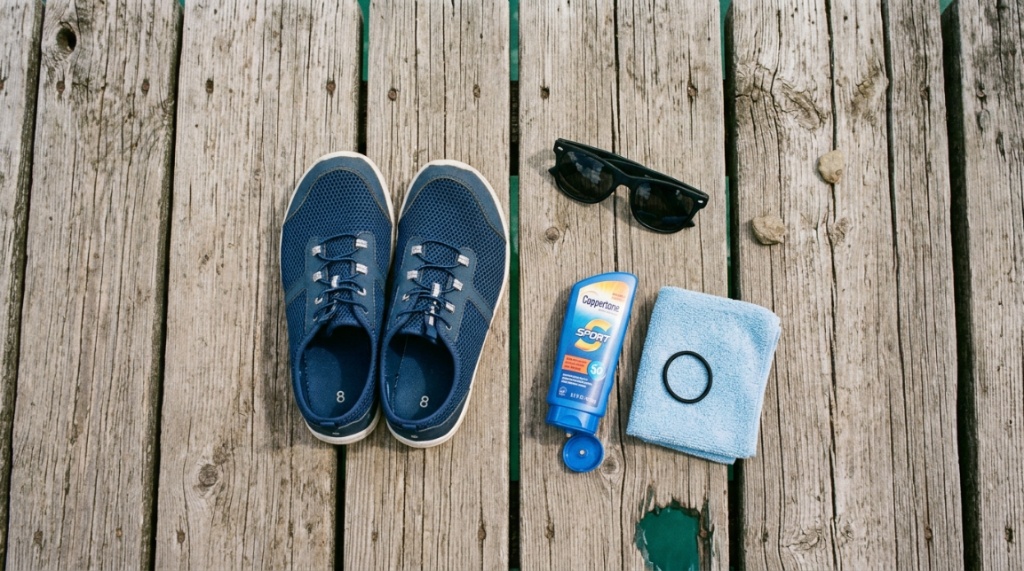
Material science is where the price difference between a $20 and a $70 shoe becomes obvious. However, budget-friendly doesn’t have to mean fragile. You need to look for specific synthetic compounds that resist the harsh Texas sun and constant wet/dry cycles.
Evaluating Synthetic Uppers vs. Mesh Knit
Traditional mesh drains water quickly but often holds sand and tends to tear if snagged on a submerged branch. Newer synthetic knit uppers (often TPU or Polyester blends) are more resistant to abrasion. If you are on a budget, prioritize a shoe with a reinforced toe cap. This prevents the most common failure point: ripped toes from shuffling against concrete.
Why Rubber Soling Matters for Longevity
Not all rubber is created equal. Thermoplastic Rubber (TPR) and Ethylene-Vinyl Acetate (EVA) are common. EVA is lightweight and cheap, but it compresses over time, losing shock absorption. TPR is heavier but offers better grip and lasts significantly longer. A shoe with a high abrasion-resistant rubber index will survive a full season of Austin lake trails.
The Quick-Dry Myth vs. Reality
Some shoes claim to be “quick-dry,” but in Texas humidity (often 80%+), nothing air-dries fast. Look for materials that don’t hold water molecules. Neoprene blends are comfortable but retain water. Open-mesh or punched-out uppers allow water to escape through centrifugal force when you walk. The faster the water leaves, the fewer blisters you get.
How Should a Budget Water Shoe Fit to Prevent Blisters?
Fit is non-negotiable. A shoe that is too tight causes friction burns; too loose causes heel slip and eventual black toenails. Since you are looking for budget options, the fit is often the only thing saving you from discomfort, as cheaper materials have less “give” and flexibility.
Understanding the “Snug” Fit for Water Activities
Water shoes fit differently than regular sneakers. The upper should be snug like a glove, holding your foot securely, but the toe box should allow wiggle room. If your toe touches the front, size up. When wet, feet swell slightly, so you need space for expansion without creating a gap at the heel.
Adjustability Features: Laces vs. Straps
Quick-lace systems and adjustable straps are safer choices than traditional laces. They lock the heel down and prevent debris from entering. A bungee lock system allows for easy on/off and accommodates foot swelling during a long day of paddling. Ensure there are no high-pressure points on the instep where the strap digs in.
Preseason Testing Tips for Texas Heat
Do not schedule a river trip for the first time you wear them. Wear them around the yard in the evening for a week. Get them wet in the hose and walk on dry pavement. This breaks the materials in and identifies hot spots before you are miles away from your vehicle.
Can You Use Running Sneakers Instead of Dedicated Water Shoes?
Many visitors try to save money by using old running shoes in the water. While this seems economical, it often ruins the investment. Running shoes soak up water like a sponge, become incredibly heavy, and take days to dry. They also lack the specialized drainage holes needed to eject water.
The Weight and Retention Problem
Standard athletic foam absorbs water. A wet running shoe can add over 1.5 pounds of weight per foot. This causes severe fatigue and leads to “sloppy” grip on wet rocks. Water shoes use closed-cell foam that repels water, keeping the shoe light and agile in the water.
When “Dedicated” is Actually Cheaper
Ruining a $100 pair of trainers in a saltwater environment is a waste. The salt corrodes the glues and puckers the leather. A $30 dedicated pair is disposable by comparison. By choosing a specific shoe, you protect your expensive gym equipment from destruction.
Cross-Culture Use: Fishing and Land Walking
If you primarily fish off a kayak, you need a shoe that works on land too. “Hybrid” water shoes have stiffer midsoles for walking on gravel launches. Pure “aqua socks” are terrible for this. You need the stiffness of a trail shoe combined with the drainage of a water shoe.
What Are the Hidden Costs of Buying Ultra-Cheap Water Shoes?
There is a low price threshold where a “deal” becomes a “liability.” Shoes priced under $15 often lack structural integrity and proper safety features. When reviewing affordable water shoes in Texas, you have to look beyond the price sticker.
The Midsole Collapse: Impact on Joint Health
Cheap EVA foam compresses permanently after two or three uses. This means you are walking on a thin layer of rubber with zero shock absorption. This directly impacts your ankles and knees, especially when walking on hard riverbeds. Pay a little more for a shank or firmer midsole density.
Tread Wear and Safety Implications
Soft rubber soles wear down incredibly fast on hot asphalt. Smooth soles become hazardous on boat ramps. If the traction pattern is shallow, it will be gone within a month. You want deep, aggressive lugs that are spaced widely apart to prevent mud clumping.
UV Degradation Concerns
Texas sun is brutal. Ultraviolet rays degrade rubber and plastics. Low-quality materials become brittle and crack. Higher quality compounds include UV stabilizers. Look for brands that mention “UV resistant” or “sunscreen resistant” in their specs. This ensures the shoe doesn’t fall apart after a season of exposure on the boat deck, Looking to set up your home aquarium after a trip to the local springs? Check out our guide on Aquarium LED Lights for Freshwater Tanks to keep your aquatic plants thriving.
How to Match Shoe Sole Stiffness to Your Activity Level
You wouldn’t wear ice skates to run a marathon. The same logic applies to water shoes. The stiffness of the sole dictates where the shoe is best used. Matching this to your specific activity maximizes both comfort and lifespan.
Flexible Soles for SUP and Surfing
For stand-up paddleboarding (SUP) or wading on sandy bottoms, you want high flexibility. You need to feel the board or the soft sand underfoot to maintain balance. A flexible sole allows your foot muscles to articulate naturally. Look for a construction that can roll up completely.
Stiff Shanks for Hiking and Rocky Trails
If you are hiking up to a waterfall in Big Bend or scrambling over rocks, stiff soles are mandatory. A rock plate or a stiffer TPU shank in the midfoot protects your foot from sharp edges. These shoes sacrifice some flexibility for torsional rigidity, preventing twisting injuries.
Compromise: The “Do-It-All” Moderate Stiffness
For most general users, a shoe that bends at the toe but resists twisting in the middle is best. This offers a balance for walking on sand, launching kayaks, and walking around the beach bar afterwards. Test this by holding the shoe at both ends and twisting like wringing a rag. It should resist that motion.
Which Toe Protection Style is Best for Gulf Jetties?
Fishing the rock jetties in Galveston or Port Aransas requires heavy-duty protection. These areas are filled with oysters and barnacles that can slice through skin and weak fabric. The “toe shoe” style is generally not adequate for this environment.
Closed-Toe Booties vs. Open-Toe Slip-Ons
Open-toe sandals are dangerous on jetties. You need a fully closed-toe design. Look for a “bootie” cut that rises higher on the ankle for additional protection. The rand (the rubber band around the base of the shoe) should be thick to absorb impacts when kicking rocks.
The Importance of Drainage in Tidal Zones
When you enter the water from a jetty, the water level rises to your knees. Without drainage holes, the shoe becomes a water balloon. Proper drainage holes in the side or upper let water blast out when you lift your foot. This keeps the shoe light on the re-entry to the boat.
Adhesive Quality and Construction
Saltwater attacks the glue that holds soles together. High-heat vulcanization (where the sole is baked onto the upper) is more durable than simple cold cementing. Check the edge where the upper meets the sole. Ensure it is seamless and tightly bonded with no gaps where sand can enter.
How Soon Should You Replace Your Water Shoes?
Water shoes don’t last forever. The degradation is often invisible to the naked eye until a critical failure occurs. Knowing the lifespan indicators helps you avoid being stranded without footwear on a sharp reef or hot deck.
Signs of Delamination and Sole Separation
If you see the sole peeling away from the upper at the toe or heel, the shoe is dead. No glue will permanently fix it once saltwater has compromised the chemical bond. Replace immediately to prevent tripping hazards and losing the shoes entirely in currents.
Compression Wear and Loss of Cushioning
Press your thumb into the midsole. If it doesn’t bounce back or feels rock hard, the cushioning is gone. Inadequate cushioning leads to plantar fasciitis and heel pain, especially on hard concrete boat ramps. Replace the shoe when your heels start aching after short walks.
Strap and Lace Failure Risks
Look for fraying on the straps or laces. A broken heel strap in the middle of a swift river will cause you to lose the shoe. Check the stitching points where the strap attaches to the shoe. Reinforce them with heavy-duty thread if they look thin, but if the plastic buckles are cracking, it is time to upgrade.
Are Expensive Brands Worth the Premium Price Tag?
Premium brands like Astral or Salomon offer superior performance, but the average weekend warrior in Texas may not need F1 technology for a casual float. The premium price often covers advanced footbeds and proprietary grip compounds that improve on wet surfaces exponentially.
Breaking Down the $50+ Feature Set
Brands like Astral use a “Sticky Rubber” compound specifically designed for wet rocks. This is a genuine leap in performance. They also include structured drainage channels that evacuate water at a specific flow rate, preventing hydroplaning. These are tangible benefits.
Budget Alternatives to Premium Performance
If your budget is capped at $40, prioritize shoes that use “Grippy” outsoles with deep siping. Look for features like the “Sticky” rubber on competitors that cost $80. Competitors like Vibram have licensed their technology, and sometimes budget shoes use “Vibram-lite” or similar compounds with 80% of the performance.
Warranty and Customer Service
Premium brands usually have robust warranty policies. They are willing to replace shoes if they fail within the first few months. Budget brands often have a “no return if wet” policy. However, Amazon’s return policy often overrides manufacturer policies, offering a safety net for cheap shoes that fall apart quickly.
Frequently Asked Questions
How tight should water shoes fit?
They should fit snugly with no heel slippage, but your toes should not touch the front of the shoe. One millimeter of space in the toe box is acceptable to accommodate for foot swelling in warmer water.
Can I wear water shoes in the washing machine?
Yes, but only on a gentle cycle with cold water. Use a mild detergent and place them in a mesh laundry bag to prevent the agitator from tearing the uppers. Air dry away from direct sunlight to prevent UV damage.
Are water shoes good for walking on hot sand?
They are better than bare feet, but not as good as closed-toe sandals. Look for a shoe with a outsole that is at least 5mm thick to provide thermal insulation from the top layer of sand. Quickly pass over hot areas.
What is the difference between water shoes and aqua socks?
Aqua socks are thin, flexible, and primarily designed for pool decks or sandy bottoms. Water shoes have structured soles, lateral support, and aggressive treads for rugged terrain like rocky riverbeds and boat ramps.
Do I need socks with my water shoes?
No, water shoes are designed to be worn without socks. Wearing socks defeats the drainage purpose and creates friction that leads to blisters. If you have sensitive skin, consider a neoprene liner instead of cotton socks.
When is the best time to buy water shoes in Texas?
The best time is during “shoulder season” (May and September). Retailers discount summer inventory to make room for fall gear. Post-summer sales in August can also yield discounts of up to 50% on clearance models.
Conclusion
Selecting the right water footwear in Texas doesn’t require breaking the bank, but it does demand vigilance regarding materials and construction. The terrain here—from the abrasive Gulf sand to the slick limestone of the Hill Country—requires a shoe that offers genuine grip, solid toe protection, and a snug fit. By prioritizing rubber compounding over brand names and checking for proper shank stiffness, you can secure a pair that lasts for multiple seasons.
Remember to check the sole density and avoid featherweight options that skimp on safety. Whether you are chasing redfish in the surf or wading through a clear spring, the right shoes are your best companion. Don’t wait until Friday afternoon before your trip to buy a pair. Spend time this week assessing your specific needs, and you’ll find that affordability and performance can coexist. Gear up, hit the water, and keep your feet safe and happy.