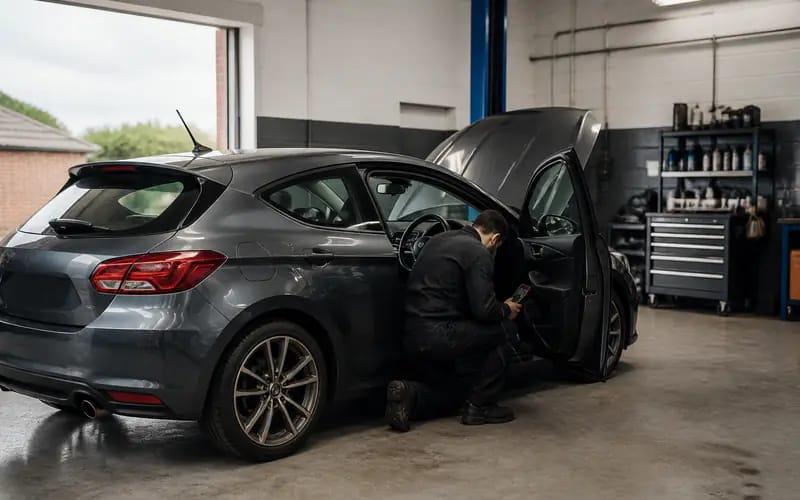
How Electric Steering Racks Are Diagnosed
An indication of a steering fault doesn’t necessarily mean a part will need to be changed. To identify the source of a problem the components must be tested in a specific order.
Reading The Stored Fault Codes
The technician uses a Diagnostic Scan Tool to read any Stored Fault Codes from the steering control module (SCM). These codes will give a general area of fault such as a sensor circuit fault or motor fault. These codes must be used as the starting point for a structured electrical fault finding procedure. Several different faults can cause the same Stored Fault Code to be written.
Checking The Torque Sensor Signal
The torque sensor is supposed to measure the amount of force that the driver is applying to the steering wheel. Slowly turning the steering wheel from lock to lock should result in a smooth signal on the scan tool. Sudden spikes or even gaps in the signal will indicate a ‘dropout’ of the sensor under load. Such a sensor is one of the most common causes of intermittent power loss that could be mistaken for a worn steering rack.
Testing The Steering Motor
The Steering Motor can now be tested for resistance and current. Is the motor spinning? Does it draw more current than expected due to it seizing? Or perhaps less current as it is failing. Much like the sensors above, the motors can also fail intermittently making diagnosis difficult. However, the motor can be tested and possibly even repaired separately from the rest of the rack.
Inspecting The Wiring And Connectors
A great number of faults that appear to be within the steering rack itself actually originate from within the wiring. The greatest cause of such faults is corrosion on a connector pin or within a connector body. This can also cause faults within the wiring itself such as chafing against a bracket or Sheathing wear. Additionally a connector pin can come loose within a connector and also cause such problems. Often when there have been steering-related safety recalls on certain models the problem has been found to be with the connectors or wiring loom routing within the steering column.
Confirming CAN Bus Communication
Many modern steering control modules communicate with other control units within the vehicle’s computer network (CAN Bus). The steering control module can flag a fault even though there is nothing wrong with the steering rack, steering motor or sensor if the communication with other control units (such as the engine control unit, gear box control unit or vehicle control unit) fails. Diagnosis of the fault would then focus on whether the steering control module is not receiving information from other control units within the vehicle’s computer network.
Checking Battery Condition And Supply Voltage
The steering system requires a constant feed of power to function. If the battery is old or worn, or the earth connection is poor then it can affect the function of the steering rack. As with any system the voltage must be checked under load and static. Many false faults are caused by poor earths or low voltage while cranking or high electrical usage.
Carrying Out A Road Test
After completing the static checks on the vehicle, it will be taken for a road test to establish whether assistance does or does not trigger at various points. It is quite common for other electrical problems to cause intermittent problems and which only appear to behave erratically with engine on and vehicle moving. The technician will also note the exact circumstances and time that the problem occurred in order to try and establish the root cause of a fault.
Clearing Codes And Running Calibration
Clearing any fault codes from your car’s onboard computer and completing the steering column’s self-learning program (if fitted) is essential after any steering repairs to remove any warning lights from your dashboard. Should a repair not resolve a problem and you are left complaining to a main dealer or independent garage, it may help your case should a part fail again within a short space of time, highlighting possible improper fitment.
Doing these checks in order will help prevent unnecessary diagnosis and reduce the number of parts that are changed in order to fix a problem with your vehicle’s steering.