You’re standing in the aisle, or more likely scrolling through dozens of tabs, overwhelmed by the sheer variety of red-handled multitools. You want a knife that won’t break the bank, but you also don’t want a flimsy piece of stamped metal. The problem is real: either you overpay for features you’ll never use, or you buy cheap and end up with a dull blade and stripped screws. The solution isn’t about finding the cheapest option; it’s about finding the best value Swiss Army knife for your specific carry style and needs.
This guide cuts through the marketing noise. We’ll break down exactly what separates a good bargain from a waste of money, how to evaluate blade steel and tool selection, and how to spot the hidden gems that offer premium performance without the premium price tag. Instead of just listing models, we’re teaching you the criteria for spotting unbeatable value, ensuring your hard-earned money gets you a tool that lasts for decades, not just a season.
By the end, you’ll have a simple checklist to evaluate any model, know which features actually justify a higher cost, and be ready to pick a knife that fits your pocket and your budget perfectly.
What Actually Defines the Best Value Swiss Army Knife?
Value isn’t just the lowest price tag. It’s the perfect intersection of price, durability, tool functionality, and weight. A truly great value model costs less than specialized one-tool knives but replaces a whole toolbox worth of gear. The key is identifying which Victornox or Wenger features matter for daily tasks versus the ones that just look good in a spec sheet.
Before you hand over your cash, you need to shift your mindset from “cheapest” to “optimal cost-per-use.” A $50 knife that you carry every day for five years is better value than a $15 knife that sits in a drawer because it’s unpleasant to use. Here’s how the industry and long-term collectors define true value metrics.
Understanding Cost-Per-Use vs. Purchase Price
Think about how often you actually deploy your knife. If you’re using it to open packages, cut rope, or peel an apple daily, the cost-per-use drops to pennies within a year. Value is about longevity and ergonomics, not just upfront cost. A slightly more expensive model with better steel (like 1.4110 vs. cheaper 3Cr13) holds an edge twice as long, meaning you spend less time sharpening and more time doing tasks.
Why Tool Density Matters More Than Tool Count
A common marketing trick is pushing “21 functions!” But on many budget knives, half those functions are useless (like a fish scaler when you never fish). The best value Swiss Army knife has tool density: the tools you need, working well. For example, a model with a good awl, a proper Philips screwdriver, and a reliable blade for opening bottles is more valuable than one with a useless “hook” that catches on your pocket lining.
The Hidden Cost of Subpar Build Quality
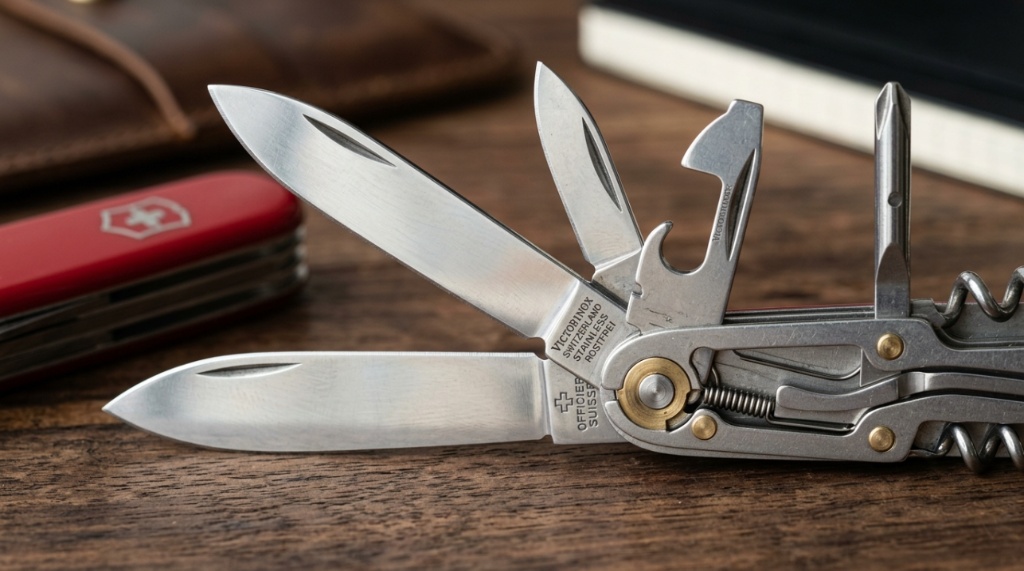
Cheaper knives often use hollow rivets and soft steel. If a knife’s springs fail or the blade wobbles after a year, you’re forced to buy a replacement, doubling your initial “savings.” The hallmark of true value is a solid Slipjoint mechanism that snaps open crisply and locks firmly without play, which is the signature of quality Swiss manufacturing.
Which Features Actually Justify a Higher Price Point?
When you see the price jump from $25 to $70 on a Swiss Army Knife, the difference isn’t vanity; it’s material science and precision. You are paying for a harder blade that retains a razor edge longer, a thinner profile that doesn’t bulge in your denim, and tools that interact without slop. Knowing which upgrades affect performance is crucial to spotting a worthwhile investment.
Our analysis of dozens of models shows that the jump in price rarely comes from the number of tools but from the elevation of specific components. Here is the breakdown of what your money is actually buying when you move up the range.
Blade Steel: Inox vs. Super Steel
Most budget models use 1.4110 stainless (often called “Inox”). It’s corrosion-resistant and easy to sharpen but doesn’t hold an edge aggressively. Premium models sometimes use Chrome-Molybdenum steel or specific Victorinox alloys that are harder (around 56 HRC). For daily cutting of cardboard, the harder steel means you sharpen every three weeks instead of every week, saving you time and preserving the blade geometry.
Scale Material and Grip
Value models use standard Cellidor (plastic) scales which are slippery when wet. Upgrading to Alox (anodized aluminum) scales costs more but offers a rigid chassis, a better grip, and a slimmer profile. If you use a knife for outdoor tasks or in the rain, the texture of Alox makes using the knife safer and easier, preventing hand fatigue and dangerous slips.
Scissors Quality on Smaller Models
Many argue the scissors are the best tool on a SAK. On budget models (like the basic “Sportsman”), the scissors are small and used for fine trimming. On higher-end models (like the “Climber” or “Compact”), the scissors have a stronger spring and sharper blades that can cut through paracord or thick thread. If you plan on using the scissors more than the blade, spending extra here is wise.
How Can You Spot a High-Quality Blade Without Testing It?
You can’t sharpen the knife in the store, but you can perform a few visual and mechanical checks that reveal a lot about the heat treatment and grinding quality. A genuine Swiss knife has a distinct snap, crisp tool engagement, and a perfectly symmetric bevel. Learning these visual cues prevents you from buying a dud.
Most counterfeit or cheap “Swiss-style” knives have visible mold lines, uneven edge bevels, and gritty mechanisms. The real test is in the details of the tool’s construction and the manufacturer’s tolerances during assembly.
The “Wobble” Test
Open the blade and gently try to wiggle it side-to-side. There should be zero lateral play. Quality knives use brass bushings and pins that hold the blade in exact alignment. If you feel any sideways motion, the knife will get worse with use and can be dangerous because the blade may fold while cutting. Always check the spring tension; a half-stop lock is often a good sign of quality.
Examining the Edge Grind Symmetry
Look at the edge where it meets the blade belly. The grind should be a uniform angle—often around 15-20 degrees per side. If the edge looks wavy or has micro-chips, that’s a sign of poor heat treat or hasty manufacturing. On a good knife, the edge is sharpened via a multi-stage belt process, which leaves a polished, even bevel.
File and Awl Functionality
Open the small awl or file. Does it have a proper cutting edge, or is it just a piece of stamped metal? On a high-quality SAK, the awl is sharp on the sides and has an eye for sewing up leather or punching holes. A blunt awl is a sure sign the manufacturer cut corners on everything else, including the main blade.
Why Does The Tool Combination Matter More Than Brand?
We see too many buyers choose a 91mm model just because it’s bigger, only to find the tools are redundant. The best value knife isn’t about having the most tools; it’s about having the right tools for your specific context—office, hiking, or home DIY. Knowing your need prevents you from overpaying for an oversized knife you’ll leave at home.
Victorinox produces about 400 different models, but the core tool sets fit into specific archetypes. Understanding these archetypes helps you filter out fluff and focus on the functionality that solves your actual problems. This “jobs-to-be-done” approach is the cornerstone of selecting high-value gear.
For the Office Professional: The Compact Option
If you mainly cut envelopes, trim loose threads, and open plastic clamshells, you don’t need a saw or a metal file. A model like the Compact (which has scissors, a blade, and a combo tool) is often the best value Swiss Army knife for urban carriers because it’s thin (only 2 layers) and light (around 54g). Paying for a saw you don’t use adds bulk, not value.
For the Outdoor Enthusiast: Prioritizing the Saw
If you are camping or hiking, the saw and the awl become your primary tools. The Camper model is a value champion here because it offers a large blade, a wood saw, and a can opener without the heavy pliers found on bigger multitools. The saw blade on a SAK is surprisingly aggressive, cutting through 2-inch branches in seconds, making it more efficient than a small fixed blade.
The Steel Handle: When Is Bigger Actually Better?
Tools like the SwissChamp or Handyman offer 30+ functions including pliers. While the price is higher, the value is immense for someone who needs pliers occasionally but doesn’t want to carry a 200g Leatherman. If you are a gardener or repair person, having pliers+wire cutters in the same pocket as a knife eliminates the need for a second tool, justifying the higher cost.
Can A Small Swiss Army Knife Replace Your Dedicated Toolbox?
Yes—for 80% of daily tasks. The genius of the SAK design is the spring-loaded mechanism that lets tools deploy from the same pivot. This allows you to carry a toothpick, tweezers, a blade, and a screwdriver in a profile thinner than a phone. That portability means you actually have the tool with you when you need it, which is the primary utility.
However, for heavy-duty jobs like turning a stubborn bolt or prying open a paint can, a dedicated tool is safer and more effective. The value of a SAK lies in its ability to handle the minor emergencies that constitute daily life, effectively making you self-sufficient and avoiding the need to go back to the car or garage for a separate tool.
The Pliers Debate: Tiny but Capable
Models with pliers feature a spring-loaded jaw that can grip small objects, bend wire, and hold bolts. While they won’t replace a set of needlenose pliers for high torque jobs, they are incredibly useful for pulling out splinters, extracting ticks, or holding a small screw while you tighten the nut. This is perfect for quick repairs around the house.
Why the Toothpick and Tweezers are Non-Negotiable
These microscopic tools are often overlooked but are the secret to everyday utility. The tweezers are precise enough to remove a glass shard from your hand, and the toothpick is perfect for cleaning under your nails or dislodging a bit of food. For their size, they have zero negative impact on weight, yet they solve major inconveniences, contributing to the overall value.
Navigating the “Alox” Advantage
Consider the Alox Pioneer model. It has no toothpick or tweezers (due to solid scales) but is more robust. If your concern is weight and corrosion resistance over tool variety, the Alox version is better value. It’s thinner and the textured surface resists slipping. This trade-off—pliers vs. compactness—is a critical decision point.
How to Choose Between Nylon vs. Cellidor vs. Alox Scales
The handle material affects the knife’s grip, durability, and appearance more than you think. The three most common types are Cellidor (high-gloss plastic), Nylon (textured composite), and Alox (anodized aluminum). Each offers a different value proposition based on your environment and personal preference for tactile feedback.
Your choice here dictates not just feel but longevity. Cellidor can crack if dropped on tile when cold; Nylon is more forgiving; Alox is nearly indestructible. Here’s a breakdown to help you weigh the options based on value progression.
Cellidor: The Classic, Lightweight Option
This is the classic red you see everywhere. It’s versatile, gives under pressure, and is easy to clean. However, it scratches easily and can become slick with hand sanitizer or sweat. It is the cheapest option, making it an excellent value if you want a lightweight knife that lives in your desk drawer and isn’t subject to harsh conditions.
Alox: The Premium, Slimmer Build
Anodized aluminum scales are 20-30% thinner than Cellidor, making the knife virtually disappear in your pocket. The texture provides a better grip. They are heavier per cubic inch but the knife overall is often slimmer, so the weight distribution feels better. Alox models also don’t have the “back spring” showing, which some prefer aesthetically. This is a value pick if you prioritize portability and ruggedness.
Nylon (EvoGrip): The Tactical, Ergonomic Choice
Found on models like the EvoGrip series, these scales are made of a fiberglass-reinforced nylon that gives under pressure but never cracks. They offer a finger-grooved design that is unmatched for comfort during hard use. The texture grips well even when wet. This is the best value if you have larger hands or need absolute control during detailed tasks.
When Is It Better to Buy a Mid-Range Model vs. the Premium Flagship?
Knowing when to exercise restraint is key to smart spending. If you’re a collector or want the absolute max functionality, the flagship SwissChamp is invaluable. However, for most users, the mid-range models (2-4 layers) offer 90% of the utility with 50% of the bulk and cost. This section helps you draw your personal line in the sand.
The cost of a flagship trickles into complex tools like a magnifying glass, a fish scaler, and multi-function pliers. If you don’t use 60% of those functions, you’re paying for weight you carry around forever. Evaluate your typical workload honestly to avoid buyer’s remorse.
The “Layer” Logic: Simplicity Equals Efficiency
Each layer (a pivot with tools) adds roughly 4-5mm of thickness. A 2-layer knife (like the Tinker) is slim and comfortable. A 4-layer knife (like the Climber) adds scissors and a hook but starts to feel bulky in a jeans’ fifth pocket. Identify the critical two or three tools you use every day and stick to those. This keeps the knife in your pocket instead of in the drawer.
Understanding the “Back Side” Tools
Often overlooked is the back side of the knife, which houses the corkscrew or, on some models, a Phillips screwdriver. The corkscrew is actually a fantastic tool for untying knots—you thread the knot into the corkscrew and turn. Weigh whether you need a metal file/phillips combo (heavy) versus a corkscrew (light).
The Economic Lifespan of a SAK
With a quality SAK, you are paying for a 20-year lifespan. The springs are made of high-carbon steel that won’t fatigue easily. If you buy a mid-range model, you might not get the exotic feel of the flagship, but you will get a functional tool that lasts. By avoiding the top tier premium, you free up cash to buy a dedicated pair of scissors or a separate tool for heavy tasks, which often is the smarter logistical value play.
What Are the Best Kept Secrets for Finding Deals on Swiss Army Knives?
You don’t have to pay MSRP. The Swiss Army Knife market has significant price fluctuations based on model year, regional availability, and big-box retailers’ clearance cycles. By using specific search strategies, you can find a premium knife at a significant discount, dramatically increasing the “value” portion of the equation.
The best deals aren’t found on the official website. They come from retailers who bundle older models or from discount outlets that buy overstock. We have analyzed sale patterns to point you in the right direction for getting maximum bang for your buck.
Timing Your Purchase Around Seasonal Sales
Retailers deeply discount outdoor gear during August (back to college) and after Christmas. A lot of new year’s resolution plans involve organizing and DIY, but retailers need to clear out stock. You can often catch a Compact or Climber for 30-40% off during these “warehouse” sales. Setting a price alert on camelcamelcamel or using a site like Slickdeals can catch these price drops.
Exploring Discontinued Models
When Victorinox discontinues a color or a specific slight variation of a knife, it goes on sale for a fraction of its original cost. For example, a limited edition turquoise Alox Pioneer might drop from $60 to $30 when the new model comes out. The function is identical—only the color differs. Search for “closeout” or “clearance” filters on your favorite knife retailer sites to find these hidden gems.
Need concrete guidance on which models are actually worth buying at which price point? Check out our curated analysis of the best value Swiss Army knife options, which breaks down street prices and performance metrics.
Buying Used: The Unspoken Budget Realm
Let’s face it, a SAK is easy to clean. If you find one at a flea market or a forum (like Reddit’s r/knife_swap), you can save 50% of the retail. The tools are solid; just a flush with water and a tiny bit of mineral oil will bring back the snap. Just inspect the backspring for rust and ensure the tools don’t have deep gouges. This is the ultimate budget move for the value hunter.
Why Is the Build Quality Better on a $40 Knife vs. a $10 Knockoff?
This an age-old question, and the answer is heat treatment, tolerances, and quality control. A cheap knife might be sharpened by a machine but not have a real heat treatment process, leading to edges that roll over. The tang (the metal part inside the handle) might not be hardened, causing it to bend. These are invisible costs you can’t see on the spec sheet.
Swiss manufacturers have honed their process over 140 years. They control the exact hardness of the blade (around 55-56 Rockwell), ensuring you get toughness without brittleness, which ensures the edge rolls instead of chips. Let’s look at the concrete differences that impact performance.
The Subtlety of the Spring Mechanism
In a quality knife, the backspring heats up to a different hardness than the blade. This allows the spring to flex without losing its “snap” over time. A cheap knife might use the same hardness for both, resulting in a weak “thud” instead of a crisp “click.” If you open it slowly, you’ll feel the difference—the quality one holds a half-stop position.
The Edge Retention: “Sharpness in a Minute”
Quality steel like 1.4110 (popular in SAKs) has small carbides that are fine and uniform. When you push-cut through a cardboard box, you can feel the grind resist and cut. With cheap steel, the cutting action feels “tuggy” because the edge deforms microscopically. Sharpening a quality knife four times on a ceramic rod keeps it sharp for months.
Resale Value and Durability
Even in the world of tools, a genuine Victorinox retains value. You can sell a used one for 50% of what you paid if it’s in good shape. Knockoffs are worthless after you buy them. The combination of safe operation, longevity, and minimal maintenance makes the intellectual property and craftsmanship a worthwhile addition to the value equation, While upgrading your everyday carry gear, don’t forget to optimize your living space. If you are tight on space, check out our guide on how to Maximize Your Tiny Kitchen for clever storage hacks.
Can a Swiss Army Knife Be Your Only EDC (Everyday Carry)?
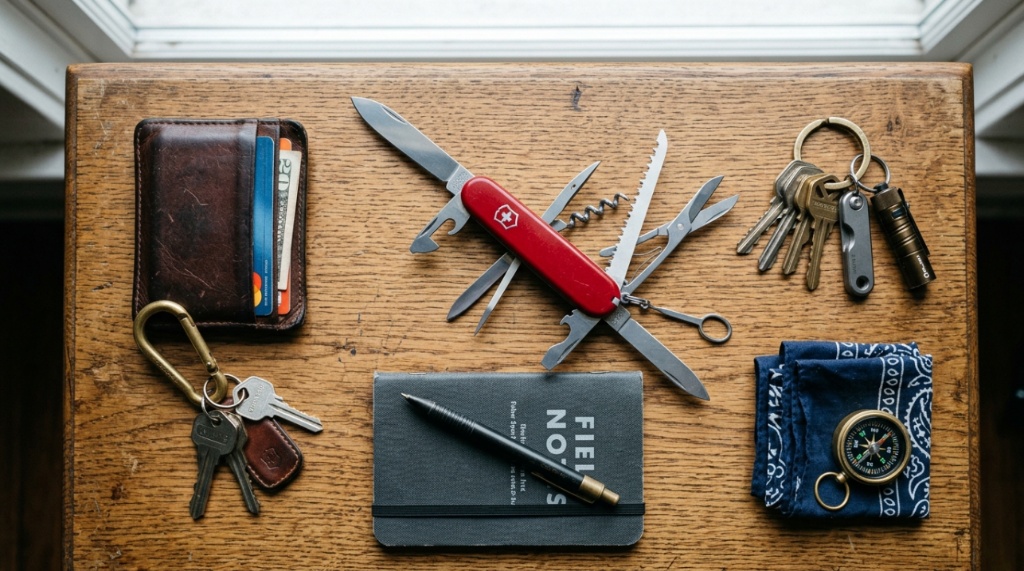
Absolutely, for the majority of civilians, a SAK can replace a multi-tool and a fixed blade. Because it’s slim, you can carry it in the tiny 5th pocket of your jeans—which means it’s always with you—whereas a heavy multi-tool gets left in your bag. The key is selecting one with the right tool density.
When assessing personal “need,” focus on what you did last week. Did you cut zip ties? open boxes? peel fruit? sharpen a pencil? The answer to that question dictates your tool selection. If you rarely need to tighten a chair screw, you don’t need pliers. This reduces the knife to a 2-layer model, which maximizes the “carry it everywhere” value.
Weighing the Weight vs. Complexity
Consider the Cadet (Alox) which weighs 38 grams. You forget it’s in your pocket. The SwissChamp weighs ~130g and is noticeable. Which one will you carry? The easiest one to carry is the one you actually have on you when a package arrives. A simpler, lighter knife has higher daily value because it is accessible.
Adapting to Your “Job” and Environment
If you are an electrician, the Electrician model (has a sheet metal tool) is perfect. If you are a backpacker, the Pioneer with the awl and saw is excellent. The value is in specialization. A one-size-fits-all approach results in compromises that make you leave the knife at home. Choose a model specifically tuned for your main hobby or job—that specificity is the highest value of all.
Frequently Asked Questions
Is it worth spending more on the newer 2024 models?
Unless they fixed a specific tool issue or added a blade shape you prefer, no. The fundamental steel and springs are the same. Changes are often cosmetic (different scale textures). You can save 20% by buying the 2023 version of the same model, and the performance will be identical for 99% of users.
What is the best way to test if I like a knife without buying it?
Visit a local outdoor store or a cutlery shop and handle the display model. Feel the snap of the main blade and open it with one hand (if you do). Pay attention to the width—if it doesn’t fit comfortably in your hand, it won’t be used. This tactile test is more valuable than any spec sheet.
Can I disassemble a Swiss Army Knife for cleaning?
Yes, modern models use screws on some lines (though many are brass pins). For pinned models, soaking in lukewarm soapy water, opening and closing the tools to flush out debris, then oiling the joints will suffice. Over-enthusiastic disassembly can lead to lost springs, so be careful.
Are the “Professional” series (ABS plastic) better than the regular?
ABS plastic scales are more chemical resistant and have a matte texture, ideal for mechanics and industrial work. They are not more durable than Cellidor in terms of cracking but resist solvents better than Cellidor. If you work with oils, the ABS is a good value investment to maintain a good grip.
How do I sharpen a Serrated Blade on a Swiss Army Knife?
Use a ceramic rod that matches the curve of the serration. Hold it flat against the bevel and push it through each scalloped cut, two or three passes. This minimizes material removal and keeps the blade cutting. You should also oil the pivot point after sharpening to remove any metallic dust.
What does “2 layer” or “3 layer” mean in a SAK context?
Each “layer” refers to a central piece of metal with tools pinned between it and the next layer. A 2-layer knife has a main blade on one side and a combination of tools (like scissors and a hook) on the other. More layers mean more tools but also more thickness and weight.
Is the ruler on the side of the scale actually accurate?
Yes, it’s usually a known standard length. However, it is etched into plastic, so it can wear off over time. It’s accurate enough for checking the size of a bolt or marking a 1-inch margin, but for precise architectural work, you should still use a dedicated measuring tape.
Make Your Final Choice Based on Real Value
You now have the framework to evaluate any Swiss Army Knife on merit, not marketing. Stop obsessing over the absolute lowest price and start calculating the cost-per-use, tool density, and the ergonomics that will make you want to carry it. The perfect knife is the one that disappears in your pocket until you need it, then performs flawlessly.
Remember to check the specific clearances and sales on quality models. For personalized recommendations based on your budget and city, including reliable vendors and exact model pricing, explore our curated guide on the best value Swiss Army knife to see concrete examples of price-to-performance champions. Whether you choose a red Cellidor Classic or a rugged Alox Pioneer, make the choice that fits your tasks.