Starting a DIY project is exciting. However, walking into a hardware store for the first time can feel overwhelming. There are hundreds of tools on the shelves, each with a different price tag and purpose. So, how do you know which ones you actually need?
The good news is that you do not need to buy everything at once. Most successful home improvers start small. They build their collection one project at a time. This guide will help you make smart choices from the very beginning.
Why the Right Tools Make All the Difference
Many beginners make the same mistake. They either buy too much or too little. Buying too much wastes money on tools that sit unused. Buying too little means stopping a project halfway to run back to the store.
Therefore, the goal is balance. You want a set of tools that covers a wide range of common tasks. You also want tools that are durable and easy to use. A well-chosen set of hand and power tools will carry you through most home repairs, furniture assembly, and weekend builds.
Additionally, having the right tools keeps you safe. Using a screwdriver as a chisel, for example, is a recipe for injury. Good tools are designed for specific jobs, and they perform those jobs with far less effort and risk.
Understanding What You Will Actually Use
Before spending a single dollar, think about the projects you plan to take on. Are you fixing things around the house? Building shelves? Doing basic car maintenance? Your goals will shape your shopping list.
Most men who are new to DIY tackle similar projects at first. They hang pictures, assemble flat-pack furniture, fix leaky pipes, or build simple outdoor structures. With these projects in mind, you can narrow down exactly what belongs in your toolbox.
The key is to start with versatility. A tool that works well for multiple tasks is worth far more than a specialty tool you use once a year.
The Foundation: Hand Tools You Cannot Ignore
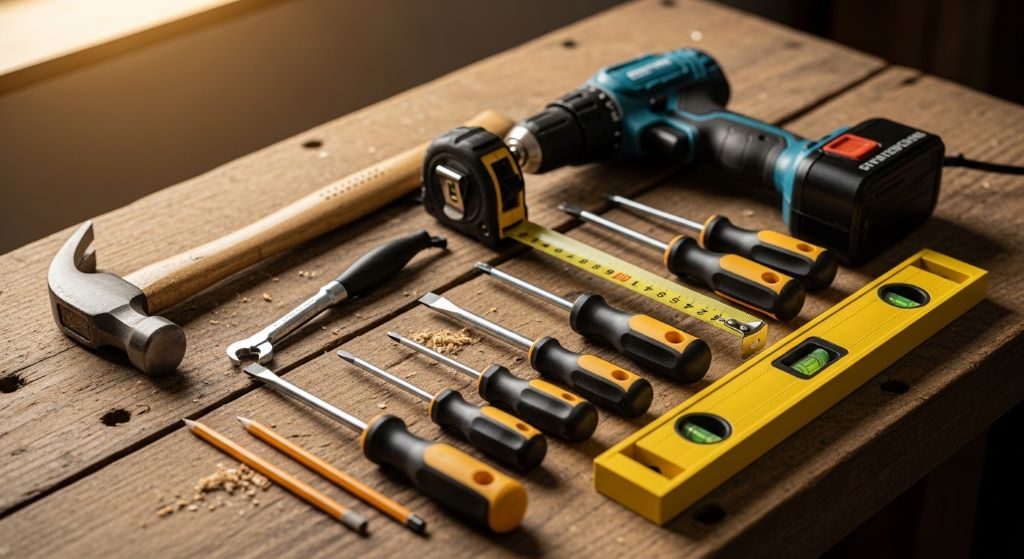
Hand tools are the backbone of any workshop. They are reliable, require no power source, and last for decades when properly cared for. Here are the ones every man should own.
A Quality Hammer
A 16-ounce claw hammer is the standard choice for most tasks. It drives nails, pulls them out, and handles light demolition. Look for one with a fiberglass or rubber handle. These absorb vibration better than wood and are much more comfortable during long use.
Screwdrivers in Multiple Sizes
You will need both flathead and Phillips head screwdrivers. Buy a set that includes several sizes of each type. A magnetic tip is helpful because it holds screws in place while you work. This small feature saves a lot of frustration, especially in tight spaces.
A Tape Measure
Measuring accurately is one of the most important skills in DIY. A 25-foot tape measure is long enough for most home projects. Choose one with a wide, sturdy blade that locks in place and does not buckle when extended.
A Level
Crooked shelves and lopsided frames are the hallmarks of a rushed job. A 24-inch spirit level helps you keep everything straight. It is small enough to carry around easily but long enough to check surfaces with accuracy.
Pliers and an Adjustable Wrench
A pair of needle-nose pliers and a set of slip-joint pliers cover most gripping tasks. Add an adjustable wrench, and you can handle most nuts and bolts without needing a full socket set. These three tools work together beautifully for plumbing fixes and appliance repairs.
A Utility Knife
This simple tool has dozens of uses. You can score drywall, open packaging, cut rope, or trim materials with clean precision. Always keep a few spare blades in your toolbox. A dull blade is more dangerous than a sharp one because it requires more force.
Power Tools: When to Step Up
Hand tools are essential, but power tools help you work faster and tackle bigger jobs. You do not need all of them at once. However, a few are so useful that they deserve a place in any solid DIY starter kit early on.
A Cordless Drill
This is arguably the single most important power tool you can own. A good cordless drill drives screws, bores holes, and handles dozens of tasks that would take twice as long by hand. Look for an 18-volt or 20-volt model with a lithium-ion battery. These hold a charge well and deliver consistent power throughout the battery life.
Make sure the drill comes with a set of drill bits and screwdriver bits. Many kits include these, which makes them excellent value for beginners.
A Circular Saw
Once you are ready to cut lumber, a circular saw is your best friend. It cuts straight lines through wood quickly and accurately. Start with a 7.25-inch blade size, which is the most common option. A laser guide feature is helpful for keeping cuts on track.
However, always respect this tool. A circular saw is powerful and can cause serious injury if misused. Practice on scrap wood first and always wear eye protection.
A Random Orbital Sander
Sanding by hand is exhausting and rarely gives a smooth finish. A random orbital sander does the work in a fraction of the time. It is also gentler on wood surfaces than other types of sanders. This tool is perfect for refinishing furniture, smoothing rough edges, and preparing surfaces for paint.
Building a Basic Tools List That Works for You
At this point, you have a solid idea of what matters. Now it is time to think about how to organize and purchase these tools strategically. A thoughtful basic tools list saves money and prevents regret.
Here are a few principles to follow:
- Buy quality over quantity. A cheap hammer that bends on first use is not a bargain.
- Stick to reputable brands for power tools. Names like DeWalt, Milwaukee, and Makita have earned their reputations.
- Look for combo kits. Many brands sell drill, saw, and battery combos at significant savings.
- Start with the tools you will use in your first project, then expand from there.
- Read reviews before purchasing. Other DIYers are honest about what works and what does not.
Additionally, do not forget safety gear. Safety glasses, work gloves, and ear protection are not optional. They should be considered part of any complete tool collection.
Storage and Organization Matter More Than You Think
A disorganized toolbox slows you down. Worse, it can lead to accidents when sharp tools are left loose in a drawer. Therefore, invest in proper storage from the beginning.
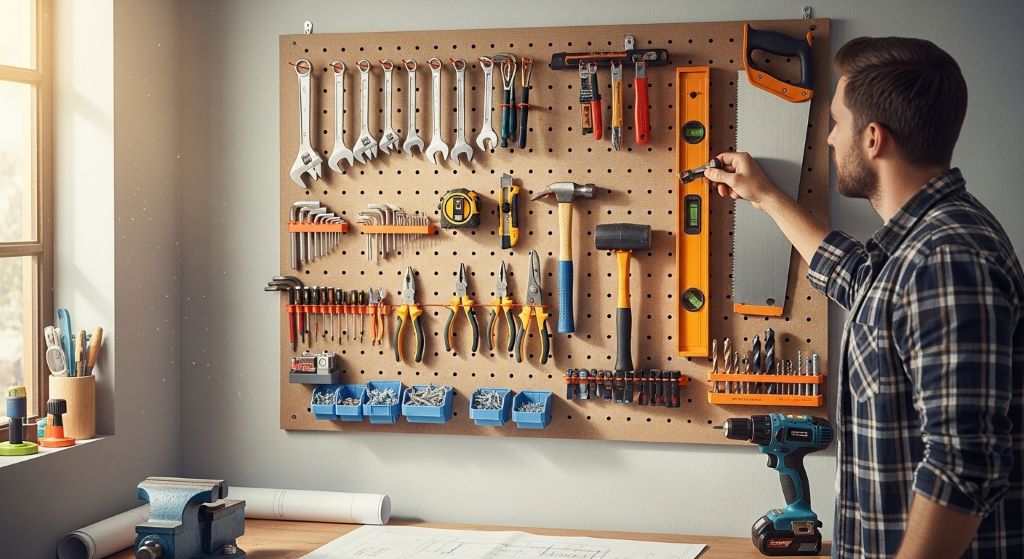
A medium-sized toolbox with a tray works well for hand tools. Wall-mounted pegboards are popular for larger workshops because they keep everything visible and accessible. Label your storage spaces so you always know where things belong.
Returning tools to their proper place after each use is a habit that pays off. You will never waste time hunting for a screwdriver again.
How to Avoid Common Beginner Mistakes
Even with the best tools, beginners often run into trouble. Here are the most common mistakes and how to sidestep them.
Rushing the prep work is one of the biggest errors. Measuring twice before cutting once sounds old-fashioned, but it is absolutely correct. A single measurement error can ruin an entire piece of material.
Not reading instructions is another trap. Whether it is an assembly guide or a tool manual, the instructions exist for good reason. Skipping them often leads to wasted time fixing preventable problems.
Finally, many beginners underestimate how long projects take. Give yourself more time than you think you need. DIY projects almost always reveal surprises along the way.
Conclusion
Choosing the right tools does not have to be complicated. Start with a solid set of hand tools: a hammer, screwdrivers, a tape measure, a level, pliers, and a utility knife. Then add a cordless drill as your first power tool investment.
From there, a circular saw and random orbital sander will open up a wide range of new projects. As you build experience, you will naturally discover which tools your specific hobby or project type demands. The key is to begin with purpose, not impulse.
A well-chosen DIY starter kit and a clear basic tools list will give you the confidence to tackle projects you once thought were beyond your skills. With the right equipment, good habits, and a little patience, there is almost nothing you cannot build, fix, or improve.
Start simple. Stay safe. And enjoy the satisfaction that only comes from making something with your own hands.
Frequently Asked Questions
What is the very first tool a DIY beginner should buy?
A cordless drill is the single most versatile tool for beginners. It drives screws, bores holes, and handles a huge range of tasks. Paired with a good set of bits, it covers more ground than almost any other single purchase.
How much should I expect to spend on a beginner tool set?
A solid starter collection of hand tools typically costs between $100 and $200. Adding a quality cordless drill can bring the total to $250 to $400. Mid-range brands offer the best balance of quality and value for most beginners.
Are cheap tools from discount stores good enough to start with?
For very occasional use, they may be sufficient. However, cheap tools often break under pressure, which can be dangerous. It is generally better to buy fewer tools of higher quality than many tools of poor quality.
Do I need a toolbox or can I store tools in a bag?
Both options work, but a proper toolbox with a tray keeps tools organized and protected from damage. A bag is more portable but offers less protection. Start with a mid-sized metal or durable plastic toolbox for most home use.
Should I buy corded or cordless power tools as a beginner?
Cordless tools are generally the better choice for beginners. They offer freedom of movement, work anywhere, and modern lithium-ion batteries are powerful and long-lasting. Corded tools deliver consistent power but limit where you can work.
Related Topics:
5 Forklift Hazards Due To Bald Tires
What is Cloud Hosting? Cloud Server Hosting Explained