So you’re thinking about getting into mountain biking, but the price tags on most bikes make your wallet wince. You’ve probably stumbled across Dynacraft bikes while scrolling through budget-friendly options, and now you’re wondering: can a sub-$200 mountain bike actually handle real trails? That’s exactly what we’re unpacking today. In this honest dynacraft mountain bike review we’ll break down whether these bikes are genuinely worth your money or if you’d be better off saving up for something sturdier. We’ll cover build quality, real-world performance, who these bikes are actually for, and where they fall short. By the end, you’ll know exactly whether a Dynacraft mountain bike fits your needs or if it’s a shortcut that leads to frustration.
What Exactly Is a Dynacraft Mountain Bike?
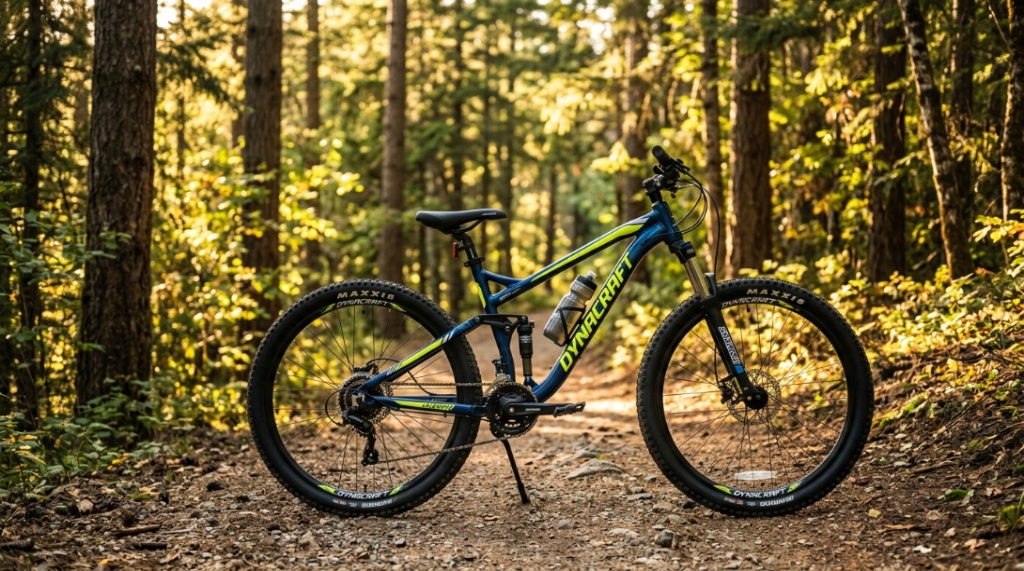
Dynacraft is a budget-friendly bicycle brand that produces entry-level mountain bikes primarily sold through major retailers like Walmart and Amazon. Their mountain bike lineup typically includes models like the Magna Echo Ridge, designed for casual riders and beginners who want an affordable way to explore light trails and neighborhood paths.
These bikes are built with cost-efficiency in mind. You’ll find steel or hi-ten frames, basic suspension forks, and entry-level components throughout. They’re not competing with Trek or Specialized on performance, but they’re not trying to. Dynacraft targets the “I just want to ride” crowd, people who need a functional bike without a $500+ investment.
The brand has been around for decades, primarily known for kids’ bikes and budget adult models. Their mountain bikes sit at the very bottom of the price spectrum, usually ranging from $100 to $250 depending on the model and retailer.
Who Should Actually Buy a Dynacraft Mountain Bike?
Dynacraft mountain bikes are best suited for absolute beginners who want to test the waters of mountain biking without a significant financial commitment. If you’re unsure whether you’ll stick with the sport, spending $150 on a starter bike makes more sense than dropping $800 on something you might abandon after three rides.
They’re also a solid choice for casual riders who plan to stick to paved bike paths, gravel roads, and very light dirt trails. Think weekend family rides, neighborhood cruising, or short jaunts on well-maintained park trails. If your definition of “mountain biking” is more “riding near mountains” than “descending rocky singletrack,” a Dynacraft will serve you fine.
However, if you’re planning to tackle technical trails, steep descents, or ride regularly, you’ll quickly outgrow what these bikes can offer. The components simply aren’t built for sustained abuse.
How Is the Build Quality on Dynacraft Mountain Bikes?
Let’s be straightforward: the build quality reflects the price point. Dynacraft mountain bikes use hi-ten steel frames, which are heavier and less responsive than the aluminum frames found on mid-range bikes. The added weight makes climbing hills noticeably harder and reduces overall agility on the trail.
The suspension forks on most Dynacraft models are basic coil-spring units that provide minimal actual damping. They absorb the initial impact of small bumps but bottom out quickly on anything more substantial. Many experienced riders describe them as “cosmetic suspension” because they add weight without delivering meaningful performance benefits.
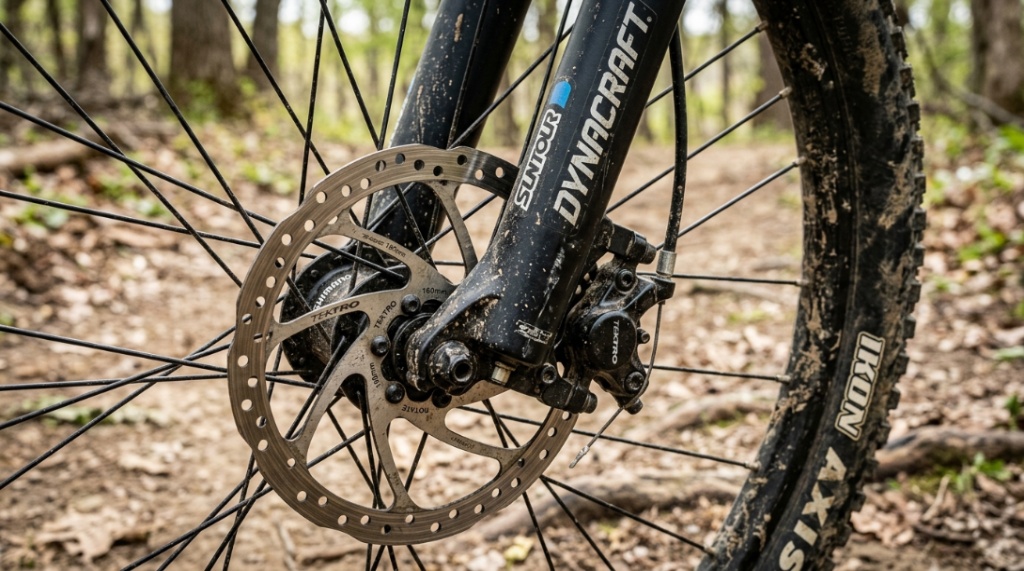
Component quality follows the same pattern. You’ll find entry-level Shimano or generic derailleurs, mechanical disc or rim brakes, and basic wheelsets. These parts function adequately out of the box but may require adjustments or replacements sooner than higher-quality alternatives.
Frame and Fork
- Hi-ten steel frame construction
- Heavier than aluminum alternatives (typically 35-40 lbs)
- Basic coil-spring suspension fork with limited travel
- Frame geometry designed for casual riding, not aggressive trail use
Drivetrain and Brakes
- Entry-level derailleurs (often Shimano Tourney or equivalent)
- Mechanical disc brakes on some models, rim brakes on others
- Adequate stopping power for casual speeds
- May require frequent cable adjustments
What Are the Pros of Buying a Dynacraft Mountain Bike?
Despite the limitations, there are genuine reasons why someone might choose a Dynacraft mountain bike. Here’s where these bikes actually shine:
- Affordability: At $100-$250, they’re among the cheapest mountain bikes you can buy new. For budget-conscious buyers, this is the primary draw.
- Accessibility: Available at Walmart, Amazon, and other major retailers. No need to visit a specialty bike shop or wait for online orders from niche brands.
- Low commitment: If you discover mountain biking isn’t for you, you’re out a fraction of what a mid-range bike would cost.
- Decent for casual use: On flat, smooth trails and paved paths, these bikes perform adequately. They get the job done for light recreational riding.
- Easy assembly: Most models come partially assembled with straightforward instructions. Basic mechanical skills are sufficient for final assembly.
What Are the Cons of Dynacraft Mountain Bikes?
Now for the honest part. These bikes have significant drawbacks that every potential buyer should understand before purchasing:
- Heavy frame: The steel construction adds 5-10 lbs compared to aluminum alternatives, making every hill a workout.
- Poor suspension performance: The front fork offers minimal real damping and adds weight without meaningful benefit.
- Component durability: Entry-level parts wear faster and may need replacement within the first year of regular use.
- Limited upgrade path: The frame and basic components don’t support meaningful upgrades. You can’t easily swap in better parts without exceeding the bike’s value.
- Not trail-ready: These bikes struggle on anything beyond the most basic dirt paths. Rocky, rooty, or steep terrain exposes every weakness.
- Resale value: Budget bikes depreciate quickly. You’ll recover very little if you decide to sell.
How Does Dynacraft Compare to Other Beginner Mountain Bikes?
When shopping in the budget mountain bike category, Dynacraft isn’t your only option. Here’s how it stacks up against common alternatives:
| Feature | Dynacraft | Schwinn | Huffy | Co-op Cycles (REI) |
|---|---|---|---|---|
| Price Range | $100-$250 | $150-$400 | $100-$250 | $500-$700 |
| Frame Material | Hi-ten steel | Steel/Aluminum | Hi-ten steel | Aluminum |
| Suspension | Basic coil | Coil (better quality) | Basic coil | Air spring (adjustable) |
| Best For | Casual/light trails | Light to moderate trails | Casual/light trails | Moderate trails |
| Upgrade Potential | Low | Moderate | Low | High |
Schwinn offers a noticeable step up in component quality at a slightly higher price point. Huffy competes directly with Dynacraft in the ultra-budget category with similar trade-offs. If you can stretch your budget to $500+, REI’s Co-op Cycles line delivers dramatically better performance and longevity.
Can You Actually Trail Ride on a Dynacraft Mountain Bike?
Technically, yes. Practically, it depends entirely on what you mean by “trail riding.” If your trails are flat, well-maintained dirt paths with minimal obstacles, a Dynacraft will handle them without issue. Smooth fire roads, packed gravel, and gentle park trails are well within its capabilities.
But if you’re eyeing trails with rocks, roots, steep climbs, or any technical features, you’ll run into problems fast. The heavy frame saps your energy on climbs, the suspension can’t handle repeated impacts, and the tires lack the grip needed for loose or uneven terrain. You won’t just have a bad time, you could put yourself in a dangerous situation if the bike can’t respond predictably.
Here’s a simple rule: if the trail makes you nervous on a Dynacraft, it’s probably beyond what the bike was designed for. Listen to that instinct.
What Maintenance Does a Dynacraft Mountain Bike Require?
Budget bikes actually require more frequent maintenance than their pricier counterparts. The entry-level components are less precise and wear faster, which means you’ll need to stay on top of basic upkeep.
Here’s a maintenance checklist for Dynacraft owners:
- Check tire pressure weekly: Proper inflation prevents pinch flats and improves ride quality. Most Dynacraft tires perform best at 35-45 PSI.
- Lubricate the chain every 2-4 weeks: A dry chain accelerates wear on the drivetrain. Use a basic bicycle chain lubricant.
- Adjust brakes monthly: Mechanical brakes stretch and loosen over time. Learn to adjust cable tension or visit a shop.
- Inspect bolts and fasteners: Budget bikes can loosen with vibration. Check handlebar, seat, and wheel bolts regularly.
- Clean after muddy rides: Dirt and grime accelerate component wear. A quick rinse and dry goes a long way.
Factor in $50-$100 annually for basic maintenance if you’re doing it yourself, or $100-$200 if you’re relying on a bike shop. This is an often-overlooked cost of budget bikes.
When Should You Upgrade from a Dynacraft Mountain Bike?
Most riders who stick with mountain biking will outgrow a Dynacraft within 6-18 months. The signs that it’s time to upgrade are pretty clear:
- You’re riding more than twice a week and the bike can’t keep up
- You’re tackling trails that exceed the bike’s capabilities
- Components are failing frequently despite regular maintenance
- The weight is noticeably holding back your performance
- You’ve developed specific preferences (better suspension, lighter frame, etc.)
When you reach this point, you’ll have a much clearer idea of what you want in your next bike. That first Dynacraft experience, even with its limitations, teaches you what matters to you as a rider. Many experienced mountain bikers started on budget bikes and used that knowledge to make a smarter second purchase.
Is the Dynacraft Magna Echo Ridge the Best Model for Beginners?
The Magna Echo Ridge is Dynacraft’s most popular mountain bike model and the one most beginners encounter. It comes in 24-inch and 26-inch wheel sizes, making it suitable for teens and adults. The 26-inch version is the standard choice for adult beginners.
It features a steel frame, front suspension fork, 6-speed drivetrain, and mechanical disc brakes on most configurations. The geometry is relaxed and upright, which is comfortable for new riders who aren’t used to aggressive riding positions.
At its typical price point of $150-$200, it’s a reasonable entry point. You’re not getting premium performance, but you’re getting a functional bike that lets you experience mountain biking firsthand. Just go in with realistic expectations about what it can and can’t do.
What Do Real Owners Say About Dynacraft Mountain Bikes?
Owner reviews paint a consistent picture. Most buyers are satisfied with their purchase given the price, but nearly everyone acknowledges the limitations. Common praise includes easy assembly, decent appearance, and adequate performance for casual riding.
The most frequent complaints center on weight, brake performance, and component durability. Several owners report needing to replace cables, adjust derailleurs, or tighten components within the first few weeks. A smaller number report issues with wheel trueness and tire quality out of the box.
The overall sentiment is: “You get what you pay for.” Buyers who understand this going in tend to be happy. Those expecting mid-range performance at a budget price are disappointed.
Final Verdict: Should You Buy a Dynacraft Mountain Bike?
Here’s the bottom line. A Dynacraft mountain bike is worth buying if you’re an absolute beginner testing whether mountain biking is for you, you plan to ride casually on easy terrain, and your budget is firmly under $250. It’s a low-risk way to get started, and it’ll teach you enough about the sport to make a smarter purchase later.
It’s not worth buying if you already know you’re committed to mountain biking, you plan to ride technical trails regularly, or you can stretch your budget to $400-$500 for a significantly better bike. In those cases, the money spent on a Dynacraft is better saved toward something that won’t need replacing in a year.
Think of a Dynacraft as a learning tool, not a long-term solution. It gets you on the trail, helps you figure out what you want, and gives you the experience to make a confident upgrade when the time comes. For that purpose, it does its job.
Frequently Asked Questions
Are Dynacraft mountain bikes good for beginners?
Yes, Dynacraft mountain bikes are a reasonable choice for absolute beginners who want an affordable entry point into the sport. They’re best suited for casual riding on easy trails and paved paths rather than technical terrain.
How much does a Dynacraft mountain bike cost?
Dynacraft mountain bikes typically range from $100 to $250, depending on the model and retailer. The Magna Echo Ridge, their most popular model, usually sells for $150-$200.
Can you ride a Dynacraft mountain bike on real trails?
Dynacraft bikes can handle light, well-maintained dirt trails and gravel paths. They’re not designed for technical trails with rocks, roots, or steep terrain. Stick to easy routes for the best experience.
How heavy is a Dynacraft mountain bike?
Most Dynacraft mountain bikes weigh between 35 and 40 pounds due to their steel frame construction. This is noticeably heavier than aluminum-framed alternatives, which typically weigh 25-30 pounds.
Do Dynacraft mountain bikes require a lot of maintenance?
Budget bikes like Dynacraft require more frequent maintenance than mid-range options. Expect to adjust brakes, lubricate the chain, and check bolts regularly. Budget $50-$100 annually for basic upkeep.
What age is a Dynacraft mountain bike suitable for?
Dynacraft offers mountain bikes in 24-inch and 26-inch wheel sizes. The 24-inch models suit younger teens, while the 26-inch versions are appropriate for older teens and adults.
Is it worth upgrading a Dynacraft mountain bike?
Generally, no. The frame and basic components don’t support meaningful upgrades. If you outgrow a Dynacraft, it’s more cost-effective to save for a better bike rather than investing in upgrades.