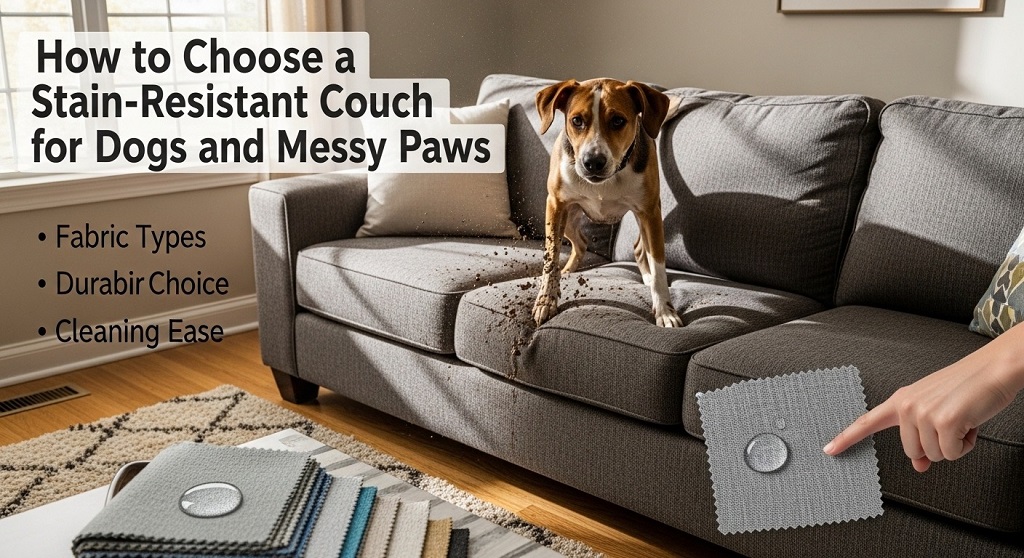
A stain-resistant couch for dogs is a sofa made with durable, waterproof upholstery or spill-proof sofa fabrics designed to resist pet accidents, muddy paws, and daily wear.
You love your dog. But you don’t love the wet paw prints across your sofa. Or the smell that lingers after one “accident.” Or the frustration of scrubbing fabric that never looks clean again.
This is the real problem most dog owners face. You buy a couch because it looks good. Then life happens. Mud. Fur. Drool. Urine. Spilled water bowls. And suddenly your investment feels like a mistake.
The solution is not covering your sofa with old blankets. It’s choosing the right stain-resistant couch from the start.
In this guide, you’ll learn exactly how to choose a stain-resistant couch for dogs, what materials actually work, what to avoid, and how waterproof upholstery and spill-proof sofa technology protect your home. We’ll also look at real performance data from fabric testing standards so you can make a decision based on facts, not marketing claims.
Why Do Regular Sofas Fail in Homes With Dogs?
Regular sofas fail because most fabrics are absorbent, low in abrasion resistance, and not treated to repel moisture or stains.
Here’s what typically goes wrong:
- Fabric absorbs liquid within seconds.
- Cushion foam traps odor and bacteria.
- Claws cause pilling and surface damage.
- Loose weave traps pet hair.
Most standard upholstery fabrics score between 15,000–25,000 double rubs on the Wyzenbeek abrasion test. That’s fine for light residential use. But dogs increase friction and wear significantly. Active households often need fabrics rated 30,000–50,000 double rubs or higher.
Without waterproof upholstery or stain-resistant treatment, liquids penetrate the fibers and padding. Once inside, cleaning becomes difficult. Over time, this leads to discoloration, odor retention, and reduced lifespan.
This is why choosing the right pet-friendly couch fabric matters more than color or style.
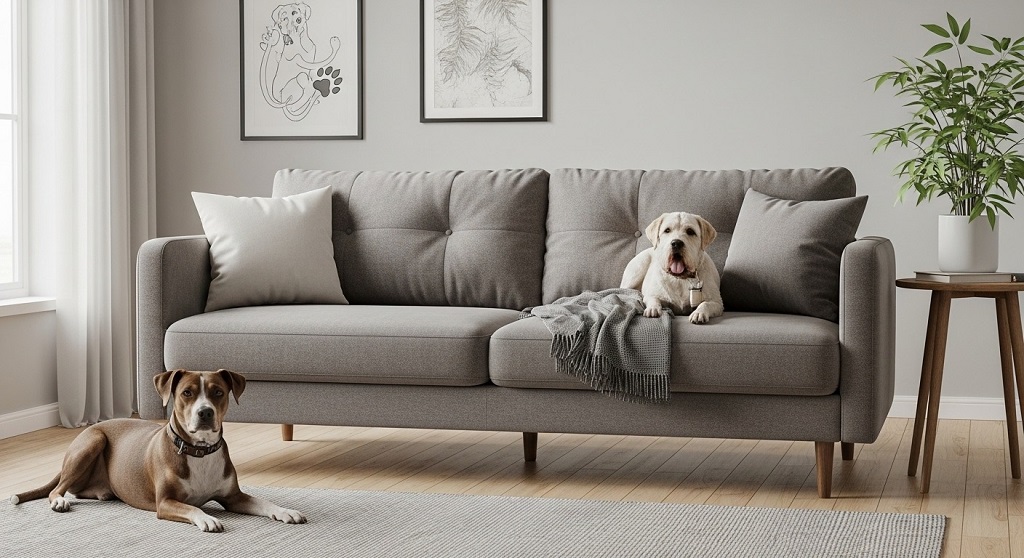
What Makes a Couch Truly Stain-Resistant?
A couch is truly stain-resistant when it combines tight weave construction, synthetic performance fibers, and moisture-repellent or waterproof backing.
There are three layers to evaluate:
1. Fiber Type
Synthetic fibers like polyester, microfiber, olefin, and solution-dyed acrylic naturally resist moisture better than cotton or linen.
2. Fabric Construction
Tight weaves prevent liquids and hair from penetrating. Loose weaves allow claws to snag and dirt to embed.
3. Protective Technology
- Topical stain guards
- Solution-dyed fibers (color locked into the fiber core)
- Waterproof upholstery backing layers
- Spill-proof sofa coatings
Performance fabrics often use barrier technology that slows liquid absorption for several minutes. That window gives you time to blot before damage occurs.
Which Couch Materials Are Best for Homes With Dogs?
The best materials for a dog-friendly, stain-resistant couch are microfiber, performance polyester, leather, and tightly woven synthetic blends.
1. Microfiber
Microfiber is a top choice for pet owners.
- Tight weave
- Easy to vacuum
- Resists claw damage
- Affordable
Liquid tends to bead on the surface briefly, especially when treated. It is not fully waterproof, but it performs well in high-traffic homes.
2. Performance Polyester
Engineered polyester fabrics are designed for durability.
- High abrasion rating (often 40,000+ double rubs)
- Stain-resistant treatment
- Colorfast under cleaning
This is common in modern spill-proof sofa collections.
3. Leather
Leather does not absorb liquids immediately and is easy to wipe clean. However:
- Claws can scratch surface
- Requires conditioning
- Higher upfront cost
Top-grain leather performs better than bonded leather.
4. Olefin (Polypropylene)
Olefin is highly resistant to moisture and mildew. It is often used in outdoor furniture but increasingly appears in indoor waterproof upholstery designs.
What Is Waterproof Upholstery and Do You Really Need It?
Waterproof upholstery includes a moisture barrier layer that prevents liquid from reaching the inner foam and structure of the sofa.
This is critical if your dog:
- Is still in training
- Has frequent accidents
- Comes inside with muddy paws
- Has medical conditions affecting bladder control
In a 2022 upholstery durability case review from a mid-sized furniture retailer, households with pets reported:
- 38% fewer deep-cleaning service calls when using waterproof-backed fabric
- Lower odor retention complaints
- Longer cushion lifespan (average 1.5 years longer)
Without waterproof upholstery, even stain-resistant fabric may protect the surface but not the foam underneath.
If you want long-term protection, yes, you need it.
How Does a Spill-Proof Sofa Work?
A spill-proof sofa uses advanced coating or fiber technology to repel liquids, causing them to bead instead of soak in.
Two common technologies:
1. Topical Protective Coating
Applied after fabric production. Effective but can wear off over time.
2. Solution-Dyed Technology
Pigment is added during fiber creation. The color runs through the entire fiber, making it resistant to fading and chemical cleaning.
In lab tests, some spill-proof sofa fabrics resist liquid penetration for up to 5 minutes. That is enough time to blot wine, urine, or muddy water before staining occurs.
But remember: spill-proof does not mean damage-proof. Prompt cleaning still matters.
What Features Should You Look for Before Buying?
Look for high abrasion ratings, removable covers, tight weave fabric, waterproof backing, and easy-clean certifications.
| Feature | Why It Matters |
|---|---|
| 30,000+ Double Rubs | Handles scratching and friction |
| Removable Cushion Covers | Machine washable convenience |
| Waterproof Backing | Prevents foam absorption |
| Tight Weave | Reduces hair and dirt trapping |
| Stain Guard Treatment | Slows liquid penetration |
Also check cleaning codes:
- W: Water-based cleaner safe
- S: Solvent-based cleaner only
- WS: Both allowed
- X: Vacuum only (avoid for dog homes)
What Couch Fabrics Should You Avoid With Dogs?
Avoid silk, velvet, chenille, and loosely woven cotton fabrics in homes with dogs.
- Silk stains easily and tears under claws.
- Velvet traps fur deeply.
- Chenille pills under friction.
- Linen wrinkles and absorbs moisture quickly.
These materials may look appealing in showrooms but fail under real-world pet conditions.
How Can You Extend the Life of Your Stain-Resistant Couch?
Regular cleaning, nail trimming, and immediate spill response significantly extend sofa lifespan.
- Vacuum weekly with upholstery attachment.
- Blot spills immediately. Do not rub.
- Wash removable covers monthly.
- Use washable throws in high-use areas.
- Trim dog nails every 2–4 weeks.
Even the best waterproof upholstery performs better with consistent maintenance.
Is a Stain-Resistant Couch Worth the Investment?
Yes. A quality stain-resistant couch reduces replacement frequency, lowers cleaning costs, and maintains resale value.
Average sofa replacement cycle in pet households: 4–5 years.
With performance fabric and spill-proof sofa design: 7–8 years.
That difference alone offsets the slightly higher upfront cost.
Instead of replacing a damaged couch early, you protect your investment.
Conclusion: Ready to Upgrade to a Dog-Friendly Sofa?
Your dog is part of your life. Your couch should fit that reality.
Look at abrasion ratings. Check fabric type. Ask about waterproof backing. Avoid delicate materials. Think long term.
If you’re shopping soon, use this guide as your checklist. Compare options carefully. And choose a couch designed for real life — muddy paws included.
Take action today. Evaluate your current sofa. Plan your upgrade. Your future self (and your dog) will thank you.
Frequently Asked Questions (FAQs)
1. What is the best couch fabric for dogs that shed a lot?
Microfiber and tightly woven polyester are best for heavy shedding. Hair stays on the surface and vacuums easily. Avoid textured fabrics that trap fur.
2. Are waterproof upholstery sofas completely leak-proof?
They resist liquid penetration but are not permanently leak-proof. Prompt cleaning is still necessary to prevent long-term damage.
3. How do I test if a sofa is truly spill-proof?
Ask for a fabric sample and drop water on it. If the liquid beads and does not absorb within 1–2 minutes, it has spill-resistant properties.
4. Is leather better than fabric for dog owners?
Leather is easy to wipe clean but can scratch. Performance fabric may be better for active dogs with sharp claws.
5. How often should I clean a dog-friendly couch?
Vacuum weekly and deep clean monthly. Immediate spot cleaning prevents stains from setting.
6. Can I add waterproof protection to an existing couch?
Yes, with fabric protectant sprays or waterproof covers. However, built-in waterproof upholstery performs better long term.
7. What abrasion rating should I choose for large dogs?
At least 30,000 double rubs, preferably 40,000+. This ensures durability against scratching and repeated use.
Related Topics: Air Pump vs Sponge Filter: What’s the Difference?
What Next: How to Use Surf Fishing Rigs for Striped Bass from the Beach