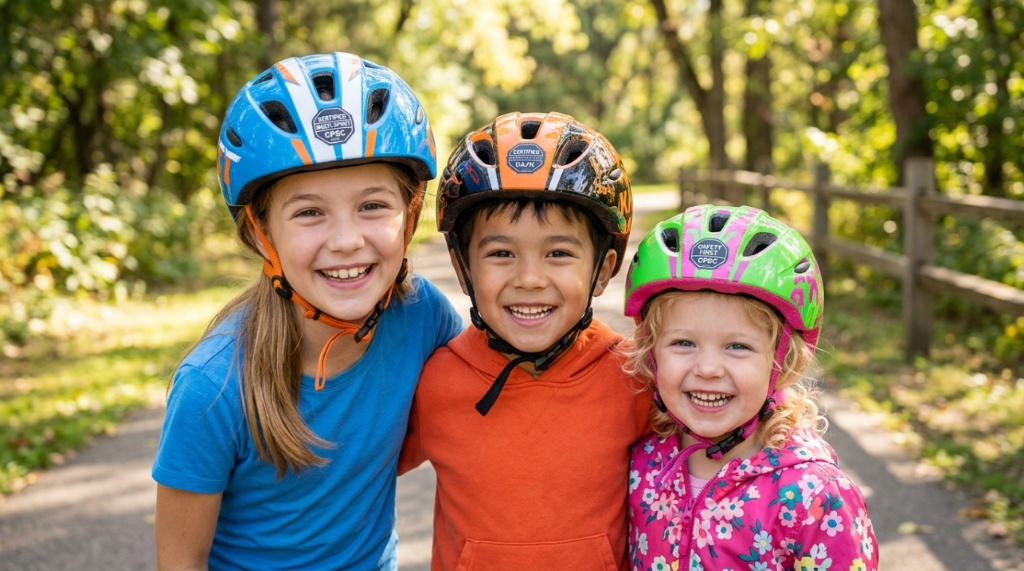
You’ve just watched your child wipe out on their scooter, only to remember they borrowed their bike helmet, which is now slightly cracked. The problem is real: kids outgrow, lose, and misuse gear constantly. You need a single helmet that protects them from bike crashes, skateboard tumbles, and scooter spills without breaking the bank.
The solution is a certified multi-sport helmet designed for versatility. This guide cuts through the marketing noise to show you exactly which best kids multi sport helmets actually pass safety tests and last through rough play. We’ve researched what real parents recommend based on safety, fit, and value to help you make a confident choice today.
What Exactly Is a Kids Multi-Sport Helmet?
A kids multi-sport helmet is a single protective head covering certified for use in multiple activities, typically biking, skateboarding, roller skating, and scooter riding. Unlike single-sport helmets, these pass safety standards for both impact protection and retention systems across different motion types.
These helmets feature a hard outer shell combined with EPS (expanded polystyrene) foam. The key difference is that multi-sport helmets often have a thicker foam layer and softer inner padding to absorb the repeated, lower-impact falls common in skate parks, compared to the single-impact design of bike-specific helmets. They also usually cover more of the back of the head, which is critical for falls backward while skating or scootering.
Multi-Sport vs. Bike-Only vs. Skate-Only Helmets
| Feature | Multi-Sport Helmet | Bike-Only Helmet | Skate-Only Helmet |
|---|---|---|---|
| Shape | Round, full coverage | Elongated, aerodynamic | Round, thick, full coverage |
| Certification | CPSC + ASTM F1492 | CPSC only | ASTM F1492 (often) |
| Impact Type | Single + multiple impacts | Single impact | Multiple impacts |
| Ventilation | Moderate | High | Low to moderate |
| Best For | Biking, skating, scooter | Road cycling only | Skatepark only |
Why Does My Child Need a Multi-Sport Helmet Instead of a Bike Helmet?
A standard bike helmet is designed for one crash and one crash only—the EPS foam compresses permanently upon impact. Multi-sport helmets are built for the multi-impact nature of skateboarding and scootering, where kids fall repeatedly in a single session.
Bike helmets prioritize ventilation and weight reduction because you’re moving forward and generating wind. A skate or scooter fall often involves a direct backward or side impact where the back of the head hits concrete. Multi-sport helmets have a lower, more rounded profile covering the occipital area (back of skull). Using a bike helmet for skateboarding means your child has no protection in the zones where they are most likely to hit. The Consumer Product Safety Commission (CPSC) standard alone does not test for multiple impacts. You need a helmet certified to both CPSC and ASTM F1492, which is the standard for skateboarding. That dual certification is the hallmark of a true multi-sport helmet.
Which Safety Certifications Should I Look For?
Look for a helmet that states it meets both CPSC 1203 (bicycle standard) and ASTM F1492 (skateboard standard) on the packaging or inside the helmet liner. This dual certification is non-negotiable for multi-sport use.
Here is the breakdown of what each certification means:
- CPSC 1203: Federal mandatory standard for all bike helmets sold in the US. Tests for impact attenuation (how well the helmet absorbs shock), strap strength, and retention system stability. This is a single-impact test.
- ASTM F1492: Voluntary standard for skateboard helmets. Tests for multiple impacts in a single area (simulating repeated falls), plus a larger impact zone and a test for the helmet staying on the head during a fall backwards.
- ASTM F1447: Sometimes found on multi-sport helmets. This is the standard for non-motorized wheeled sports like inline skating and scooters. It is similar to CPSC but with slightly different impact parameters.
If you see only CPSC, it is a bike helmet. If you see CPSC + ASTM F1492, you have a true multi-sport helmet suitable for a 6-year-old who switches from bike to scooter to skateboard in one afternoon.
How Do I Measure My Child’s Head for the Correct Fit?
Measure your child’s head circumference using a soft measuring tape placed about one inch above the eyebrows and around the largest part of the back of the head. Use this measurement in centimeters to match with the helmet size chart.
Do not guess based on age. A 5-year-old could have a head circumference anywhere from 48cm to 54cm. Here is a step-by-step process for the perfect fit:
- Measure: Wrap the tape snugly (not tight) around the head, just above the eyebrows. Write down the measurement in centimeters.
- Check the Chart: Almost all helmet manufacturers list sizing in centimeters. Match your measurement to the given range.
- Try It On: Place the helmet on the head. It should sit level, not tilted back or forward. The front edge should be no more than two finger widths above the eyebrows.
- Shake Test: Without buckling the strap, shake your head side to side. If the helmet shifts more than an inch, it is too large.
- Strap Adjustment: The Y-strap (where the two side straps meet) should sit just below the earlobe. Buckle and tighten so only one finger fits between the chin and the strap.
What Are the Best Kids Multi-Sport Helmets in 2025?
The top-rated helmets this year come from Triple Eight, Nutcase, and Retrospec, each offering a balance of safety certifications, fit adjustability, and ventilation designed for active kids. Parents consistently recommend these three brands for durability and value.
Triple Eight Sweatsaver
Best for: Skateboarding and scootering.
Certifications: CPSC, ASTM F1492, EN 1078.
Key Feature: Thick, replaceable sweat liner that also provides extra impact padding.
Pros: Excellent multi-impact protection, comfortable, comes in many sizes (XS/S for small heads).
Cons: Heavier than bike helmets, less ventilation for hot weather.
Nutcase Little Nutty / MIPS
Best for: Biking and scooter riding with MIPS safety.
Certifications: CPSC, ASTM F1492, EN 1078.
Key Feature: MIPS (Multi-directional Impact Protection System) to reduce rotational forces.
Pros: Lightweight, fun graphics, great fit for round heads, easy magnetic buckle.
Cons: More expensive, foam is not as thick as Triple Eight for multiple hits.
Retrospec Scout
Best for: Budget-conscious parents (under $30).
Certifications: CPSC, ASTM F1492.
Key Feature: Adjustable fit dial at the back.
Pros: Affordable, dual certified, good ventilation, cool designs.
Cons: Padding is thinner, may feel less premium after a year of heavy use.
When Should I Replace My Child’s Multi-Sport Helmet?
Replace your child’s multi-sport helmet immediately after any impact where the head hits a hard surface, even if there are no visible cracks. Also replace it every 3 to 5 years from the date of manufacture, regardless of use.
The EPS foam inside the helmet is sacrificial. Once compressed by an impact, it cannot protect again in that same spot. For a skateboard fall, the foam might look fine on the outside but be crunched internally. Common replacement triggers include:
- Visible damage: Cracks in the shell, dents in the foam, or a loose liner.
- Bad smell/rot: Kids sweat heavily. If the interior foam has degraded and smells permanently musty, it is time to replace it.
- Outgrown: If the fit dial is maxed out, or the helmet sits too high above the eyebrows, it is too small to protect correctly.
- Expiration: Check the sticker inside the helmet with the manufacturing date. Sunlight, sweat, and temperature changes degrade the foam over time.
Can a Multi-Sport Helmet Be Used for Snowboarding or Skiing?
No. You should not use a warm-weather multi-sport helmet for snow sports. Multi-sport helmets are not designed for cold temperatures and do not have the insulation or earmuffs required for winter sports.
Snow sports helmets are built to handle different impact scenarios (harder, cold plastic) and must be ASTM F2040 certified. A multi-sport helmet will not keep your child warm enough, and the vents will let cold air rush in. Additionally, winter helmets are designed to fit goggles. If your child snowboards or skis, buy a dedicated winter helmet. If they only bike and skate, stick with the multi-sport helmet.
How Do I Clean and Maintain My Child’s Helmet?
Hand wash the outer shell with mild soap and warm water using a soft cloth. Remove the inner padding (if removable) and wash it in cold water, then air dry completely before reinserting. Never submerge the entire helmet.
Proper maintenance extends the life of the helmet and prevents bacterial buildup from sweat. Follow these rules:
- Do not use harsh chemicals: Avoid bleach, solvents, or abrasive cleaners. They can damage the EPS foam and the outer shell’s integrity.
- Air dry only: Do not place the helmet on a radiator, in direct sunlight, or in a dryer. Heat can melt or soften the EPS foam.
- Store properly: Keep the helmet in a cool, dry place out of direct sunlight. Avoid leaving it in a hot car trunk in summer.
- Remove padding: Most quality multi-sport helmets have removable, washable pads. Wash them monthly if your child plays hard.
Which Features Matter Most for Active Kids?
For active children, the most important features are a dial-fit adjustment system, adequate ventilation (8+ vents), and a chin strap with a quick-release (preferably magnetic) buckle.
Kids dislike wearing uncomfortable gear. If the helmet is too hot, itchy, or hard to buckle, they will fight you. Here is what separates a “parent-recommended” helmet from a shelf-sitter:
- Dial Fit System: A rear dial (like on a bike helmet) allows you to tighten or loosen the fit easily for a custom fit over the course of a year as the child grows.
- Magnetic Buckle: Fidlock or similar magnetic buckles are a game-changer. Kids can fasten them with one hand, even with gloves. No more pinched necks.
- Removable, Washable Liners: Kids sweat and drool. A liner that can be tossed in the washing machine keeps the helmet fresh and reduces the “smelly helmet” complaint.
- Weight: A heavy helmet (over 300g for a toddler) causes neck fatigue. Look for light EPS foam construction.
- Ventilation: At least 10 vents are ideal for biking in the summer. Fewer vents mean more protection for skating, but less airflow.
Is It Worth Paying Extra for MIPS Technology?
Yes, if your budget allows. MIPS (Multi-directional Impact Protection System) adds a low-friction layer between the outer shell and the foam liner that allows the head to slide slightly upon angled impact, reducing rotational forces to the brain.
Skateboarding and scooter falls often involve a twisted motion as the kid goes down. MIPS is designed specifically to address that type of injury. However, MIPS adds $15–$30 to the cost. For a child who only rides a balance bike on grass, it is not critical. For a child who aggressively skates or rides a scooter on pavement, the extra protection is a smart investment. All major helmet brands now offer MIPS versions of their popular models. If you buy a Nutcase or a Triple Eight Sweatsaver with MIPS, you are getting the highest safety standard currently available for recreational wheeled sports.
What Size Helmet Do I Buy for a Toddler vs. a Big Kid?
Toddlers (ages 1–3) typically need an XS or XXS size with a circumference of 47–52 cm. Big kids (ages 8–12) often need a Medium (54–58 cm). Always measure and buy the size that matches the head circumference, not the child’s age.
A common mistake is buying a size too large so the child can “grow into it.” A loose helmet shifts in a crash, exposing the forehead or rolling off the head entirely. Here is a general size guide based on measurements:
- XXS/XS (47–51 cm): Toddlers and small preschoolers (ages 1–4).
- S (51–53 cm): Preschoolers and early elementary (ages 3–6).
- M (54–56 cm): Elementary to preteen (ages 6–10).
- L (57–59 cm): Preteen to teen (ages 10+).
Frequently Asked Questions
Can I use a multi-sport helmet for a toddler balance bike?
Yes. A balance bike is essentially a low-speed bicycle. A multi-sport helmet with CPSC certification is perfectly safe for a toddler on a balance bike, provided the helmet fits snugly and sits level on the head.
How do I know if a helmet is dual certified?
Check the inside sticker or the packaging. Look for the specific text “CPSC 1203” and “ASTM F1492.” If you see only one, the helmet is not multi-sport certified.
Are cheap multi-sport helmets safe?
Yes, if they carry CPSC and ASTM F1492 certification. Budget helmets like Retrospec Scout pass the same impact tests as expensive ones. The difference is usually in comfort features, padding durability, and weight, not raw safety performance.
Can my child wear a multi-sport helmet for hockey?
No. Hockey helmets must be certified for ice hockey (CSA Z262.1 or HECC). Multi-sport helmets do not protect against the high, sharp impacts of a hockey puck or skate blade.
Why does my child’s helmet smell so bad?
Bacteria from sweat builds up in the foam and padding. Remove and wash the pads regularly. If the foam itself smells, use a gentle spray of diluted vinegar and water, let it air dry, and refrain from using the helmet for 24 hours.
Should I buy a helmet with a visor?
A visor can help block sun glare, but it is not necessary for safety. On a skateboard, a visor can sometimes snag on ramps or rails. For general multi-sport use, a visor is fine for biking but not essential for skating.
How tight should the chin strap be?
Tight enough that you can slip one finger under the strap, but no more. The strap should lie flat against the chin. A loose strap allows the helmet to roll off during a fall.
While multi-sport certification ensures your child is protected across biking and rollerblading, skateboarding introduces unique impact angles. If you are wondering how specialized industrial safety crossover equipment translates to extreme sports, read our deep dive: Does Fall Protection Gear Work for Skateboarders?
Your Child’s Safety Starts with the Right Fit
Choosing the right helmet is the single most important gear decision you will make for your child’s wheeled activities. The best kids multi sport helmets balance certified protection, proper fit, and features that your child will actually tolerate wearing. Measure their head, look for dual CPSC and ASTM F1492 certification, and prioritize a dial fit system and magnetic buckle for daily ease of use. Whether you opt for the rugged protection of the Triple Eight Sweatsaver, the lightweight MIPS safety of the Nutcase, or the unbeatable value of the Retrospec Scout, you are giving your child the freedom to ride, skate, and scoot with reduced risk. Do not wait until after a crash. Make the swap today and enjoy peace of mind every time your child heads out the door.