
You’re standing on the bank, the wind is perfect, and your target is a shadow beneath the water. You cast, and instead of a silky release, you get a backlash so violent it looks like a bird’s nest exploded. We have all been there. The difference between a frustrating day and a trophy catch often comes down to one thing: the reel’s casting performance. Finding the best fishing reels smooth casting reel is not just about throwing further; it is about consistency, control, and actually enjoying your time on the water. This guide cuts through the marketing hype and gives you the practical knowledge to buy the right reel this year.
What Makes a Fishing Reel Cast Smoothly?
Cast smoothness is a synergy of engineering and materials. It comes down to the internal friction of the spool rotation and the line’s ability to leave the spool without resistance. A smooth casting reel minimizes energy loss during the cast, allowing your lure to fly with less effort.
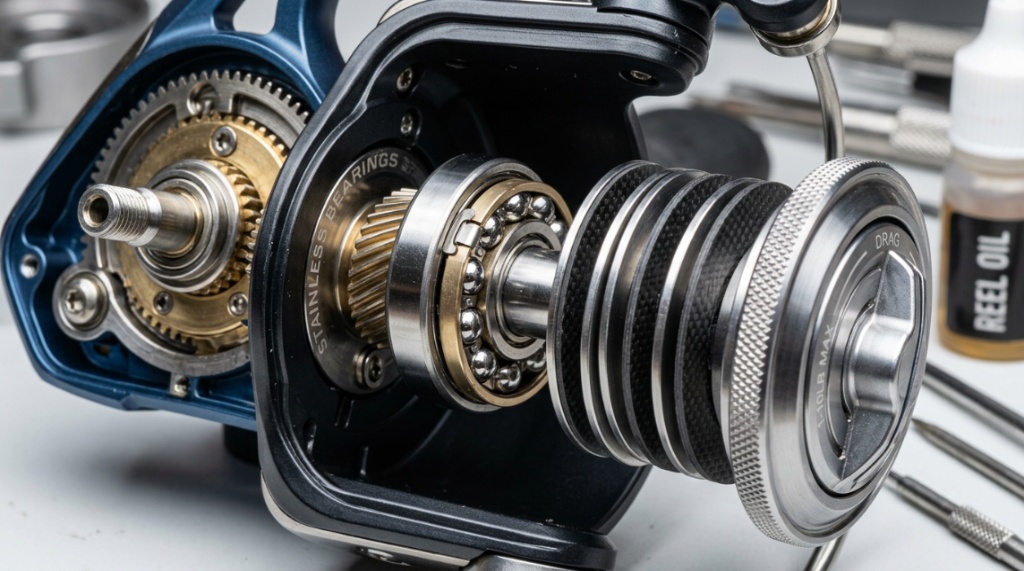
The primary culprit for poor casting is friction within the spool shaft and bearings. This friction is caused by poor tolerances, low-quality lubricants, or worn components. A second critical factor is the spool design itself, including the spool lip angle and weight.
The Role of Bearings
Most anglers obsess over bearing count. However, the quality of the bearing matters far more than the quantity. A reel with three high-quality, shielded stainless-steel bearings will cast smoother than a reel with ten cheap, gritty bearings. Look for reels that specifically mention “corrosion-resistant” or “shielded” bearings, as grit and water are the enemies of a smooth spin.
Why Does Spool Weight Matter for Casting Distance?
A lighter spool requires less force to start spinning. This is a fundamental law of physics known as inertia. When you cast, you must overcome the weight of the spool to get it rotating. A heavier spool acts like a flywheel, requiring more energy to start, which reduces distance and increases thumb fatigue.
For finesse fishing with lightweight lures (under 1/4 ounce), a lightweight, ported aluminum spool is non-negotiable. Heavier spools are better suited for heavy lures or presentations where you need heavy line capacity, but they will never cast a light lure as well as their lighter counterparts.
Which Reel Type Casts Better: Baitcaster or Spinning?
This is the most common debate in fishing. Spinning reels are generally easier to cast with lighter lures and are far less prone to backlash. Baitcasters, however, offer greater accuracy and distance once mastered, particularly with heavier lures.
For beginners or those using lures under 3/8 ounce, a spinning reel is the best fishing reels smooth casting reel choice due to its low friction design and lack of spool tension control. For experienced anglers throwing heavy crankbaits or jigs, a baitcaster’s direct spool control provides unmatched accuracy. Neither is “better” overall; the best choice depends on the specific technique you are using.
How Do Magnetic and Centrifugal Braking Systems Work?
Braking systems prevent overrun (backlash) on baitcasting reels by applying friction to the spool. Magnetic brakes use magnets to create a non-contact drag field. Centrifugal brakes use physical brake blocks that expand outward against a brake ring. Both systems achieve the same goal but with different control methods.
Magnetic brakes are easier to adjust on the fly. You simply turn a dial. Centrifugal brakes require you to open the side plate and move pins or weights manually. For most freshwater anglers, a reel with a user-adjustable magnetic brake is the most versatile option, allowing for rapid tuning when changing lure weights.
Can a Cheap Reel Ever Cast Smoothly?
Yes, a budget reel can cast smoothly, but it requires more maintenance and will not last as long as a premium reel. The difference lies in tolerances. A cheap reel might cast well for the first three trips, but as dust and water enter the system, the cheap bushings and bearings degrade rapidly.
However, there are a few “budget heroes” in the $60–$90 range that use decent aluminum frames and stainless steel bearings. The key to keeping a budget reel smooth is to disassemble it once a month and apply a thin reel oil to the spool shaft bearings and a light grease to the gears. Never over-lubricate, as excess oil attracts dirt and slows the spool down.
| Feature | Budget Reel ($50) | Mid-Range Reel ($150) | Premium Reel ($300+) |
|---|---|---|---|
| Bearing Quality | Unshielded / Gritty | Shielded / Smooth | Corrosion Proof / Ultralight |
| Spool Weight | Heavy/Steel | Ported Aluminum | Super-Ported / Titanium |
| Braking System | Simple Centrifugal | Adjustable Mag | Hybrid / Digital |
| Smoothness (Year 1) | Fair | Good | Excellent |
| Smoothness (Year 3) | Poor | Good (with care) | Excellent |
What Are the Best Gears for a Smooth Retrieve?
Gear ratio is about retrieval speed, but gear quality is about smoothness. Smooth reels use carbon fiber, brass, or high-grade aluminum gears. Carbon fiber and brass gears mesh silently and resist wear much better than cheap zinc alloy gears that feel “grindy.”
For general casting, a gear ratio between 6.2:1 and 7.1:1 is a sweet spot. This provides a good balance of torque for fighting fish and speed for line pick-up. However, the smoothness of the retrieve is heavily influenced by the gear material. If you feel a clicking or vibration when reeling, the gears are either damaged or made of inferior materials.
How to Test a Reel for Casting Smoothness Before Buying
You can evaluate a reel’s potential without ever spooling it with line. Perform these three simple tests in the store. First, hold the reel horizontally and spin the spool with your thumb. A good reel should spin freely for 15–20 seconds if the brakes are off. Second, listen for noise. Spin the handle. If you hear clicks or scraping, the gears are poor. Third, check the handle for play. There should be zero wobble in the handle when you wiggle it.
- The Spin Test: Engage the spool, then disengage it. Flick the spool with your finger. It should spin smoothly without wobbling.
- The Handle Test: Crank the handle forward and backward. It should be tight with no slop.
- The Brake Test: If a baitcaster, turn the brake dial. You should feel a distinct increase in resistance.
These tests will immediately weed out poorly manufactured reels. Don’t be shy about doing this at a tackle shop.
Which Line Type Improves Casting Distance and Smoothness?
The line on your spool significantly impacts casting performance. Braided line is the slipperiest and casts the furthest, but it has zero stretch. Fluorocarbon sinks and is stiff, causing more friction on the spool and guides. Monofilament is soft and forgiving, providing good balance for most anglers.
For the smoothest casting experience with a spinning reel, use monofilament or copolymer line. For baitcasters, a braid-to-fluorocarbon leader is the ultimate setup for distance and stealth. Avoid filling a spool completely full; leave about 1/8 inch of the spool lip exposed to prevent wind knots.
Is a Shallow Spool Better for Smooth Casts?
Absolutely. A shallow spool reduces the mass of the line and the distance the line must travel to leave the spool. This dramatically reduces friction and inertia. Shallow spools are the secret weapon of serious finesse anglers.
When you cast with a full deep spool, the line must jump over a tall spool lip and resist the friction of the line against itself. A shallow spool minimizes this. If you primarily fish with light lines (6–12 lb test), a shallow spool version of your favorite reel is almost always the best fishing reels smooth casting reel option. You trade line capacity for superior casting performance. When selecting a reel that can handle heavy lines and heavy targets, you also need to think about your presentation strategy. If you plan to head down to the shoreline, learning how to Rig Live and Cut Bait for Surf Fishing is just as critical as having a smooth drag system.
How to Maintain Your Reel for Peak Casting Performance
Smoothness is not a purchase; it is a practice. You must maintain your reel. The most common mistake is using too much grease. Grease is for gears. Oil is for bearings. Putting grease on the spool shaft bearings is like putting mud on a hockey puck. It stops momentum.
The Three-Step Maintenance Routine
- After Every Trip: Rinse the reel with fresh water to remove salt and dirt. Dry it with a towel.
- Monthly: Remove the side plate. Apply one drop of high-quality reel oil to the spool shaft bearing. Spin the spool to distribute it.
- Yearly: Perform a full teardown. Clean all parts with lighter fluid or a degreaser. Regrease the gears and oil the bearings.
This simple routine will keep a $100 reel casting like a $300 reel for years. Neglect it, and a $300 reel will cast like a $20 reel within a season.
Why Frame Rigidity Affects Your Cast
A flexing frame absorbs the energy you are trying to transfer to the lure. When you cast, the reel frame supports the spool. If the frame twists or bends, the spool’s alignment changes, creating friction that kills distance and causes inconsistent releases.
Aluminum and magnesium frames are rigid. Graphite and composite frames are lighter but flex. For heavy lures or powerful casting motions, always choose a fully aluminum framed reel. This rigidity ensures that the spool and pinion gear stay perfectly aligned, delivering that effortless, silk-smooth cast every time.
Which Features Actually Matter for Saltwater Smoothness?
Saltwater is the enemy of smooth casting. Corrosion on the spool shaft or handle makes a reel feel rough. If you fish in saltwater, prioritize features like a sealed carbon drag system and a one-piece frame.
The most important feature for saltwater smoothness is a sealed bearing system. Look for reels that use “Crush Washers” or “X-Protect” technologies. These prevent salt crystals from forming inside the bearings. Secondly, the spool should be made of anodized aluminum or machined steel to resist pitting. A saltwater reel that casts smoothly is a reel that has been engineered to reject the environment, not just fight it.
Real-World Review: What to Look For
Don’t just read the star rating. Read the specific complaints. If multiple reviews mention “rough casting” or “grindy feel” after three months, that is a red flag about build quality. Conversely, look for reviews that mention “smooth out of the box” and “glass-smooth retrieve.”
For a trusted, data-driven comparison of top models tested for speed, drag, and overall durability, check out our detailed analysis of the best fishing reels smooth casting reel options on the market today. This resource provides real testing data you can rely on.
Frequently Asked Questions
How often should I oil my reel bearings for smooth casting?
You should oil your spool shaft bearings every 3–4 fishing trips. Use only one drop per bearing. Over-oiling creates drag. If you fish in dirty water, increase this frequency to every trip.
Does a higher bearing count mean a smoother cast?
No. Bearing quality is far more important than quantity. A reel with 4 high-quality, shielded bearings will cast smoother than a reel with 12 cheap, unshielded bearings. High counts are often just a marketing number.
Can a baitcaster be as smooth as a spinning reel?
For heavy lures, yes. For light lures (under 3/8 oz), a spinning reel is inherently smoother because the line does not have to overcome the inertia of a rotating spool. Baitcasters require more thumb control.
What is the best lubricant for casting reels?
Use a lightweight synthetic reel oil (like Shimano or Abu Garcia brand oil) on the spool bearings. Use a light grease (like Cal’s or Yamaha) on the main gear and pinion. Never use WD-40; it will displace oil and dry out the bearings.
Should I spool my reel to the absolute top for distance?
No. Fill the spool to within 1/8 inch of the rim. Overfilling causes loops to jump off the spool, creating wind knots and friction. Underfilling reduces casting distance because the line must travel further over the spool lip.
Why does my reel feel “rough” after winter storage?
The old grease has likely hardened or separated. Perform a full teardown, clean all old grease and oil with a degreaser, and re-lubricate with fresh oil and grease. This will restore the smooth feel instantly.
Is a magnesium frame better than aluminum for casting?
Magnesium is lighter but less rigid than aluminum. For most freshwater fishing, aluminum provides better rigidity for smooth casting. Magnesium is great for reducing fatigue on all-day trips but offers no casting performance advantage.
Conclusion
Choosing a reel for smooth casting is not about finding a magic product. It is about understanding how bearings, spool weight, frame rigidity, line choice, and maintenance work together. You now know to look for a reel with a lightweight spool, high-quality shielded bearings, and a rigid metal frame. You know that a $60 reel can feel like a dream if cleaned properly, and a $300 reel will feel like trash if neglected. Your next purchase should be informed by these principles, not by flashy packaging. Take the knowledge you have gained here, test your reels, and invest in the maintenance that keeps them performing at their peak. The fish are waiting. Make that cast count.