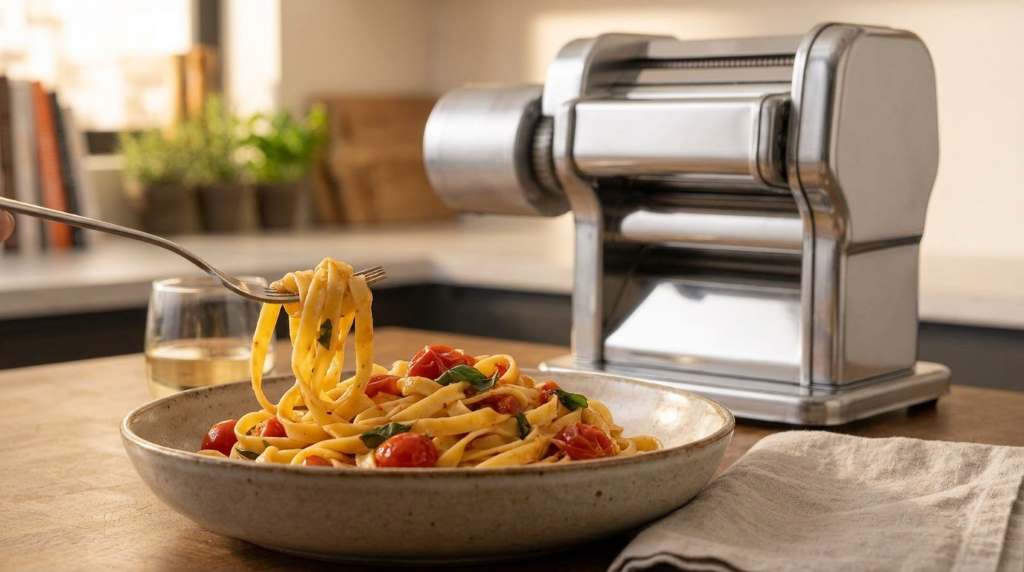
The Newhai 550W is a capable stainless steel pasta maker for home chefs who want faster sheet rolling and noodle cutting. Its 550W motor, 0.3 to 5mm thickness range, and 2mm/6mm cutters offer strong versatility, although heat management limits extended batches.
Fresh pasta remains a practical kitchen upgrade, especially when texture and ingredient control matter. A well-built durable pasta machine can also reduce repetitive hand rolling. This Newhai model uses a 550W motor and a 200mm roller, giving home cooks substantial capacity without industrial-scale complexity.
Key Takeaways
- Best feature: The 2-in-1 design rolls dough and cuts noodles without changing the main workflow.
- Build quality: The 304 stainless steel construction feels substantial and suits frequent home use.
- Thickness control: The 0.3 to 5mm range supports thin noodles, sheets, and thicker dough preparations.
- Main limitation: Extended continuous operation can generate significant motor heat.
- Blade flexibility: The standard setup provides 2mm and 6mm cutting widths.
- Best buyer: Home chefs making fresh pasta regularly, rather than occasional users seeking compact storage.
What Makes the Newhai 550W Different?
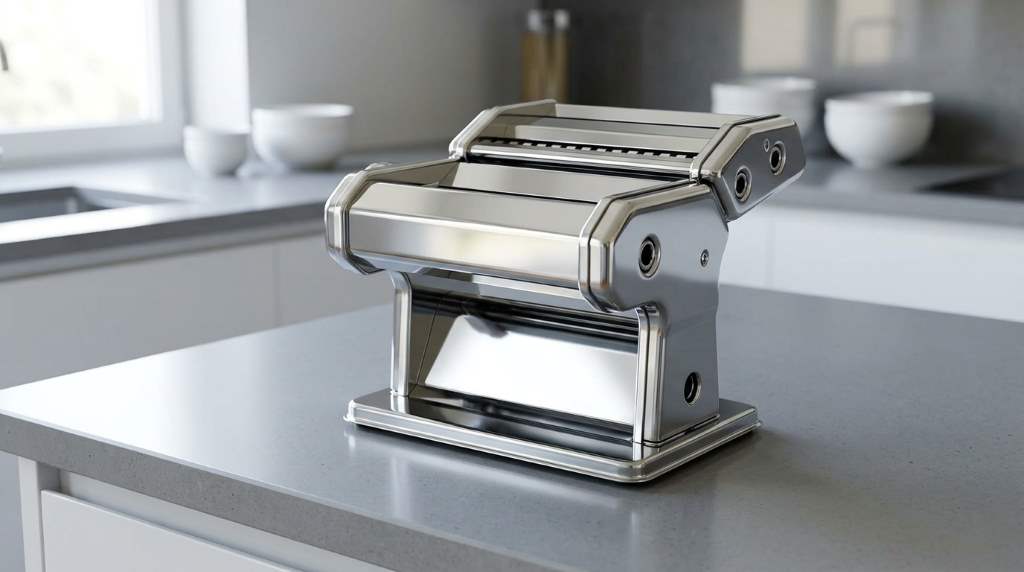
The Newhai 550W takes a more substantial approach than lightweight countertop pasta rollers. Its 304 stainless steel body, 550W motor, and 7.8-inch roller create a distinctly heavy-duty setup.
However, that heavier construction changes how you should plan kitchen use. The machine weighs about 44 pounds, so you should choose a permanent or semi-permanent workspace before buying.
Interestingly, kitchen organization also affects how often you will actually use bulky appliances. A thoughtfully arranged maximize kitchen digital calendar system can help coordinate meal preparation, batch cooking, and cleanup.
The Core Design Philosophy
Newhai essentially combines two repetitive pasta-making stages into one powered workflow. First, the rollers flatten prepared dough, then the cutting section converts sheets into noodles.
Therefore, you spend less time manually turning handles and coordinating separate equipment. That advantage becomes particularly noticeable when preparing several servings for family meals or dinner parties.
Newhai 550W Specifications at a Glance
The machine offers a straightforward specification set that explains its appeal to serious home cooks. Its 550W motor drives a 200mm roller, while the adjustable thickness range reaches from 0.3mm through 5mm.
| Specification | Newhai 550W |
|---|---|
| Motor power | 550W |
| Construction | 304 food-grade stainless steel |
| Roller width | 200mm / 7.8 inches |
| Thickness range | 0.3mm to 5mm |
| Standard cutters | 2mm and 6mm |
| Functions | Dough pressing and noodle cutting |
| Approximate weight | 44 pounds |
The combination favors versatility rather than portability. Consequently, the machine makes more sense for cooks who value repeated use over quick cabinet storage.
The standard 2mm and 6mm cutters cover two useful noodle profiles, but they do not replicate every traditional pasta shape. You should therefore consider your preferred recipes before treating the machine as an all-purpose pasta solution.
How Well Does the 550W Motor Perform?
The 550W motor gives this machine considerably more mechanical assistance than manual pasta rollers. It handles standard pasta dough efficiently when you prepare dough with appropriate hydration and consistency.
Nevertheless, power does not eliminate the need for sensible operating cycles. Extended heavy batches can increase motor temperature, and available product information warns about overheating during prolonged use.
For home cooking, that limitation matters less than it would in a restaurant. You can roll a batch, cut it, pause briefly, and continue without demanding continuous commercial production.
What Dough Works Best?
Start with a smooth dough that feels firm but remains workable under pressure. Avoid pushing extremely dry dough through the rollers simply because the motor appears powerful enough.
Instead, knead thoroughly and allow the dough to rest before rolling. This approach reduces mechanical resistance while producing smoother sheets and cleaner cuts.
Whole-wheat dough deserves additional attention because its texture can create more resistance. Use smaller portions and allow additional cooling time when processing dense mixtures.
Rolling and Cutting Performance
The adjustable 0.3 to 5mm thickness range gives the Newhai a useful advantage for home experimentation. You can gradually reduce thickness instead of forcing one thick piece through a narrow final setting.
That gradual approach also improves sheet consistency. Start thicker, fold when appropriate, and progressively reduce the setting until the dough reaches your target texture.
The 2mm cutter suits finer noodles, while the 6mm cutter creates broader strands. Reviews and product information also indicate that some users experience uneven separation, so dough consistency remains important.
What Can You Make?
You can use the Newhai for fresh noodles, pasta sheets, and several flat noodle preparations. Its thickness adjustment also supports dough applications that require controlled sheet thickness.
- Fine noodles: Use the 2mm cutter for thinner strands.
- Wide noodles: Choose the 6mm cutter for broader pasta.
- Pasta sheets: Use the rollers without relying on the cutters.
- Dumpling wrappers: Experiment with suitable thickness settings and smaller dough portions.
However, the machine does not automatically produce every pasta shape. If you regularly cook ravioli, shells, or tube-shaped pasta, you may need separate equipment.
Stainless Steel Construction: Durable or Just Heavy?
The 304 stainless steel construction gives the Newhai a solid, professional appearance. More importantly, stainless steel resists corrosion and simplifies routine surface cleaning when you handle the machine correctly.
Still, durability involves more than the outer shell. Rollers, belts, gears, bearings, cutters, and motor ventilation all influence long-term reliability.
Some marketplace feedback reports uneven roller movement and inconsistent cutter separation. Therefore, buyers should evaluate the complete mechanical system rather than assuming stainless steel guarantees flawless longevity.
Kitchen aesthetics can also influence where you keep a machine this substantial. If you prefer uninterrupted counters, handleless kitchen designs pros can offer useful organization ideas.
Cleaning and Maintenance: The Part Home Chefs Shouldn’t Ignore
Cleaning requires more discipline than simply wiping the visible stainless steel surfaces. Flour and dough particles can collect around rollers, cutters, seams, and mechanical areas.
Most importantly, keep water away from the motor and electrical components. The available product review specifically warns that the motor is not waterproof, making careful cleaning essential.
After each session, remove loose flour before wiping accessible surfaces. Let damp components dry completely before storing or operating the machine again.
A Practical Cleaning Routine
- Step 1: Switch off and unplug the machine before cleaning.
- Step 2: Remove loose flour and dried dough from accessible areas.
- Step 3: Wipe stainless steel surfaces using a suitable damp cloth.
- Step 4: Keep moisture away from the motor housing and electrical areas.
- Step 5: Dry every cleaned surface before your next batch.
Never treat the machine like a dishwasher-safe countertop appliance unless your specific manual explicitly permits that method. A cautious cleaning routine protects both food quality and mechanical components.
Heat Management: The Most Important Limitation
The biggest concern involves sustained operation rather than ordinary home batches. Available reviews describe noticeable heat buildup during longer runs, with some reports placing overheating around ten minutes.
That does not make the machine unsuitable for home kitchens. Instead, it means you should organize production around short cycles and cooling periods.
For example, prepare all dough portions before switching on the machine. Then roll and cut one batch, pause when necessary, and continue after the motor cools.
How to Reduce Motor Stress
First, avoid forcing oversized dough portions through the rollers. Smaller portions create a more controlled workflow and reduce unnecessary resistance.
Next, maintain adequate ventilation around the motor housing. Finally, stop the machine if you notice unusual heat, odor, noise, or performance changes.
This approach protects the motor while giving you enough productivity for normal household cooking. It also prevents enthusiasm from turning a useful appliance into an overheated appliance.
Is the Newhai 550W Easy for Beginners?
The basic operating concept remains approachable because the machine handles the physical rolling and cutting. Beginners still need to learn dough hydration, portion sizing, thickness control, and proper resting techniques.
Fortunately, those skills improve quickly with repetition. Once you understand how your dough behaves, the machine becomes considerably more predictable.
Start with a familiar egg pasta recipe rather than experimenting with dense specialty dough immediately. After mastering standard dough, gradually test whole wheat and alternative flour blends.
Newhai 550W Pros and Cons
Pros: The machine offers strong motor power, substantial stainless steel construction, useful thickness adjustment, and convenient two-stage processing.
Cons: Its heavy body limits portability, the cutter selection remains narrow, and prolonged operation can create excessive heat.
Some user feedback also raises concerns about cutter consistency and mechanical smoothness. These reports do not prove every unit suffers identical problems, but they deserve consideration before purchase.
Who Should Buy the Newhai 550W?
The Newhai suits home chefs who make fresh pasta frequently and want powered assistance. It especially fits households that prepare multiple portions rather than single servings.
It also makes sense for cooks who have enough counter space for a heavy appliance. If you need something lightweight and easily stored, a smaller manual machine may suit you better.
However, high-volume commercial kitchens should examine true commercial-duty alternatives. The documented heat concerns make continuous production a poor match for this model.
Who Should Skip It?
Skip this machine if you expect continuous operation for large commercial batches. Its operating limitations conflict with the demands of sustained production.
You should also reconsider the purchase if your kitchen has very limited storage. A 44-pound machine requires deliberate placement rather than casual cabinet storage.
Finally, buyers seeking many specialty pasta shapes may find the standard two-blade arrangement restrictive. A machine with broader die or cutter options may provide better creative freedom.
Newhai 550W Buying Checklist
Before purchasing, compare your actual cooking habits with the machine’s operating characteristics. A strong specification sheet matters less when the appliance conflicts with your workflow.
- Counter space: Confirm that you can accommodate a roughly 44-pound machine.
- Batch size: Decide whether short operating cycles meet your cooking needs.
- Pasta style: Check whether 2mm and 6mm cutters cover your favorite noodles.
- Electrical setup: Verify the exact voltage and plug configuration for your kitchen.
- Cleaning: Confirm that you can keep moisture away from electrical components.
- Warranty: Review seller support and return terms before committing.
Also inspect the machine immediately after delivery. Check the rollers, cutters, housing, power connection, and included components before preparing food.
How Does It Compare With a Manual Pasta Maker?
A manual roller gives you more direct control and usually requires less counter space. However, every sheet requires physical handle turning, which becomes tiring during larger batches.
The Newhai shifts that effort to an electric motor. Consequently, it makes repeated rolling easier while demanding more space, cleaning care, and heat management.
Your choice therefore depends on workload rather than simply motor power. Occasional cooks may prefer simplicity, while frequent pasta makers can appreciate automation.
Final Verdict: Is the Newhai 550W Worth Buying?
Yes, the Newhai 550W can be a worthwhile choice for home chefs who prioritize powered rolling, sturdy construction, and practical noodle cutting. Its 550W motor and 0.3 to 5mm adjustment range provide meaningful capability for regular household pasta production.
However, the machine deserves a realistic assessment rather than unconditional praise. Its weight, limited standard cutter selection, reported consistency issues, and heat buildup make it better suited to controlled home batches than continuous production.
If you make fresh pasta several times monthly, have adequate counter space, and accept short operating cycles, the Newhai deserves serious consideration. Before ordering, compare the current seller warranty, voltage specification, replacement-part availability, and return policy.
Ready to upgrade your homemade pasta routine? Choose the Newhai 550W when its batch capacity and powered workflow match your kitchen habits, then use short cycles to protect the motor and maintain consistent results.
Frequently Asked Questions
Is the Newhai 550W good for home use?
Yes, it works well for frequent home pasta making when you use controlled batches and allow cooling periods.
What pasta widths does the Newhai 550W make?
The standard machine includes 2mm and 6mm cutters for thin and wide noodles.
Can the Newhai 550W make pasta sheets?
Yes, its adjustable rollers can flatten dough without using the noodle-cutting section.
Does the Newhai 550W overheat?
It can become hot during prolonged operation, so short cycles and cooling breaks provide the safer approach.
Is the Newhai 550W easy to clean?
Yes, accessible stainless steel areas clean reasonably easily, but you must protect the motor from moisture.