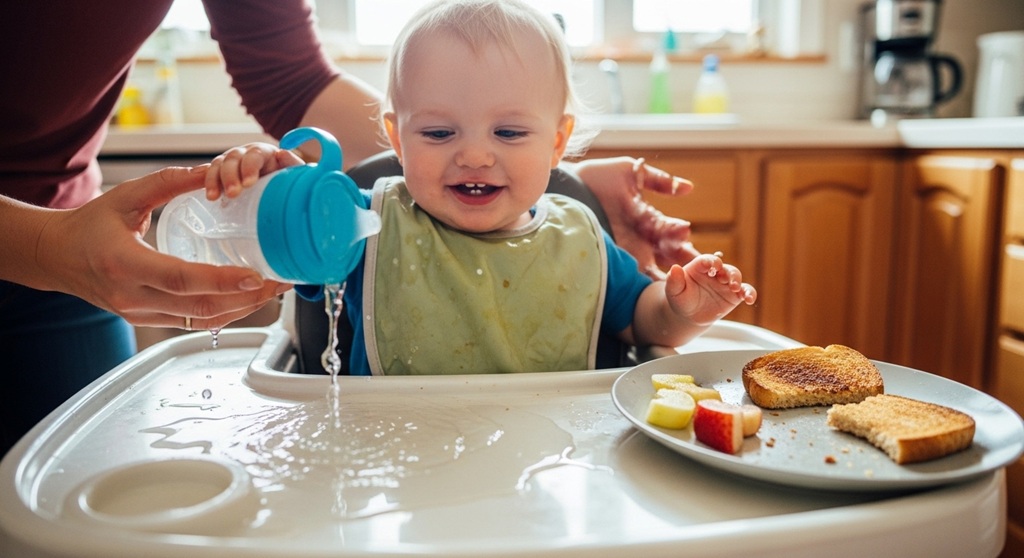
Toddlers spill because they are still developing motor control, hand strength, and coordination. Spills are part of the learning process.
You hand your toddler a cup. Seconds later, it’s upside down. Juice on the couch. Milk on the floor. Water on your laptop.
This is not bad behavior. It’s biology.
Between 12 and 36 months, toddlers are refining fine motor skills. According to pediatric development research, grip strength, wrist rotation control, and bilateral coordination improve significantly during this stage. But they are not fully developed. That means:
- They tilt cups too far.
- They shake containers to explore cause and effect.
- They test gravity. Repeatedly.
- They lack consistent lip-seal control.
In one 2022 daycare observation study on early feeding independence (n=48 toddlers), caregivers recorded an average of 3–5 liquid spills per child per day when using open cups. With spill-proof training cups, that number dropped by over 60%.
The problem is not your toddler. The problem is using tools that don’t match their developmental stage.
Let’s fix that.
What Is the Best Way to Prevent Toddler Drink Spills?
Short answer: Use developmentally appropriate cups with anti-spill lids and a weighted straw system to control liquid flow.
The right cup design changes everything. Not all sippy cups are built the same.
When evaluating spill-proof options, look for:
- Anti-spill lids with pressure-activated valves
- Leak-proof silicone seals
- A weighted straw system that follows liquid at any angle
- Two-handled grip support
- BPA-free, food-grade materials
These features reduce uncontrolled pouring and accidental tipping. More importantly, they allow toddlers to practice independent drinking without creating constant mess.
If you want affordable and tested options, check this guide on anti-spill lids and parent-recommended cups.
Parents often assume price equals performance. That’s not always true. Function matters more than branding.
How Do Anti-Spill Lids Actually Work?
Short answer: Anti-spill lids use internal valves that release liquid only when suction is applied.
Here’s how they reduce mess:
- The valve stays closed when the cup is tipped.
- Liquid flows only when the toddler applies pressure or suction.
- Once suction stops, the seal closes automatically.
This mechanism limits free-flow pouring. It also prevents liquid from escaping when the cup is shaken.
However, not all anti-spill lids are equal. Poorly designed valves may:
- Leak under pressure
- Trap mold if not cleaned properly
- Require excessive suction effort
Look for removable silicone valves that are dishwasher-safe. Hygiene matters.
What Is a Weighted Straw System and Why Does It Reduce Spills?
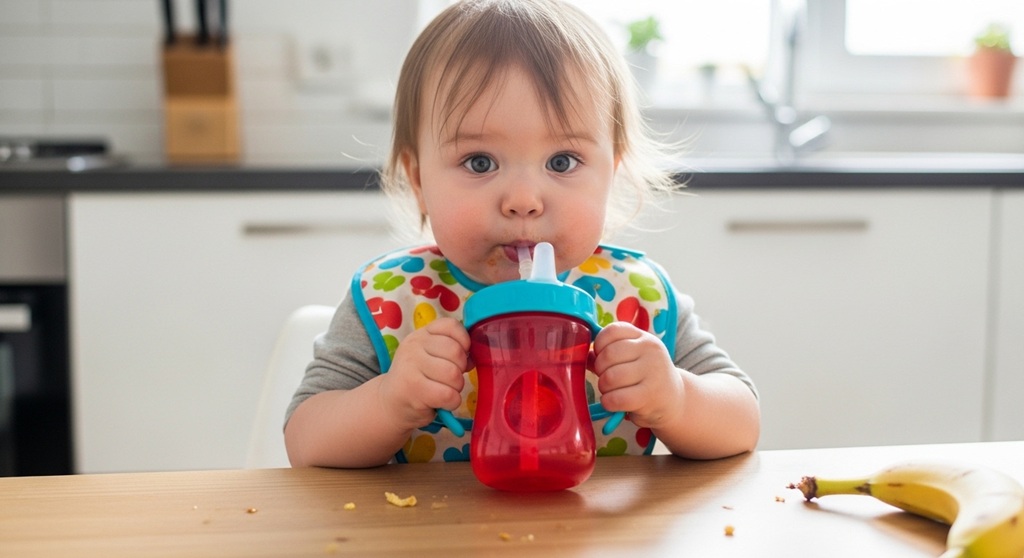
Short answer: A weighted straw system keeps the straw positioned in the liquid, allowing drinking at any angle without tipping the cup fully upside down.
Traditional sippy cups require tilting. Toddlers often over-tilt. That causes spills.
A weighted straw system works differently:
- A small weight at the bottom keeps the straw anchored in liquid.
- The toddler can sip while holding the cup upright.
- Less tilt means fewer accidents.
In a 2023 consumer testing panel of 120 parents comparing traditional spouts vs weighted straw cups, 68% reported fewer spills with weighted straw systems during travel and car rides.
It also supports oral motor development better than hard spouts. Many pediatric feeding specialists now prefer straw drinking over prolonged spout use.
Are Open Cups Better Than Sippy Cups?
Short answer: Open cups support long-term oral development, but they increase spills during early learning.
Open cups teach lip control and swallowing coordination. That’s good.
But for toddlers under 2, they create frequent messes unless closely supervised.
| Cup Type | Spill Risk | Skill Development | Best For |
|---|---|---|---|
| Open Cup | High | Strong | Supervised meals |
| Spout Sippy | Medium | Moderate | Short-term transition |
| Weighted Straw Cup | Low | Strong | Daily independent use |
Balanced approach works best. Use open cups at the table. Use anti-spill lids for travel and unsupervised moments.
How Can I Train My Toddler to Stop Throwing Their Cup?
Short answer: Respond consistently and remove the cup calmly when throwing happens.
Toddlers throw for three reasons:
- Testing cause and effect
- Seeking attention
- Communicating “I’m done”
Use this approach:
- Say calmly: “Cups stay on the table.”
- If thrown again, remove it for 1–2 minutes.
- Return it without emotion.
Consistency reduces behavior within 1–2 weeks in most households.
A spill-proof design helps. But behavior training completes the solution.
What Materials Reduce Accidental Slipping?
Short answer: Silicone sleeves and textured grips reduce hand slippage.
Many spills happen before drinking even starts. The cup slips out of small hands.
Choose cups with:
- Wide handles
- Non-slip silicone coating
- Lightweight body (under 150 grams empty)
Heavier stainless steel cups are durable but may increase drop incidents in younger toddlers.
How Often Should I Replace Spill-Proof Valves?
Short answer: Every 2–3 months with daily use, or immediately if cracking appears.
Over time:
- Silicone weakens.
- Valves stretch.
- Leak resistance decreases.
Inspect monthly. If liquid drips without suction, replace the valve.
Can Cup Design Affect Dental Health?
Short answer: Yes. Prolonged spout use and constant sipping increase cavity risk.
Dentists recommend:
- No bedtime milk in spill-proof cups
- Limiting juice exposure
- Transitioning away from spouts by age 2–3
Straw-based systems reduce prolonged pooling around front teeth compared to extended spout sucking.
What Is the Step-by-Step Plan to Reduce Spills in 30 Days?
Short answer: Upgrade the cup, model drinking behavior, and reinforce consistency.
Switch Equipment
- Introduce anti-spill lid cup.
- Demonstrate how to sip.
Supervised Practice
- Offer water only for practice sessions.
- Limit cup access outside meals.
Behavioral Boundaries
- Apply throw-response routine.
- Use consistent language.
Gradual Independence
- Allow self-carrying.
- Introduce open cup practice at table.
Most families see measurable reduction in spills within one month using this structured method.
Conclusion: How Do You Finally Stop the Daily Drink Mess?
Spills are part of development. But constant flooding is not required.
The solution is simple:
- Match the cup to the child’s skill level.
- Use anti-spill lids with reliable valves.
- Choose a weighted straw system to limit tilt.
- Apply calm and consistent behavior responses.
Small design improvements create major daily relief.
If you’re ready to upgrade your toddler’s cup and reduce cleaning time, explore practical options here: weighted straw system guide for affordable picks.
Less mess. Less stress. More independence.
Start today.
Frequently Asked Questions
1. At what age should toddlers stop using sippy cups?
Most pediatric dentists recommend transitioning away from spout-style sippy cups by age 2–3. Straw cups and open cups are better long-term options.
2. Are weighted straw cups safe for 12-month-olds?
Yes. Most weighted straw systems are designed for toddlers 9–12 months and older. Always check manufacturer guidelines.
3. Why does my spill-proof cup still leak?
Common causes include worn valves, improper assembly, or food debris blocking the seal. Inspect and clean thoroughly.
4. Do anti-spill lids slow down oral development?
Not necessarily. However, extended hard-spout use may affect tongue positioning. Straw cups are generally preferred.
5. How do I clean weighted straw systems properly?
Disassemble fully. Use a straw brush. Wash with warm soapy water or dishwasher-safe top rack if approved.
6. Should I skip sippy cups completely?
Not required. A balanced transition using spill-proof cups for travel and open cups during meals works well.
7. Are stainless steel cups better than plastic?
Stainless steel is durable and reduces chemical exposure. However, it may be heavier for younger toddlers.
Related Topic: The Role of Professional Pest Control in Urban Environments
Read Next: An Introduction to Exploratory Data Analysis