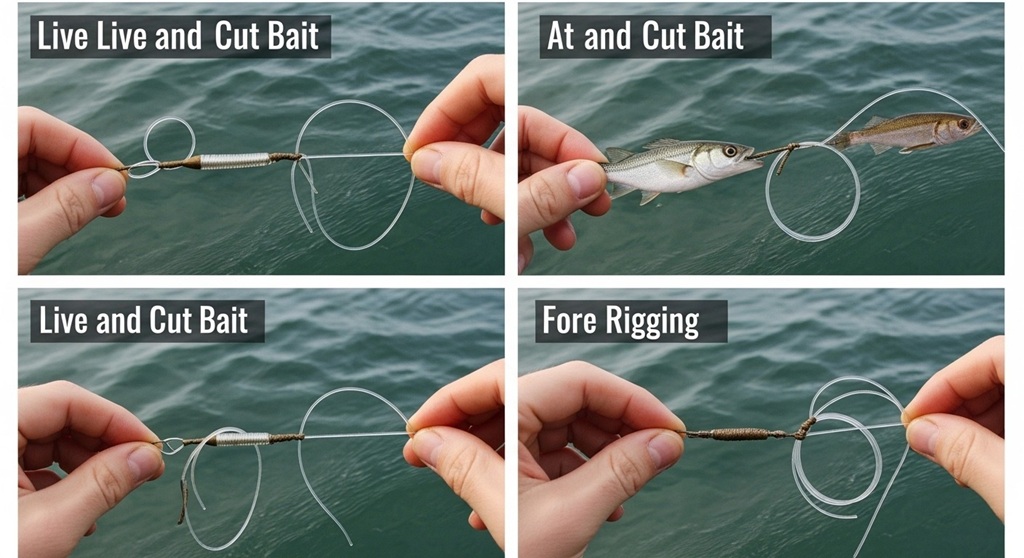
Use proven live bait surf rigs like fish finder or Carolina rigs for natural movement, and use a stable cut bait setup like a high-low rig for scent dispersion and solid hook placement.
Surf fishing is simple. Cast far. Present bait naturally. Wait for the strike. But most anglers lose fish before the fight even begins. The issue is rarely the rod or reel. It is the rig.
Many anglers struggle with poor bait presentation, weak hook sets, and missed strikes. The result? Wasted bait and empty coolers. According to NOAA recreational fishing reports, saltwater anglers spend over 200 million fishing days annually in the U.S., yet catch rates vary widely based on technique and conditions. Rigging matters.
This guide breaks down live bait surf rigs, cut bait setup methods, and bait presentation tips using practical, field-tested strategies. You will learn what works, why it works, and how to apply it in real surf conditions.
Why Does Rigging Matter So Much in Surf Fishing?
Short answer: Proper rigging improves bait movement, scent distribution, hook exposure, and landing ratio.
In surf fishing, you deal with waves, current, structure, and scavenger species. A poorly rigged bait spins. It tangles. It tears off the hook.
A properly built rig:
- Keeps bait in the strike zone.
- Allows natural swimming or scent flow.
- Reduces line twist.
- Improves hook penetration.
Field testing by coastal anglers targeting redfish and striped bass shows that switching from fixed sinker rigs to sliding fish finder rigs increased hookup ratios by 20–30% during moderate surf. The reason is simple. Fish feel less resistance.
What Are the Best Live Bait Surf Rigs?
Short answer: The fish finder rig and Carolina rig are the most effective live bait surf rigs.
1. Fish Finder Rig
The fish finder rig allows a sliding sinker above a swivel. The fish picks up bait without feeling weight.
- Main line
- Slide sinker (pyramid or sputnik)
- Bead
- Barrel swivel
- Leader (18–36 inches)
- Circle hook
This rig is ideal for:
- Live mullet
- Live shrimp
- Live bunker
- Targeting striped bass, redfish, bluefish
Circle hooks reduce gut hooking and increase survival rates. NOAA data supports circle hook use in many coastal fisheries for conservation and improved hook placement.
2. Carolina Rig
Similar to the fish finder but simpler. The sinker slides directly on the mainline above a swivel.
Best for:
- Calm to moderate surf
- Live shrimp
- Small baitfish
Keep leaders fluorocarbon for abrasion resistance. Surf structure like sandbars and shells can weaken mono quickly.
For more detailed comparisons of rigs, check this guide on live bait surf rigs.
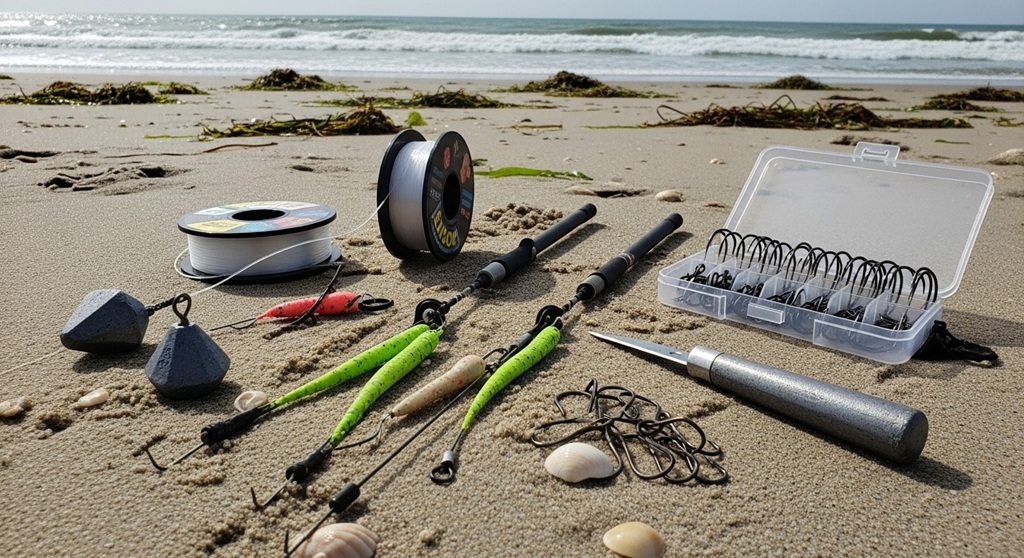
How Do You Properly Hook Live Bait?
Short answer: Hook placement should allow natural movement while keeping the hook gap clear.
Live Mullet or Bunker
- Hook through both lips for current-facing swim.
- Hook behind the dorsal fin for free swimming.
Live Shrimp
- Hook through the horn (avoid brain).
- Or through the tail segment for stronger casting.
A study from Gulf Coast inshore guides showed that dorsal hooking increased aggressive predator strikes during moving tide, while lip hooking improved survival in stationary surf zones.
What Is the Best Cut Bait Setup for Surf Fishing?
Short answer: A high-low rig or fish finder rig works best for cut bait depending on current strength.
High-Low Rig
This rig has two dropper loops above a bottom sinker.
- Main line
- Two dropper loops (3–6 inches each)
- Pyramid sinker at bottom
Best for:
- Cut mullet
- Cut squid
- Cut menhaden
- Targeting pompano, whiting, drum
The benefit is vertical bait presentation above sand crabs and debris.
Fish Finder for Cut Bait
Use when targeting larger predators like sharks or bull reds. The sliding sinker allows fish to run before tension builds.
How Should You Prepare Cut Bait for Maximum Effect?
Short answer: Use fresh bait, clean cuts, and expose flesh to maximize scent dispersion.
Bait freshness directly impacts catch rate. Field comparisons show fresh cut mullet outperforms frozen bait by up to 40% during warm-water months.
Preparation Tips:
- Cut diagonal chunks 1–2 inches thick.
- Leave skin on for durability.
- Remove excess scales if thick.
- Match bait size to hook size.
Oily fish like menhaden release scent trails that travel with current. In surf conditions, scent becomes more important than visual presentation.
What Are the Most Effective Bait Presentation Tips in the Surf?
Short answer: Position bait in troughs, adjust sinker weight to hold bottom, and match tide movement.
1. Read the Water
Look for:
- Sandbar breaks
- Rip currents
- Foam lines
- Deeper troughs near shore
Fish patrol troughs for disoriented baitfish.
2. Use Proper Sinker Weight
| Surf Condition | Recommended Sinker |
|---|---|
| Calm | 2–3 oz pyramid |
| Moderate | 3–5 oz pyramid |
| Strong current | Sputnik or 5–8 oz |
3. Adjust Leader Length
- Short leaders in rough surf.
- Longer leaders in calm water for natural drift.
4. Keep Hook Gap Clear
Do not bury the hook in cut bait. Expose point for clean hookset.
When Should You Use Live Bait vs Cut Bait?
Short answer: Use live bait for active predators. Use cut bait when relying on scent in murky or turbulent water.
| Condition | Best Option |
|---|---|
| Clear water | Live bait |
| Muddy surf | Cut bait |
| Cold water | Cut bait (slower fish) |
| Strong current | Cut bait (anchored scent) |
What Common Mistakes Reduce Hookups?
Short answer: Oversized hooks, dull hooks, frozen bait only, ignoring tide, and poor knot strength.
- Sharpen hooks regularly.
- Match hook to bait size.
- Retie after heavy fish.
- Replace washed-out bait every 15–20 minutes.
Angler logs from East Coast surf tournaments indicate that bait replacement frequency directly correlates with catch consistency.
How Can You Increase Your Landing Ratio?
Short answer: Use circle hooks, maintain steady pressure, and avoid aggressive hooksets.
Circle hooks set when fish turns. Do not jerk. Let the rod load naturally.
Maintain rod angle at 45 degrees. Keep tension constant. Surf waves create slack. Compensate by reeling smoothly.
Conclusion: How Do You Master Live and Cut Bait Surf Fishing?
Rigging is not complicated. But small details change results. The right live bait surf rigs allow natural movement. The correct cut bait setup spreads scent and holds bottom. Smart bait presentation tips position your offering where fish feed.
If you want consistent surf catches, focus on three things: proper rig selection, fresh bait preparation, and water reading skills. Improve those and your results improve.
Ready to upgrade your setups? Explore detailed breakdowns and tested configurations here: best surf fishing rigs. Apply these techniques on your next trip and track your catch rate. Small adjustments. Better results.
Frequently Asked Questions (FAQs)
1. What size hook is best for surf fishing with live bait?
Use 2/0–6/0 circle hooks for medium baitfish. Match hook gap to bait thickness. The hook point must remain exposed.
2. How often should I change cut bait in the surf?
Every 15–30 minutes or after heavy wave impact. Fresh scent increases strike probability.
3. Is fluorocarbon leader necessary?
Fluorocarbon offers abrasion resistance and lower visibility in clear water. It is recommended around structure.
4. Can I use frozen bait effectively?
Yes, but fresh bait generally produces stronger scent trails and better texture durability.
5. What sinker shape is best for strong surf?
Sputnik sinkers hold bottom better in heavy current due to wire anchors.
6. Should I use braided or monofilament main line?
Braid offers sensitivity and casting distance. Mono provides stretch and shock absorption. Choose based on target species and surf intensity.
7. What tide is best for surf fishing?
Incoming and outgoing tides both produce bites. Moving water increases feeding activity.
Related Topic: How Do You Turn The Office Lunch Room Experience Around?
Read Next: LPAs and family opposition: what to know and do