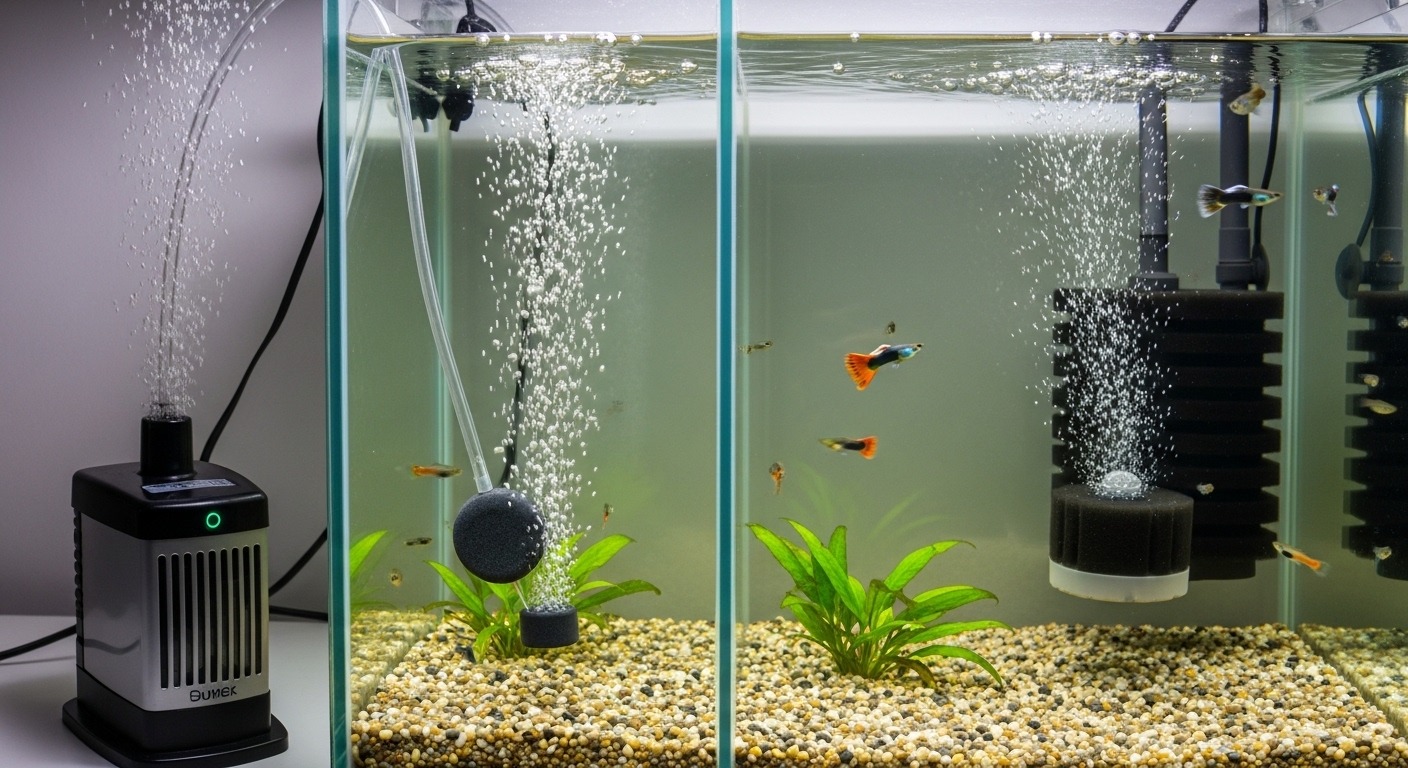
An air pump moves air. A sponge filter cleans water using biological filtration and needs an air pump to operate.
If you’re setting up a fish tank, this confusion is common. Many beginners think an air pump and a sponge filter do the same job. They don’t.
An air pump pushes air into the aquarium. That air creates bubbles, improves oxygen circulation, and powers air-driven equipment. A sponge filter is a filtration device. It traps debris and supports beneficial bacteria that break down harmful waste like ammonia and nitrite.
This distinction matters. According to multiple aquarium case studies from small-scale breeders and hobbyist forums, tanks without proper biological filtration show ammonia spikes within 48–72 hours after adding fish. That spike is a leading cause of early fish mortality.
So the real question isn’t which one is better. It’s understanding what each device does and when you need both.
What Does an Air Pump Actually Do in an Aquarium?
Short answer: An air pump increases oxygen circulation and powers air-driven equipment but does not filter water.
An aquarium air pump is a mechanical device placed outside the tank. It pushes air through airline tubing into the water. The rising bubbles create surface agitation. That agitation increases gas exchange.
Why Is Oxygen Circulation Important?
Fish breathe dissolved oxygen. Oxygen enters the water mainly through surface movement. When water is still, oxygen exchange slows down. This can stress fish.
In tanks with high stocking density, warmer water, or limited surface movement, dissolved oxygen can drop quickly. Research on tropical freshwater systems shows that dissolved oxygen levels below 5 mg/L may cause stress in many common aquarium species.
What Equipment Uses an Air Pump?
- Sponge filters
- Air stones
- Undergravel filters
- Certain protein skimmers (in small systems)
Notice something important. The air pump powers equipment. It does not remove waste or toxins by itself.
When Do You Need an Air Pump?
- Low water movement tanks
- Heavily stocked aquariums
- Breeding tanks
- Quarantine setups
- During power outage backup systems (with battery pumps)
If your filter already creates strong surface agitation, you may not need a separate air pump for oxygen circulation. Many hang-on-back and canister filters already provide enough movement.
What Is a Sponge Filter and How Does It Work?
Short answer: A sponge filter provides mechanical and biological filtration using air-driven suction.
A sponge filter setup includes:
- A porous sponge
- A lift tube
- Airline tubing
- An air pump
When the air pump pushes air into the lift tube, bubbles rise. This creates suction. Water is drawn through the sponge. That’s where filtration happens.
What Type of Filtration Does a Sponge Filter Provide?
| Filtration Type | Does Sponge Filter Provide It? | How It Works |
|---|---|---|
| Mechanical Filtration | Yes | Traps debris in sponge pores |
| Biological Filtration | Yes | Hosts beneficial bacteria |
| Chemical Filtration | No | Requires carbon or resin media |
Why Is Biological Filtration Critical?
Fish produce ammonia through waste and respiration. Ammonia is toxic even at low concentrations (above 0.25 ppm in many freshwater systems).
Beneficial bacteria convert:
- Ammonia → Nitrite
- Nitrite → Nitrate
This process is known as the nitrogen cycle. Without biological filtration, toxins build up fast. In breeder case studies involving 10–20 gallon tanks, sponge filters maintained stable ammonia levels under 0.1 ppm once fully cycled.
That’s why sponge filters are common in:
- Fry tanks
- Shrimp tanks
- Hospital tanks
- Betta setups
Can You Use an Air Pump Without a Sponge Filter?
Short answer: Yes, but it won’t provide biological filtration.
You can run an air stone alone. It will improve oxygen circulation. It will not remove ammonia, nitrite, or debris.
If your main filter already handles mechanical and biological filtration, an air pump with an air stone can serve as supplemental aeration.
However, relying only on an air pump in a stocked tank is risky. Water may look clear, but toxins can still accumulate.
Can You Use a Sponge Filter Without an Air Pump?
Short answer: No. A sponge filter needs airflow to function.
Without an air pump, there is no suction. No water movement. No filtration.
Some hobbyists use powerheads instead of air pumps to drive sponge filters. That works, but technically, some form of water movement device is required.
Air Pump vs Sponge Filter: Which One Should You Choose?
Short answer: Choose based on your goal. For oxygen, use an air pump. For filtration, use a sponge filter (powered by an air pump).
Choose an Air Pump If:
- You need extra oxygen circulation
- Your filter already provides strong biological filtration
- You want to run decorative air stones
Choose a Sponge Filter If:
- You’re setting up a breeding tank
- You need gentle water flow
- You want reliable biological filtration
- You’re cycling a new tank
In many setups, the answer is simple. Use both together.
Is a Sponge Filter Enough for a Main Aquarium?
Short answer: Yes, for small to medium tanks with moderate stocking.
Sponge filters are often underestimated. In controlled hobbyist trials with 20-gallon freshwater tanks stocked with community fish, dual sponge filter setups maintained stable nitrate levels under 20 ppm with weekly water changes.
However, for:
- Large tanks (55+ gallons)
- High bioload fish (cichlids, goldfish)
- Heavy feeding schedules
You may need a hang-on-back or canister filter alongside a sponge filter.
What Are the Pros and Cons of Each?
| Feature | Air Pump | Sponge Filter |
|---|---|---|
| Main Function | Oxygen circulation | Biological filtration |
| Removes Waste | No | Yes (mechanical + biological) |
| Cost | Low | Low |
| Maintenance | Minimal | Rinse sponge regularly |
| Noise | Can vibrate | Depends on air pump |
How Do You Set Up a Sponge Filter Correctly?
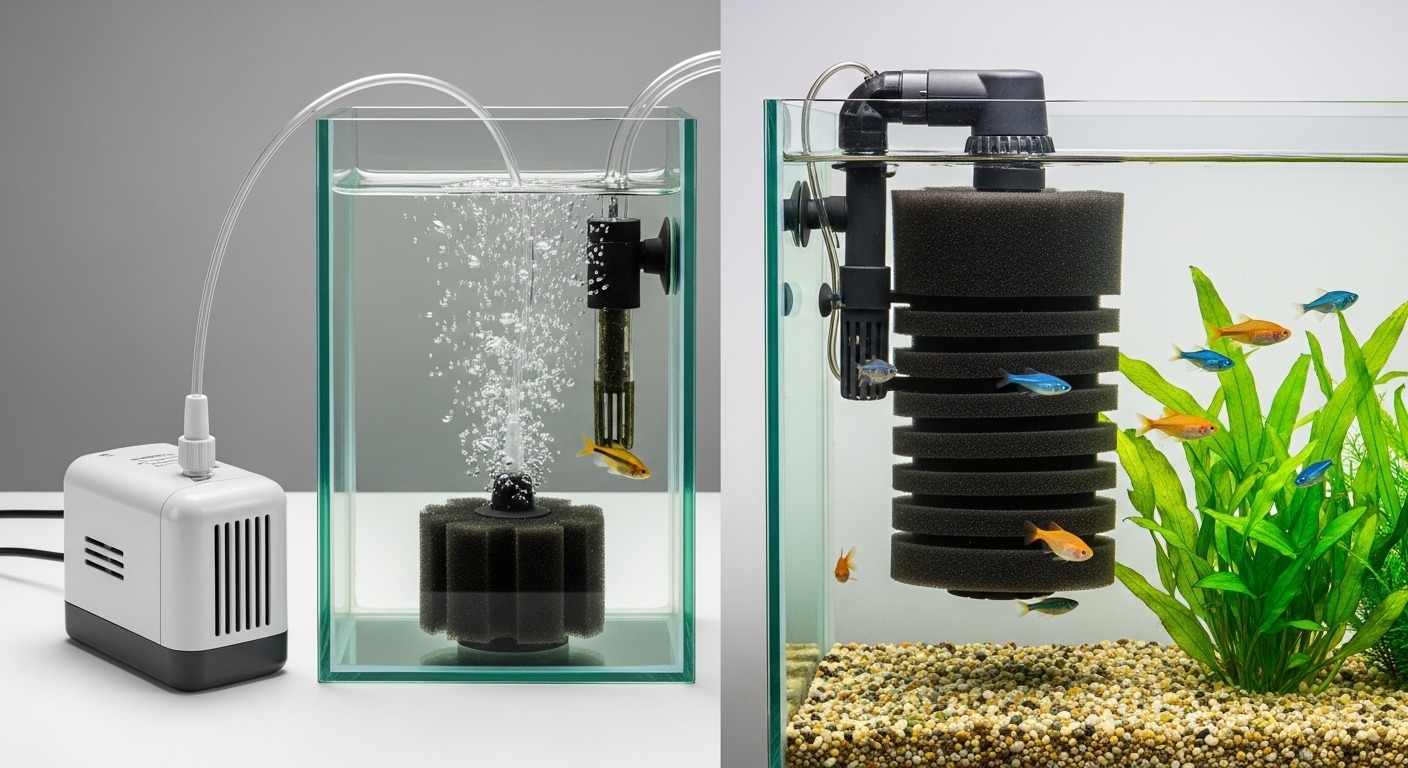
Short answer: Connect sponge filter to air pump, place in tank, allow 4–6 weeks to cycle.
Step-by-Step Sponge Filter Setup
- Attach airline tubing to air pump.
- Connect tubing to sponge filter lift tube.
- Place sponge filter at bottom of tank.
- Turn on air pump.
- Allow beneficial bacteria to colonize (4–6 weeks).
Tip: Seed the sponge with media from an established tank to speed up biological filtration.
Never rinse the sponge in tap water. Chlorine kills beneficial bacteria. Use old tank water during water changes.
Does an Air Pump Improve Fish Health?
Short answer: Yes, if oxygen levels are low.
Fish show stress signs when oxygen drops:
- Gasping at surface
- Lethargy
- Clamped fins
Adding oxygen circulation can reduce stress. In breeder logs involving guppies and bettas, tanks with consistent aeration reported lower mortality during summer heat when water temperatures exceeded 28°C.
Warm water holds less oxygen. That’s where air pumps become important.
Is a Sponge Filter Better for Shrimp and Fry?
Short answer: Yes, because it provides gentle flow and safe intake.
Traditional filters can suck in baby shrimp or fry. Sponge filters prevent that.
They also offer surface area for biofilm growth, which shrimp graze on. This supports stable biological filtration and natural feeding behavior.
Conclusion: Do You Really Need to Choose?
An air pump and a sponge filter serve different roles. One moves air. The other cleans water through biological filtration.
Most beginner mistakes happen when hobbyists confuse oxygen circulation with filtration. Clear water doesn’t mean safe water.
If you’re running a small tank, breeding fish, or keeping shrimp, a proper sponge filter setup powered by a reliable air pump is one of the safest and most cost-effective systems available.
Before you add new fish, review your filtration system. Test ammonia and nitrite levels. Make sure your tank is cycled.
Want a stable, low-risk aquarium? Start with proper biological filtration and consistent oxygen circulation. Your fish depend on it.
Frequently Asked Questions (FAQs)
1. Does an air pump clean the water?
No. An air pump only moves air and improves oxygen circulation. It does not remove ammonia, nitrite, or debris.
2. Can I run a sponge filter without bubbles?
No. Sponge filters require airflow to create suction and move water through the sponge.
3. How long does it take for a sponge filter to cycle?
Typically 4–6 weeks. You can speed up biological filtration by adding seeded media from an established tank.
4. Do I need both a sponge filter and a hang-on-back filter?
In larger or heavily stocked tanks, yes. The sponge adds extra biological filtration and oxygen circulation.
5. Are sponge filters good for bettas?
Yes. They provide gentle flow and stable water parameters, which bettas prefer.
6. How often should I clean a sponge filter?
Rinse it every 2–4 weeks in tank water during water changes. Never use tap water.
7. Is an air pump necessary if I already have a filter?
Not always. If your filter creates enough surface movement for oxygen exchange, an additional air pump may not be required.
Related Topics: 8 Must-Monitor Metrics for Your Retail Business
What Next: How to Limit Interruptions in the Meeting Room