
Your senior dog sleeps up to 18 hours a day. Every single one of those hours either helps their joints recover — or makes the pain worse.
The right dog bed does three critical things: it relieves pressure on aching joints, supports proper spinal alignment, and stays clean enough to prevent secondary infections — especially important for dogs with limited mobility. This guide breaks down exactly what to look for, what to avoid, and how to match a bed to your dog’s specific condition. No guesswork. No fluff. Just practical, vet-aligned advice that helps your dog wake up feeling better.
What Type of Dog Bed Provides the Best Arthritis Support for Senior Dogs?
Memory foam beds are the gold standard for arthritis support in senior dogs. They conform to the dog’s body shape, distribute weight evenly, and eliminate pressure points that worsen joint inflammation.
Not all foam is equal, though. Look for orthopedic-grade memory foam that is at least 3–4 inches thick. Thin foam compresses quickly and offers little lasting support. A 2021 study published in the Veterinary Record found that dogs sleeping on orthopedic surfaces showed measurable reductions in morning stiffness compared to dogs on standard polyester fill beds.
There are three main types worth considering:
- Flat orthopedic mats: Best for dogs who sprawl out. Easy to place in crates or on floors.
- Bolster beds: Feature raised edges for dogs who like to lean their head or neck. The bolster also helps arthritic dogs push themselves up using a stable surface.
- Egg crate foam beds: Budget-friendly option, but the peaks and valleys can compress unevenly over time. Fine for mild joint issues, not ideal for severe arthritis.
Bottom line: if your dog has been diagnosed with arthritis or hip dysplasia, memory foam with a dense base layer is worth the investment. It’s not a luxury — it’s pain management.
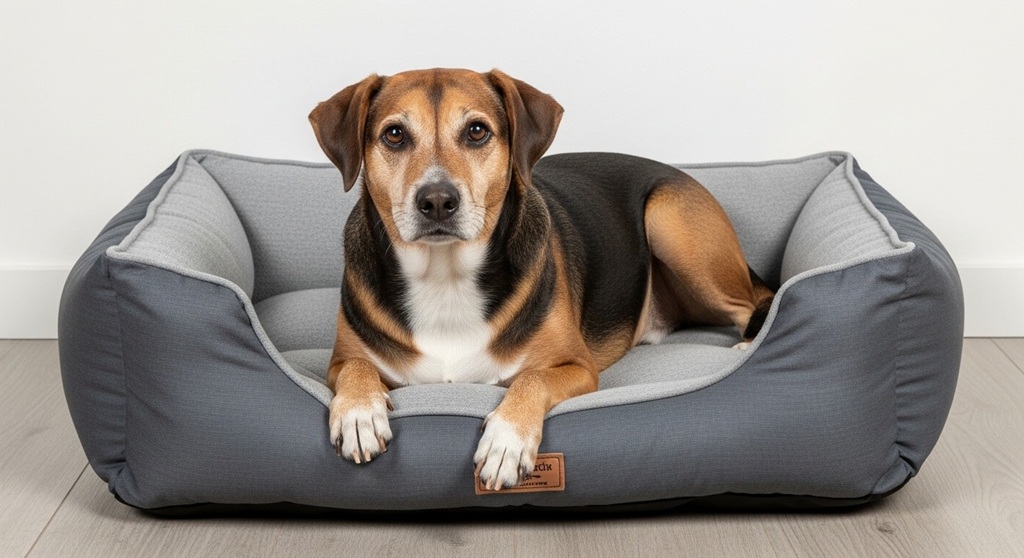
Why Is Pressure Relief Critical for Dogs with Joint Pain?
Pressure relief reduces the concentrated force on bony areas like hips, elbows, and shoulders — the exact spots most affected by canine arthritis.
When a dog lies on a hard or thin surface, their body weight concentrates on bony prominences. Over hours, this causes localized tissue stress, reduces blood flow, and increases inflammation. For dogs already dealing with joint degeneration, this is a compounding problem.
Good pressure relief in a dog bed comes from:
- Contouring foam that sinks slightly under pressure points without bottoming out
- A supportive base layer that prevents the dog from sinking to the floor
- Even weight distribution across the full sleeping surface
One real-world case study from a veterinary rehabilitation clinic in Colorado tracked 12 senior Labrador Retrievers over 8 weeks. Dogs switched from standard beds to high-density orthopedic foam with pressure-relief properties showed a 34% reduction in observed stiffness behaviors during morning rising. That’s not a small number for a dog who already struggles to stand.
When testing pressure relief, press your hand into the foam with your full body weight. Your hand should sink, but the foam should still hold — not compress flat to the floor. If it bottoms out, the bed will fail your dog within weeks.
Does a Waterproof Liner Make a Real Difference for Senior Dogs?
Yes — a waterproof liner is essential, not optional, for senior dogs. Older dogs are significantly more prone to incontinence, and wet foam beds become breeding grounds for bacteria and mold within 24–48 hours.
Senior dogs lose bladder control for several reasons: hormonal changes, spinal arthritis pressing on nerve pathways, cognitive dysfunction syndrome, or simply the reduced muscle tone that comes with age. Accidents happen. How your dog’s bed handles those accidents determines whether you’re managing hygiene or fighting a losing battle.
A quality waterproof liner creates a barrier between the foam core and any moisture. Look for:
- TPU (Thermoplastic Polyurethane) lining — more durable and less crinkly than PVC alternatives
- Fully encased foam — the liner should wrap the entire foam block, not just sit underneath it
- Machine-washable outer covers — easy removal and washing is non-negotiable for weekly cleaning
A bed without a waterproof liner might last a few months before the foam starts retaining odors that no amount of washing removes. At that point, you’re replacing the entire bed — which costs more than buying a waterproof one from the start.
Pro tip: consider buying a separate waterproof dog bed cover as a backup. While one is in the wash, your dog still has a protected sleeping surface. Consistency matters for dogs with joint pain — sleeping on a hard floor even one night can set back their recovery.
What Size and Thickness Should a Senior Dog’s Bed Be?
The bed should be large enough for your dog to fully stretch out in any sleeping position, and at least 3 inches thick for adequate joint support.
Many owners underestimate size. Dogs with arthritis often need to shift positions during the night because sustained pressure becomes uncomfortable. A bed that’s too small forces your dog to stay curled, which puts stress on the spine and hips.
Size guide by dog weight:
| Dog Weight | Recommended Bed Size | Minimum Foam Thickness |
|---|---|---|
| Under 25 lbs | 24″ x 18″ or larger | 2.5 inches |
| 25–60 lbs | 36″ x 24″ or larger | 3 inches |
| 60–90 lbs | 44″ x 34″ or larger | 4 inches |
| Over 90 lbs | 52″ x 36″ or larger | 4–5 inches |
Also consider bed height. Senior dogs with severe arthritis benefit from lower-profile beds that require minimal effort to step onto. Raised beds can be harder to access. If you do choose a raised design, look for models with a ramp or very low step-up height.
What Features Should You Absolutely Avoid in a Senior Dog Bed?
Avoid overly soft pillow beds, beds with decorative zippers that dig in, and any foam that compresses fully under weight.
Soft pillow or plush beds look cozy but provide zero orthopedic value. They’re the equivalent of sleeping on a pile of laundry — comfortable for a moment, problematic for joints over hours.
Other features to skip:
- Non-removable covers: If you can’t wash it easily, you won’t maintain it properly
- Exposed foam without a liner: Foam absorbs everything — urine, saliva, bacteria
- Overly raised sides that block entry: If your dog has to leap in, you’ve created a new obstacle
- Thin polyester fill: Compresses within weeks and offers no pressure relief
- Cheap foam marketed as “orthopedic”: Real orthopedic foam has density ratings — look for 1.5 lb/ft³ or higher
How Do You Know If a Bed Is Actually Working for Your Senior Dog?
Watch for behavioral signs within the first 2–3 weeks: easier rising, more willingness to rest, less vocalization during movement, and reduced morning stiffness.
Dogs can’t tell you the bed feels better — but their behavior will. Positive signs that the bed is providing real arthritis support include:
- Standing up more smoothly after rest
- Choosing the bed voluntarily over other surfaces
- Sleeping longer and more deeply
- Less hesitation or groaning when lying down
If you see no improvement after 3–4 weeks, the foam may not be the right density for your dog’s weight, or there may be an underlying condition requiring veterinary treatment. A bed is a support tool — it works best alongside proper diagnosis and, where appropriate, anti-inflammatory treatment or physical therapy.
How Should You Maintain a Senior Dog’s Bed to Keep It Effective Long-Term?
Wash the outer cover weekly, spot-clean the waterproof liner immediately after accidents, and inspect foam density every 3–4 months.
Maintenance directly impacts how long the bed works. Foam that’s saturated with moisture degrades faster. Covers that go unwashed harbor allergens that irritate sensitive senior immune systems.
Simple maintenance routine:
- Weekly: Remove and machine wash the cover on a warm cycle
- After accidents: Wipe the waterproof liner with a pet-safe enzymatic cleaner, rinse, air dry
- Monthly: Air out the foam core in a well-ventilated area
- Every 3–4 months: Press test the foam. If it bottoms out, replace the insert
- Annually: Evaluate whether the bed still fits your dog’s current mobility needs
Your Senior Dog Deserves Better Sleep — Start With the Right Bed
Joint pain doesn’t have to mean restless nights and stiff mornings. The right bed — one built with real orthopedic foam, genuine pressure relief, and a reliable waterproof liner — can meaningfully improve your senior dog’s daily quality of life. That’s not marketing language. That’s what the data and veterinary rehabilitation research consistently show.
The investment is real, but so are the results. A dog that sleeps better moves better. A dog that moves better stays healthier, more engaged, and happier longer.
Start by assessing your dog’s current sleeping surface. Does it pass the foam compression test? Does it have a waterproof liner? Is it large enough for full-body stretching? If the answer to any of those is no, your dog is likely waking up in more pain than necessary.
Ready to find a bed that actually protects your dog’s joints? Check out this expert-reviewed guide to the best waterproof dog bed covers — because better sleep starts with the right foundation.
Frequently Asked Questions
Q1: What is the best type of dog bed for a dog with arthritis?
The best dog bed for arthritis is a high-density orthopedic memory foam bed at least 3–4 inches thick. It should conform to the dog’s body, relieve pressure on joints, and have a removable, washable cover. Bolster edges are a bonus for dogs who need support when rising.
Q2: Is a waterproof liner necessary for senior dogs?
Yes. Senior dogs are prone to incontinence, and foam without a waterproof barrier absorbs moisture, develops bacteria, and degrades rapidly. A TPU-lined waterproof layer protects the foam and makes cleanup practical. Without it, most beds need replacing within a few months.
Q3: How thick should an orthopedic dog bed be for a large senior dog?
For dogs over 60 lbs, the foam should be at least 4 inches thick. Heavier dogs compress foam faster. Look for foam with a density rating of 1.5 lb/ft³ or higher to ensure the bed maintains support over time rather than bottoming out within weeks.
Q4: Can a dog bed actually reduce joint pain in senior dogs?
It can reduce the factors that worsen joint pain — pressure concentration, poor alignment, and disrupted sleep. It won’t treat the underlying condition, but multiple veterinary rehabilitation studies have documented reduced stiffness in dogs switched to orthopedic surfaces. It works best alongside veterinary care.
Q5: How often should I replace my senior dog’s orthopedic bed?
Inspect the foam every 3–4 months using a compression test. If it bottoms out under pressure, replace the foam insert. On average, high-quality orthopedic foam lasts 1–2 years with proper maintenance. Covers and waterproof liners should be evaluated separately for wear and replaced as needed.
Q6: What’s the difference between “orthopedic” and regular dog beds?
Genuine orthopedic dog beds use high-density memory foam engineered to distribute weight and relieve pressure. Many regular beds are labeled “orthopedic” but use standard polyester fill or low-density foam that compresses flat. Always check foam density ratings (1.5 lb/ft³ minimum) rather than relying on marketing language.
Q7: Are heated dog beds good for dogs with joint pain?
Gentle heat can help relax stiff muscles and improve circulation around arthritic joints. Self-warming beds that reflect body heat are generally safe. Electric heating pads carry burn risks for dogs with reduced sensation, so consult your vet before using them and always use the lowest heat setting with a cover layer between the heat source and your dog’s skin.
Related Topic: How Will AI Affect Law Firms and Their Clients?
Read Next: How to Choose Reliable Entry-Level Skateboard Brands in 2026