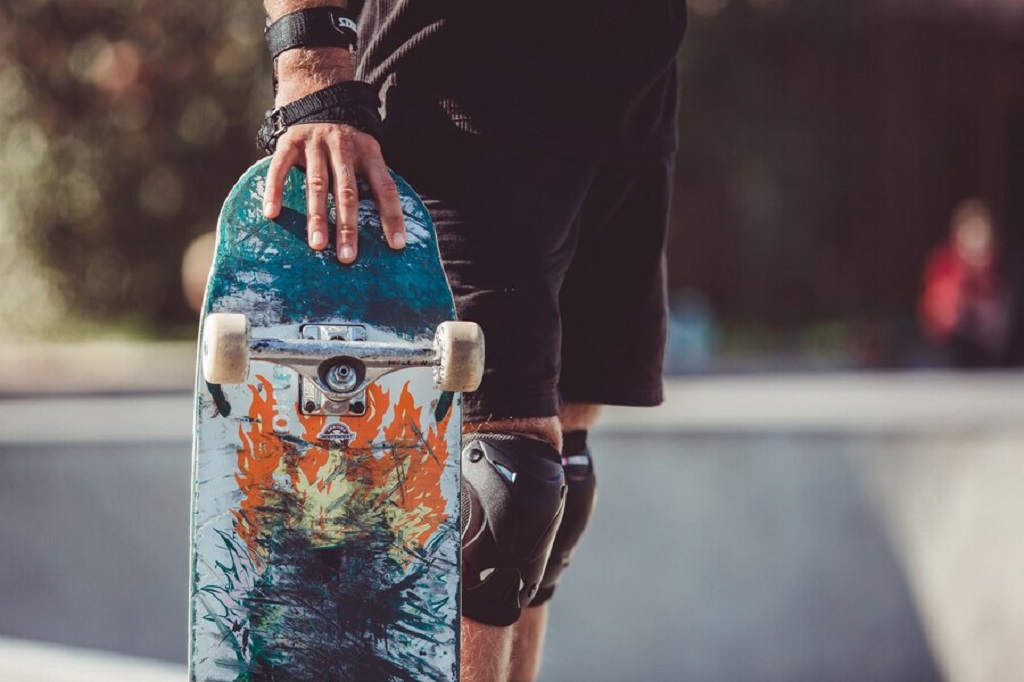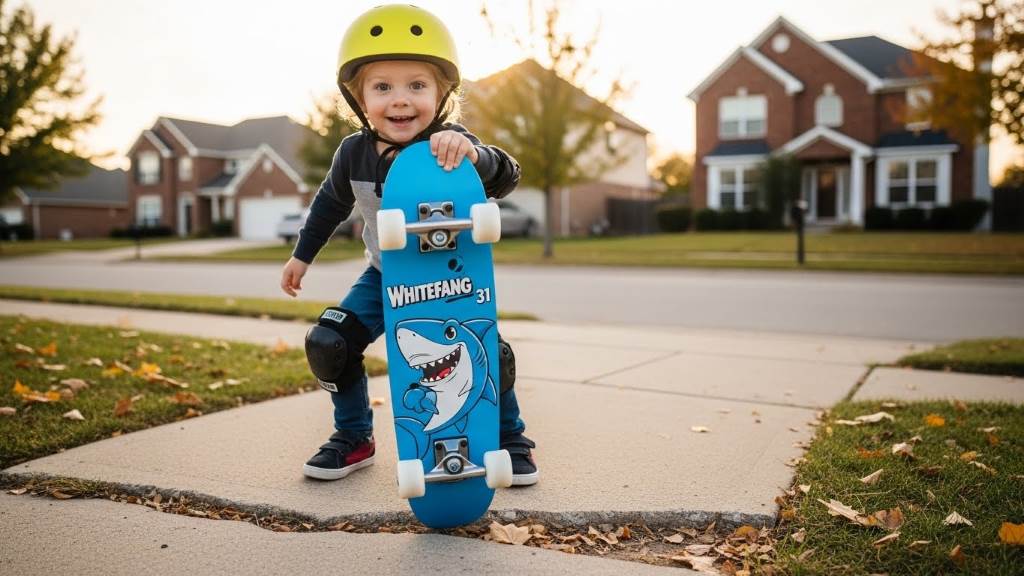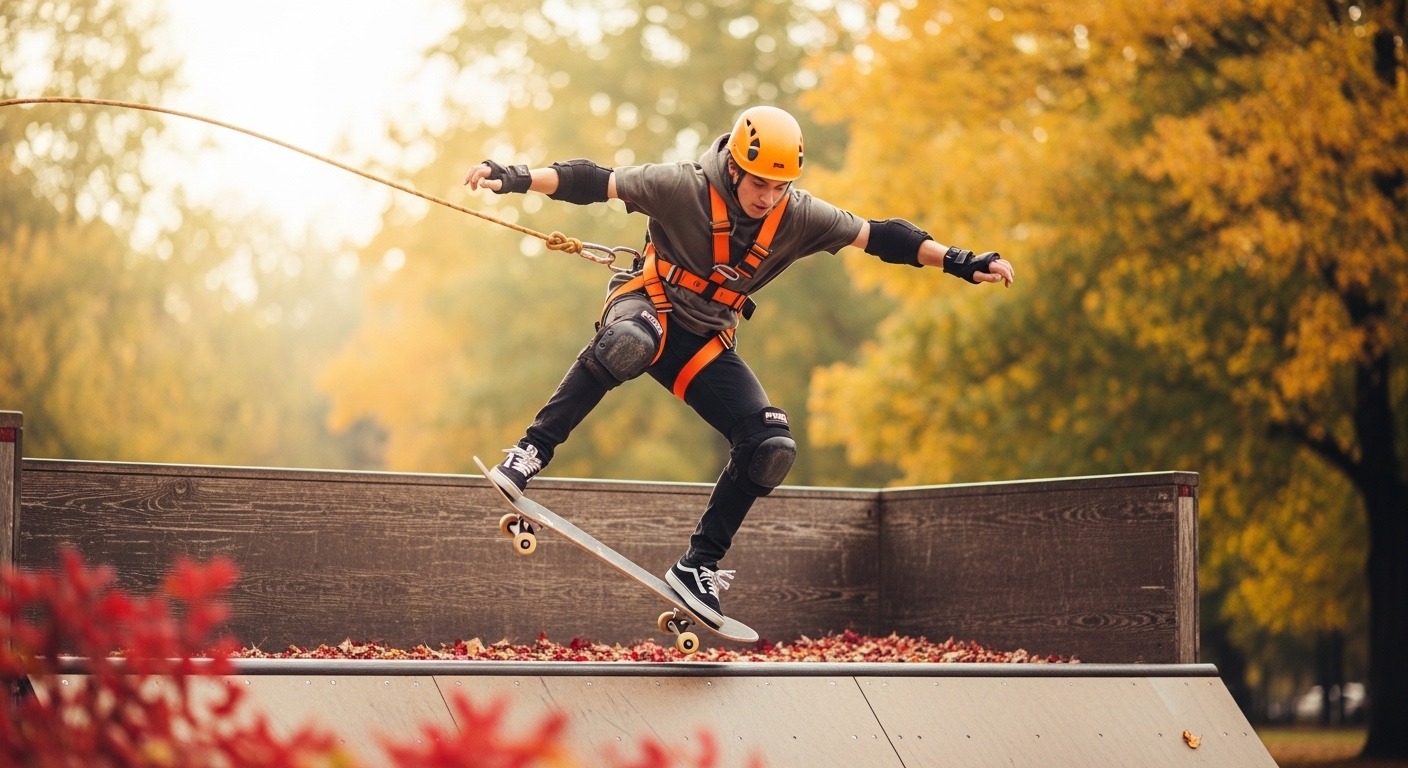
Fall protection gear for skateboarders works by absorbing impact, spreading force away from joints and the head, and reducing friction during slides. Helmets protect the brain from linear and rotational forces. Pads shield knees, elbows, and wrists from direct blows. Gloves and slide gear control abrasion. Together, they reduce injury risk during common skateboarding falls.
Skateboarding falls are not random. Most happen during trick attempts, speed wobbles, or sudden stops. The body instinctively reaches out to break the fall, placing wrists, elbows, knees, and the head at risk. That’s where skating fall safety gear plays a role. It doesn’t make you invincible. It makes injuries less severe and recovery faster.
This guide explains how impact protection gear actually works, why it matters, and how skateboarders can choose and use it effectively. No hype. Just clear answers, real data, and practical advice.
Why Are Skateboarding Falls So Common?
Skateboarding falls are common because the sport involves unstable surfaces, speed, and tricks that push balance limits. Even experienced riders fall.
Problem: Many skaters underestimate how often falls occur and how hard the ground hits back.
Agitate: According to injury surveillance data from U.S. emergency departments, skateboarding causes over 130,000 injuries per year. Wrist fractures, head injuries, and knee trauma are among the most reported. Beginners are at higher risk, but experienced skateboarders account for a large share of injuries due to higher speeds and trick difficulty.
Solution: Understanding fall mechanics helps explain why protective gear works.
- Loss of balance sends the body forward or sideways.
- Hands instinctively reach out, stressing wrists and elbows.
- Momentum carries the head toward the ground.
- Hard surfaces like concrete do not absorb energy.
Skating fall safety depends on interrupting this chain. Gear does that by absorbing energy before your body does.
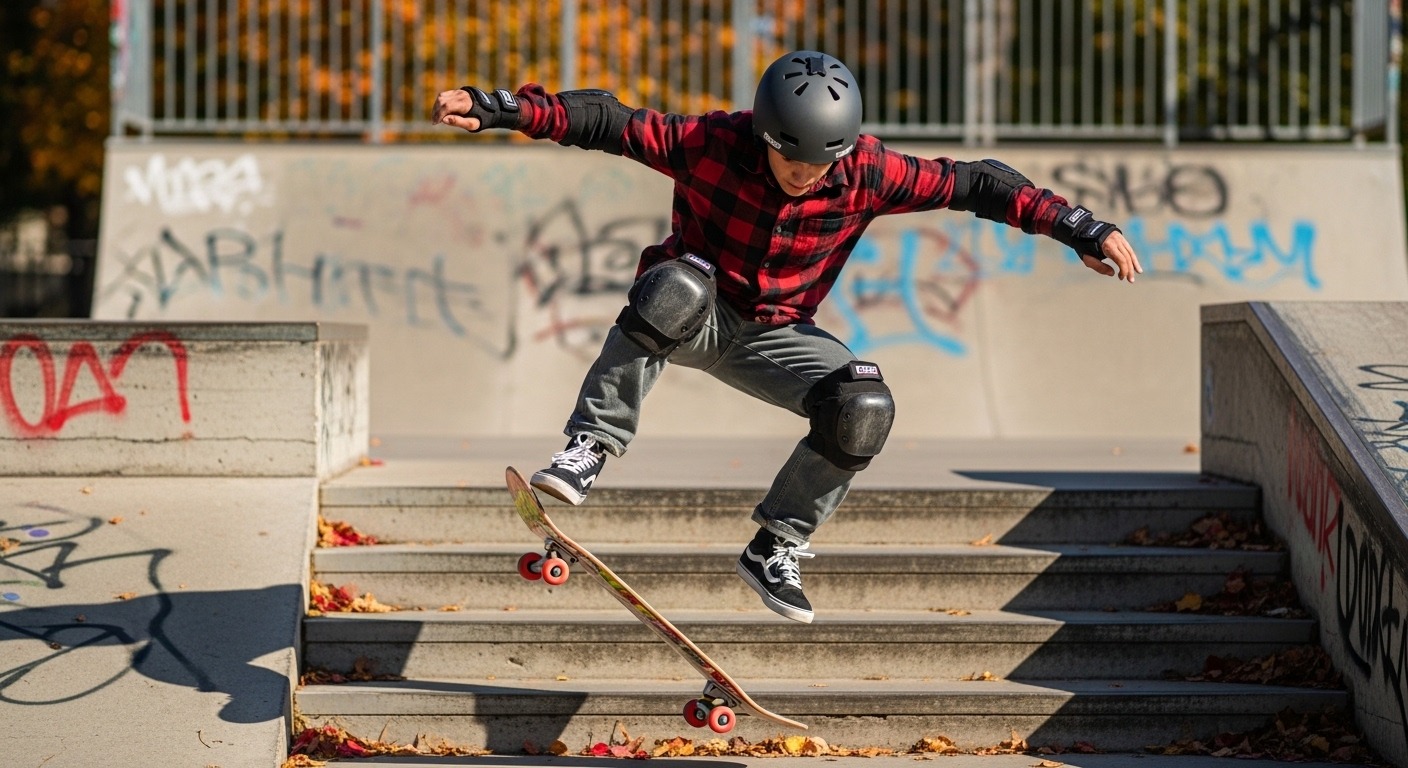
How Do Helmets Protect Skateboarders During Falls?
Skateboard helmets protect by absorbing impact energy and reducing brain movement inside the skull.
Problem: Head injuries are the most serious risk in skateboarding.
Agitate: Even a low-speed fall can cause a concussion. At higher speeds, rotational forces can lead to traumatic brain injury. Many skaters avoid helmets because they feel bulky or unnecessary.
Solution: Modern helmets are designed specifically for impact protection gear needs in action sports.
What Happens During a Head Impact?
- The head stops suddenly on impact.
- The brain continues moving inside the skull.
- This movement causes bruising and shearing of brain tissue.
How Helmets Reduce Injury
- EPS foam liners compress to absorb linear force.
- Hard outer shells distribute impact over a wider area.
- Rotational systems (like slip-plane designs) reduce twisting forces.
Case studies from action sports injury research show helmet use reduces head injury risk by up to 60% in wheeled sports. That’s not theory. That’s measurable impact reduction.
How Do Wrist Guards Prevent Common Skateboarding Injuries?
Wrist guards work by limiting extreme wrist motion and spreading impact force across stronger forearm structures.
Problem: Wrist fractures are one of the most common skateboarding injuries.
Agitate: When falling forward, skaters land on outstretched hands. The wrist absorbs the full force, often beyond its natural range.
Solution: Wrist guards change how force travels through the arm.
Key Design Elements
- Rigid splints on the palm and back of the wrist.
- Energy-absorbing padding.
- Straps that hold the wrist in neutral alignment.
Clinical comparisons show wrist guards significantly reduce distal radius fractures. In skate parks where wrist guards are required, injury reports consistently drop.
For skating fall safety, wrist guards are one of the highest return-on-investment pieces of gear.
How Do Knee and Elbow Pads Absorb Impact?
Knee and elbow pads protect joints by absorbing shock and allowing controlled sliding instead of sudden stops.
Problem: Joints are vulnerable because they sit close to the ground.
Agitate: Direct joint impacts can cause fractures, ligament damage, and long-term pain. Repeated minor injuries add up.
Solution: Pads reduce peak force and manage friction.
Impact Absorption Mechanics
- High-density foam compresses on impact.
- Hard caps spread force across the pad surface.
- Sliding surfaces prevent joint locking.
In controlled drop tests, padded joints experience significantly lower peak force than unprotected joints. That difference often separates a bruise from a fracture.
Impact protection gear for knees and elbows is especially important for transition skating and vert ramps.
What Role Does Sliding Play in Fall Protection?
Sliding reduces injury by preventing sudden deceleration, which lowers force on joints and bones.
Problem: Sudden stops cause higher impact forces.
Agitate: Falling straight onto concrete creates sharp force spikes. Those spikes break bones.
Solution: Slide-friendly materials manage energy over time.
- Hard plastic caps allow controlled movement.
- Slide gloves protect palms during downhill skating.
- Durable fabrics reduce skin abrasion.
Physics explains this clearly. Force equals mass times acceleration. Sliding increases stopping time, which lowers acceleration. Lower acceleration means lower force.
How Does Impact Protection Gear Work Together as a System?
Fall protection works best when all gear functions as a system, not as isolated pieces.
Problem: Some skaters wear partial gear and expect full protection.
Agitate: Protecting only one area shifts injury risk elsewhere.
Solution: System-based protection balances force distribution.
| Body Area | Common Injury | Protective Gear |
|---|---|---|
| Head | Concussion | Helmet |
| Wrists | Fracture | Wrist Guards |
| Knees | Impact Trauma | Knee Pads |
| Elbows | Joint Injury | Elbow Pads |
Skating fall safety improves when gear works together to manage force paths.
Does Protective Gear Affect Skateboarding Performance?
Modern protective gear is designed to minimize movement restriction while maximizing protection.
Problem: Many skaters think gear slows them down.
Agitate: Older gear designs were bulky and uncomfortable.
Solution: Today’s impact protection gear uses lightweight materials and ergonomic shaping.
- Flexible foams harden only on impact.
- Low-profile pads fit under clothing.
- Ventilation reduces heat buildup.
In skill progression studies, skaters wearing protective gear attempt more tricks and practice longer due to reduced fear of injury.
When Should Skateboarders Wear Fall Protection Gear?
Skateboarders should wear fall protection whenever speed, height, or unfamiliar terrain is involved.
Problem: Skaters often skip gear during casual sessions.
Agitate: Most injuries happen during routine skating, not extreme tricks.
Solution: Match gear to risk level.
- Street skating: Helmet and wrist guards.
- Park skating: Full pads recommended.
- Downhill skating: Full impact protection gear required.
How Do You Choose the Right Fall Protection Gear?
Choosing the right gear depends on fit, certification, and skating style.
- Look for certified helmets.
- Ensure pads fit snug without cutting circulation.
- Replace gear after major impacts.
Fit matters more than brand. Poorly fitted gear fails to protect properly.
Conclusion: Why Fall Protection Gear Matters for Skateboarders
Falls are part of skateboarding. Injuries don’t have to be. Fall protection gear works because it manages energy, spreads force, and reduces injury severity. Helmets protect the brain. Pads protect joints. Wrist guards prevent fractures. Sliding surfaces reduce impact spikes.
Skating fall safety is not about fear. It’s about staying on your board longer and recovering faster when things go wrong. Data, physics, and real-world case studies all point to the same conclusion: impact protection gear works.
Call to Action: Review your current setup today. Upgrade worn gear. Choose protection that fits your skating style. Your future sessions depend on it.
Frequently Asked Questions
Does wearing protective gear guarantee no injuries?
No. Protective gear reduces injury severity but does not eliminate risk.
Are helmets necessary for experienced skateboarders?
Yes. Experience does not prevent unpredictable falls.
Do wrist guards interfere with tricks?
Modern designs allow full finger movement with minimal restriction.
How often should protective gear be replaced?
Replace helmets after major impacts and pads when padding degrades.
Is fall protection gear only for beginners?
No. Advanced skaters face higher-speed impacts and greater risk.
What is the most important piece of protective gear?
Helmets, due to the risk of brain injury.
Can protective gear improve confidence?
Yes. Reduced fear often leads to better skill progression.
Related Topics: Social Media Marketing: Engaging Audiences Locally and Beyond
What Next: Why the LOFE Buckwheat Pillow Is Perfect for Comfortable Sleep