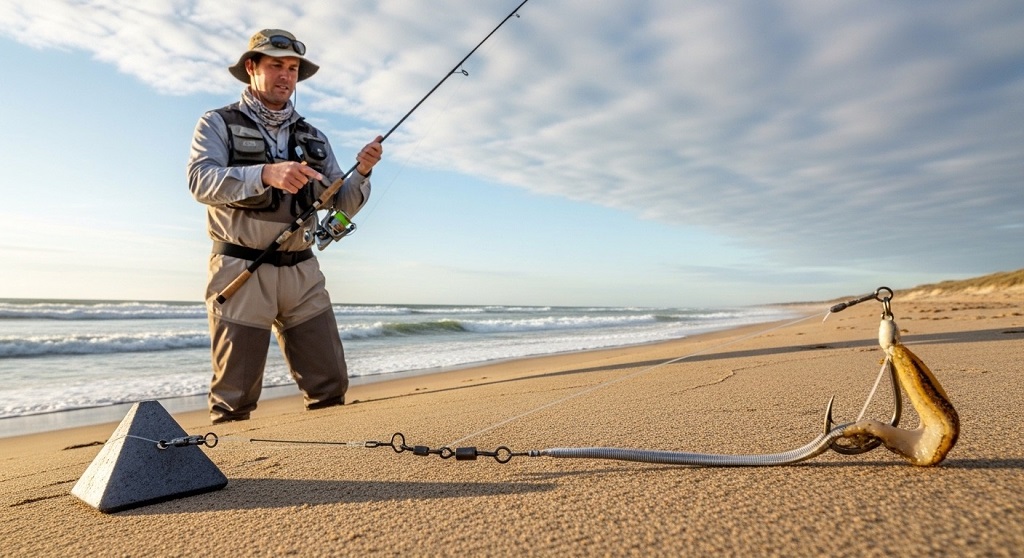
Striped bass, often called stripers, patrol beaches in search of baitfish like bunker, clams, and sand eels. Casting from the surf line offers direct access to these migratory predators, especially during spring and fall runs. Many anglers land quality fish—30 to 40+ inches—using simple bait rigs rather than complex lures.
This guide answers the core question: How do you set up and use effective surf fishing rigs to catch striped bass from the beach? It covers proven rigs, step-by-step setups, bait choices, techniques, and tips drawn from established practices in Northeast and mid-Atlantic surf fishing.
Regulations require inline circle hooks for bait fishing in many areas to reduce deep hooking and support conservation. Follow local size, bag limits, and seasons—check state rules before heading out.
What Are the Best Striped Bass Surf Rigs for Beach Fishing?
The fish finder rig stands out as the top choice for striped bass surf rigs. It allows a fish to take bait without feeling immediate weight resistance, leading to better hookups.
Other effective options include the high-low rig for presenting multiple baits and the Carolina rig (similar to fish finder) for sandy bottoms.
These rigs work because stripers often cruise the wash zone, ambushing bait in troughs or near breaking waves. Data from angler reports and surveys show consistent catches with these setups during peak seasons.
How Do You Tie a Fish Finder Rig for Striped Bass Surf Fishing?
Start with this rig for most beach scenarios targeting larger stripers.
Direct answer: Thread an egg or pyramid sinker (2-6 oz, depending on current) onto the main line, add a bead or sinker slide, tie a barrel swivel, attach a 2-4 ft fluorocarbon leader (30-50 lb), and finish with an inline circle hook (6/0 to 9/0).
Steps:
- Spool your reel with 20-40 lb braided main line for long casts and sensitivity.
- Slide the sinker onto the main line.
- Add a protective bead if needed to prevent knot damage.
- Tie a strong barrel swivel (size 4-7) to the main line.
- Attach leader to the swivel’s other end using a uni or Palomar knot.
- Tie the circle hook to the leader—Gamakatsu or Mustad inline models perform well.
- Bait up with chunk bunker, clam strips, or bloodworms.
Cast beyond the breakers, let the rig settle, and keep the rod in a holder or low for bite detection. When a striper hits, feel the weight, wait 5-10 seconds, then reel steadily—no hard hook set needed with circles.
This setup shines in moderate surf. In one documented Northeast surf session, anglers using fish finder rigs with bunker chunks boated multiple 30+ inch fish in a single tide.
When Should You Use a High-Low Rig for Shore-Based Striped Bass?
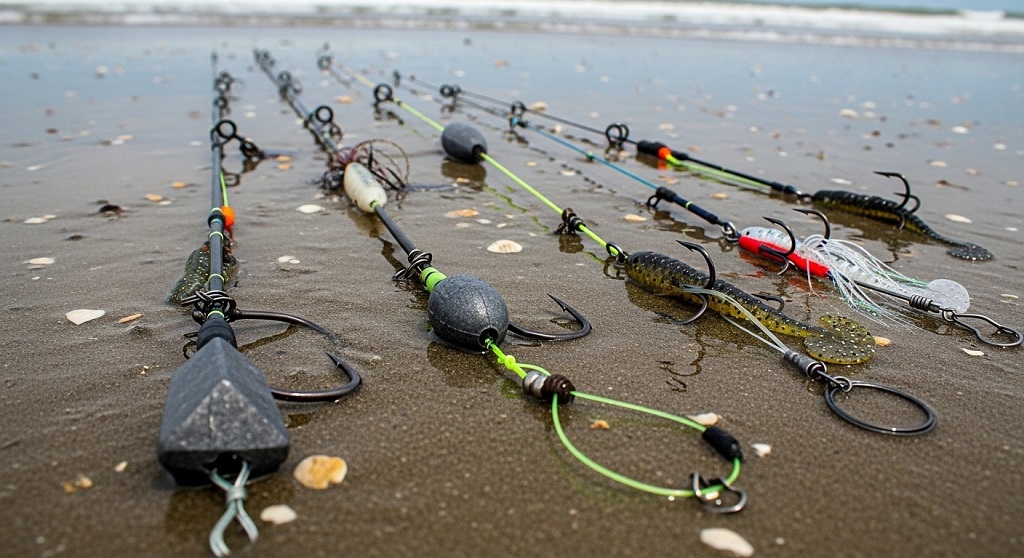
Use the high-low rig early or late season when stripers feed closer to bottom or when smaller baits attract pickers.
Direct answer: It presents two hooks at different depths—one near bottom, one 12-18 inches up—for doubled chances.
Steps to build:
- Use 30-50 lb mono or fluoro leader (3-5 ft total).
- Tie two dropper loops 12-15 inches apart (use perfection loop or surgeon’s loop).
- Attach circle hooks (5/0-7/0) to each loop via loop-to-loop or snell.
- Tie a swivel or snap at the top for main line connection.
- Add pyramid sinker (3-5 oz) at the bottom via snap.
Bait both hooks—bottom with clam or worm, upper with cut bait. This rig handles current well and targets stripers holding in sloughs. It also catches incidental bluefish or fluke.
In practice, high-low rigs produce during slower periods, with reports of double hookups on falling tides.
What Bait Works Best with Surf Rigs for Striped Bass from the Beach?
Live or fresh cut bait drives success. Bunker (menhaden) chunks rank highest for big stripers.
Direct answer: Bunker chunks, clam bellies, bloodworms, or sandworms on circle hooks trigger aggressive strikes.
- Bunker: Cut into fist-sized pieces; oily scent draws fish from distance.
- Clams: Whole or strips; ideal for high-low rigs in cooler water.
- Worms: Bundle sandworms or bloodworms; great for picky feeders.
Match the hatch—observe local forage. Fresh bait outperforms frozen in most cases. Store on ice to maintain firmness.
Regulations mandate circle hooks with natural bait in striped bass zones, boosting release survival rates.
How Do You Choose Tackle for Bass Fishing from Shore with These Rigs?
Balance power and castability.
Direct answer: Use a 9-11 ft medium-heavy surf rod (rated 2-6 oz lures), paired with a 5000-8000 size spinning reel spooled with 30 lb braid.
- Rod: Fast action for distance; examples include models from Penn or St. Croix.
- Reel: Smooth drag (20+ lb max) handles runs.
- Line: Braid for zero stretch, plus 30-50 lb fluoro leader for abrasion resistance.
This combo casts 3-6 oz rigs far into the surf zone where stripers patrol.
What Techniques Maximize Hookups When Surf Fishing for Striped Bass?
Location and timing matter as much as rig choice.
Direct answer: Target troughs, sandbars, and rip currents at dawn, dusk, or night during moving tides.
- Read the surf: Fish where waves break over bars, creating white water.
- Cast timing: Place rigs in current seams.
- Bite response: Let fish run briefly with bait rigs, then tighten line.
- Fight: Keep rod tip up, use drag to tire fish, avoid beaching in heavy sand.
Many 40+ inch stripers come from consistent beach sessions during fall migrations.
Conclusion: Start Catching Striped Bass from the Beach Today
Mastering striped bass surf rigs transforms shore fishing. The fish finder rig delivers consistent results for big stripers, while high-low adds versatility. Pair them with fresh bait, proper tackle, and smart location reading.
These methods have produced reliable catches season after season. Regulations protect the fishery—use circle hooks, handle fish minimally, and release quickly.
Ready to hit the beach? Grab your gear, check tides, and target the next incoming tide. Share your catches or questions in the comments below—I reply to every one. Tight lines!
FAQ
What is the best rig for striped bass surf fishing from the beach?
The fish finder rig ranks as the best overall. It lets stripers take bait freely without feeling sinker weight right away, improving hookup ratios on large baits like bunker chunks.
Do I need circle hooks for striped bass bait fishing?
Yes—in most Atlantic states, regulations require inline (non-offset) circle hooks when using natural bait. This reduces gut hooking and supports higher release survival.
What size hook for striped bass surf rigs?
Use 6/0 to 9/0 inline circle hooks. Larger for big bunker chunks (8/0-9/0), smaller for clams or worms (6/0-7/0). Brands like Gamakatsu or Eagle Claw hold up well.
What bait catches the most striped bass from shore?
Fresh bunker chunks lead, followed by clam bellies and bloodworms. Match local forage for best results—oily baits draw stripers from afar.
How much weight do I need for surf fishing striped bass?
2-6 oz pyramid or egg sinkers. Use heavier (4-6 oz) in strong current or surf, lighter (2-3 oz) in calm conditions to hold bottom without spooking fish.
When is the best time to surf fish for striped bass?
Spring (April-June) and fall (September-November) migrations peak. Focus on low light—dawn, dusk, night—and moving tides for active feeding.
Can beginners catch striped bass from the beach?
Yes—with a basic fish finder rig, fresh bait, and proper location. Start simple, learn to read waves, and persistence pays off quickly.
Related Topics: How to Choose a Durable Surf Fishing Rod for Saltwater Conditions
What Next: LPAs and family opposition: what to know and do